F1GMAT · https://www.f1gmat.com/mba-resume-mistakes-international-applicants ·
 Add F1GMAT as a preferred source on Google, opens Google in a new tab
See more of F1GMAT's MBA admissions research in Google's Top Stories by making us a preferred source on Google.
An admissions essay reader will dismiss any MBA resume entry that cannot trace back the IMPACT metrics to the applicant's roles and responsibilities. When you write your resume, map IMPACT metrics that show scale or brand visibility to the decisions you made.
Contents
Scale
Startups outside the US don't have the scale compared to US startups unless it is a consumer market serving a large population or one of the four industries – real estate, Oil & Gas, Pharma, and Manufacturing. Those who are in niche technology markets try to play the Fish in the Pond Technique, where they mention the niche market size and the company's revenue in the market. This is the right approach to offer context, but you must understand that the resume is about you.
Unless you can separate yourself from the market and offer a clear value in contribution and helping the startup achieve milestones, these numbers, despite the context, will be quickly dismissed by the admissions team.
Be aware of the first impression and choose these milestones:
Real-Estate
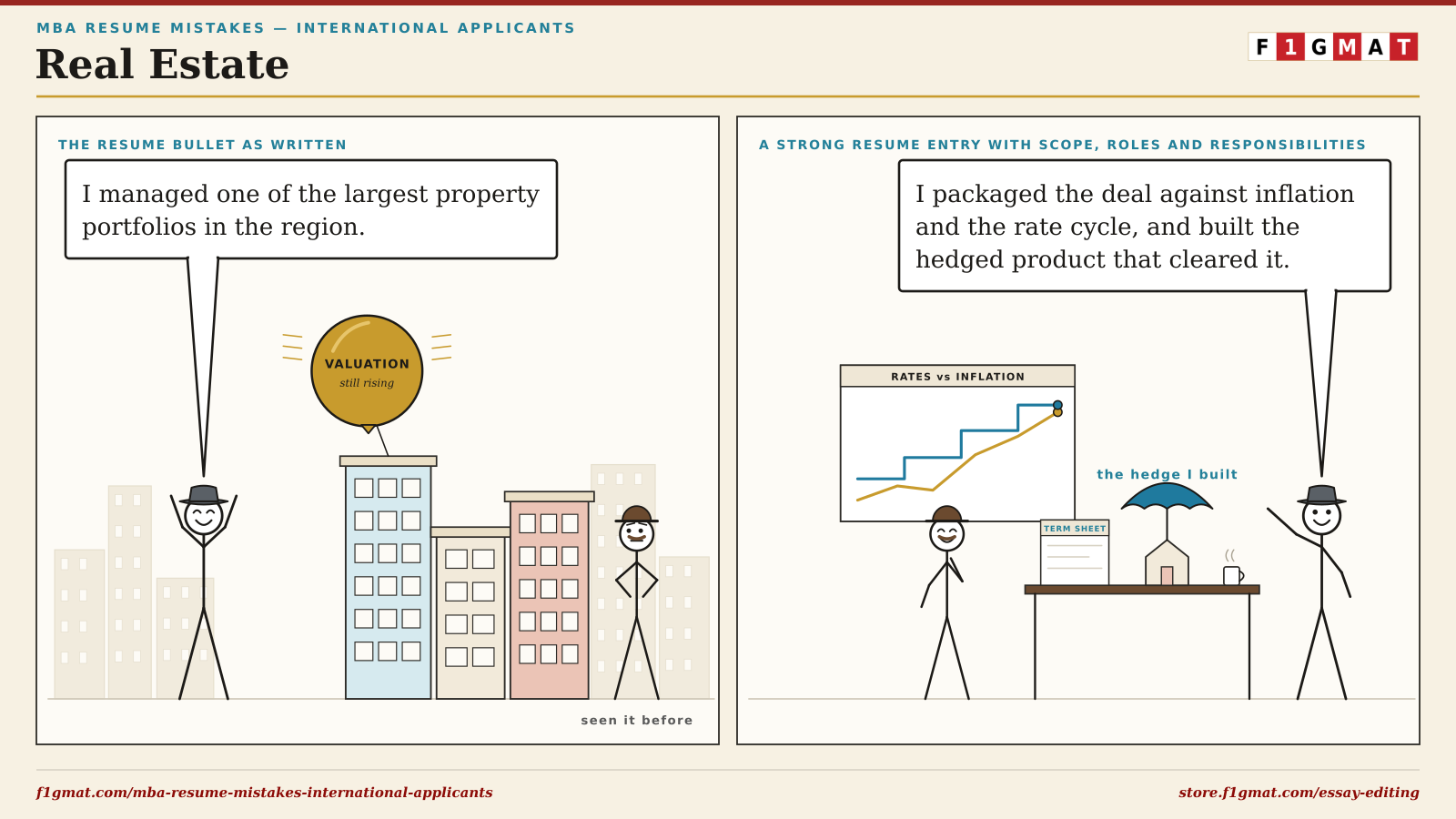
If you are in the real estate market, the admissions team is aware of the mismatch between the valuation and the reality of the market over the past five years. The scale of the operation or deal size in these inflated markets is unlikely to impress the admissions team. But an awareness of building custom financial products, packaging deals to address inflation trends and interest rates, and citing market trends in commercial and housing markets will help applicants stand out from typical KPI cited by real estate professionals.
Manufacturing
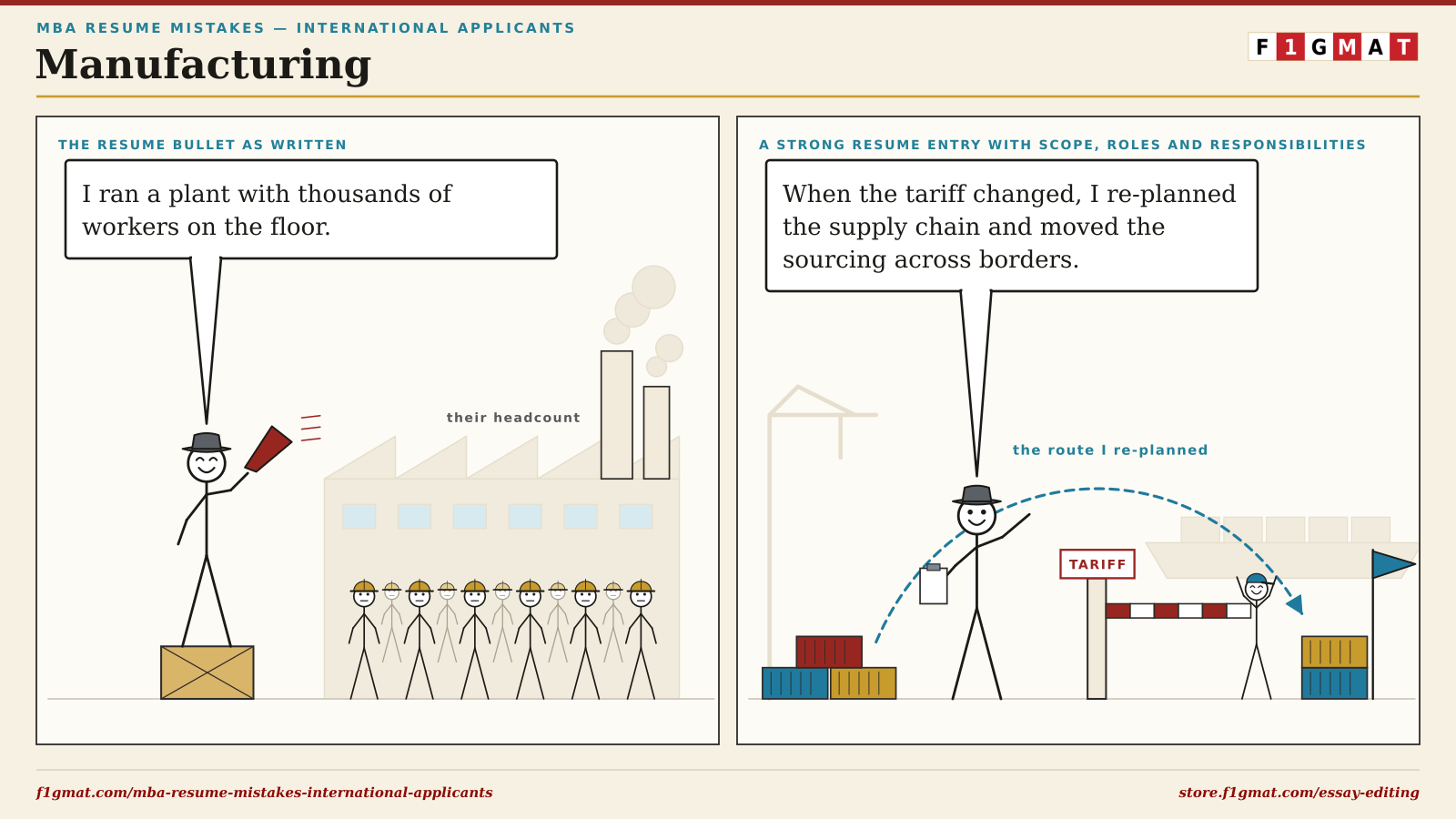
If you are in manufacturing, the challenges will be local. The admissions person in the US is unlikely to read about such problems, as most of the manufacturing has been outsourced to international and emerging markets.
Break down the policy hurdles, the cultural challenges, and even cost pressures.
Highlight supply chain planning, as tariff changes have disrupted the luxury of extensive supply chain networks.
Build a strong case on the challenges you overcame while managing the cost pressures.
Oil and Gas
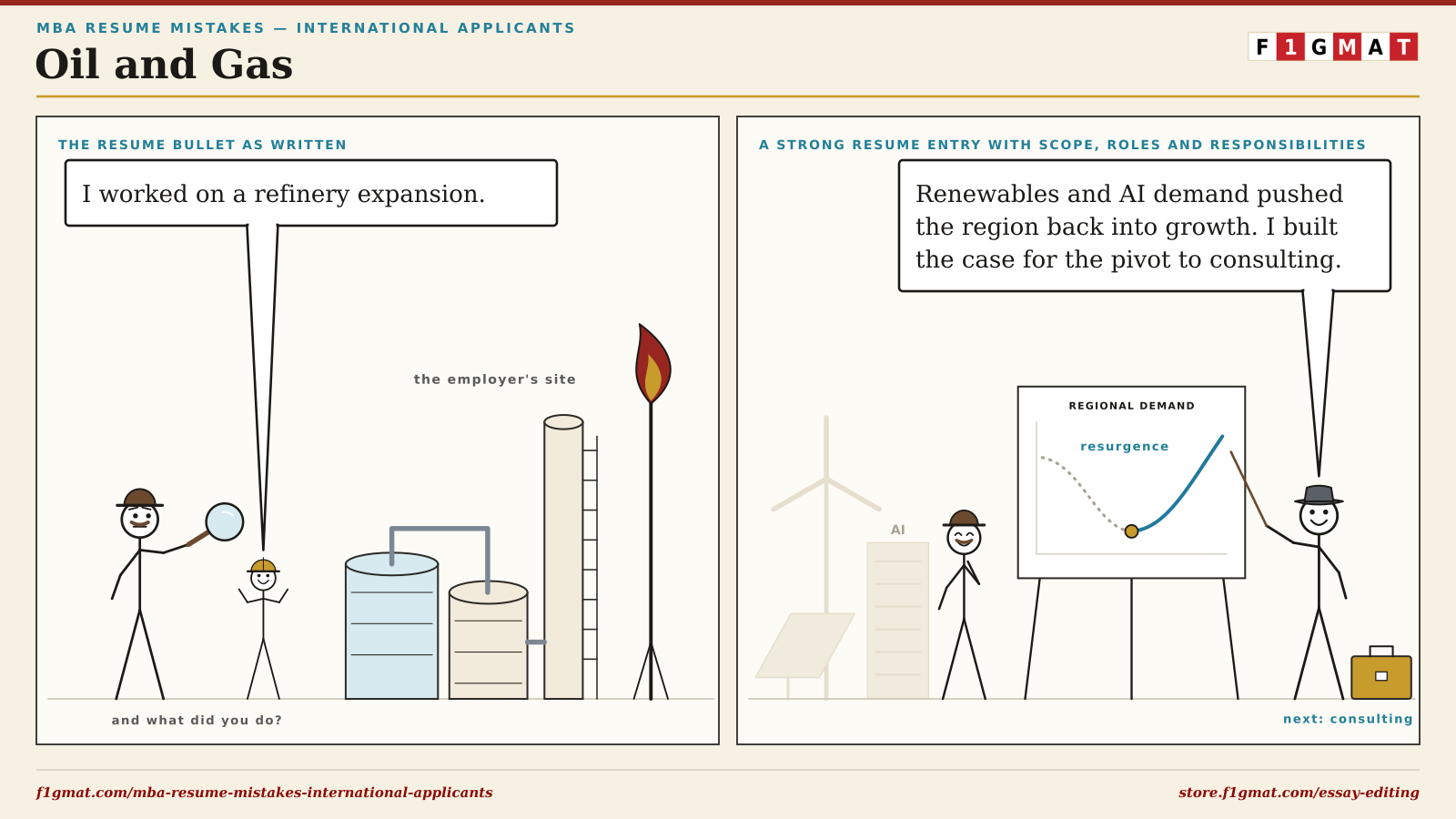
With global demand saturating with the emergence of solar, wind, and hydroelectric power, the industry is witnessing a resurgence in certain regions due to the new demand for AI.
Include such demand trends in your resume entry and hint at your potential to pivot to consulting or adjacent industries.
Pharma
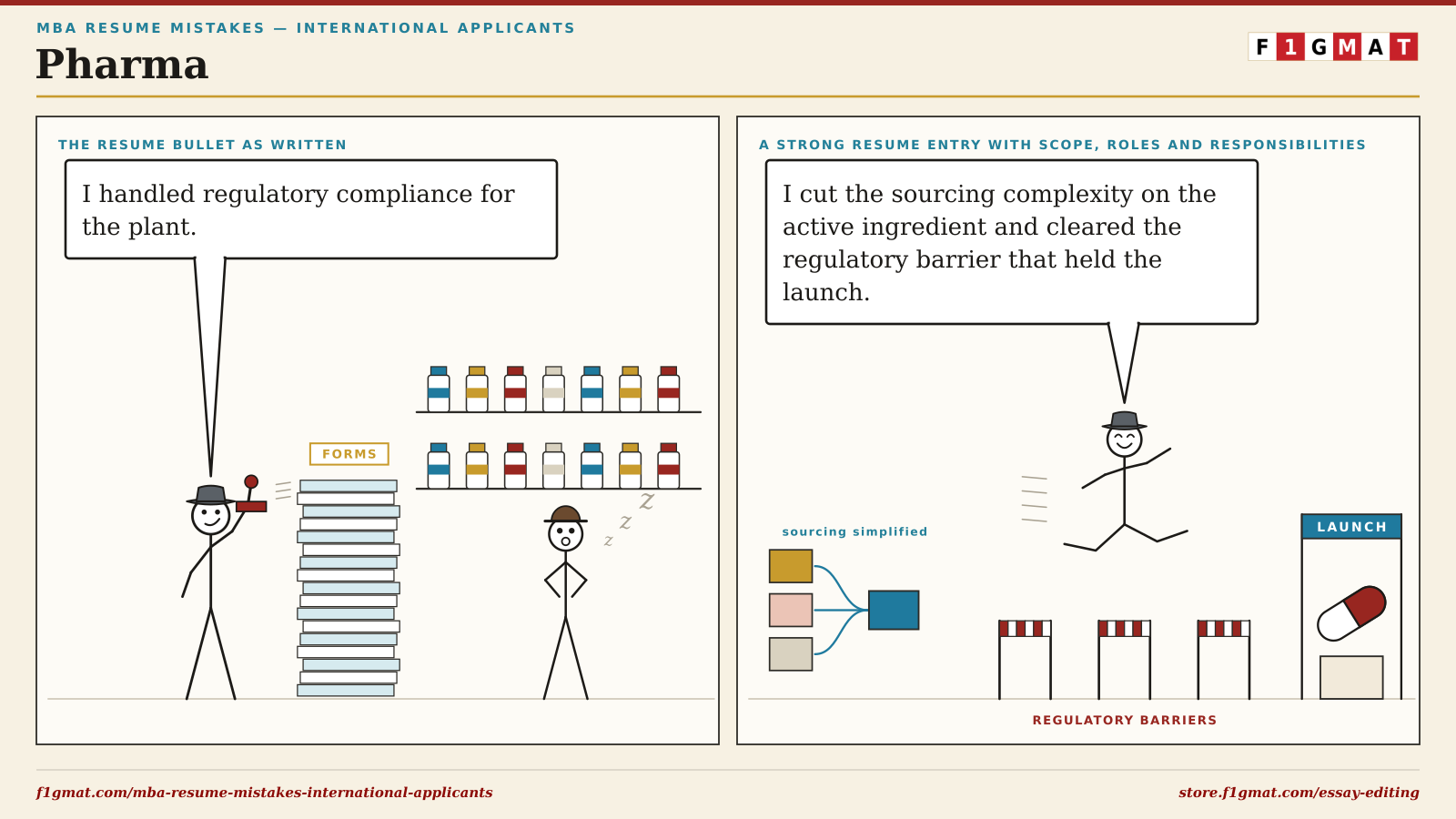
The Contract Manufacturing model has streamlined the manufacturing process for large pharma giants in the US.
Capturing relevant metrics and the complexity of sourcing ingredients, overcoming regulatory barriers, and streamlining operations should be clearly highlighted if you are coming from Pharma.
By including metrics that demonstrate technical, operational, and regulatory milestones, your entries will be acceptable for an MBA admissions team.
Technology
If you are an international technology applicant from India, China, or Southeast Asia, standing out against the 'public' image is crucial.
The bulk of the policy tweaking has been against H1B visa holders and technology companies in India that have gamed the system.
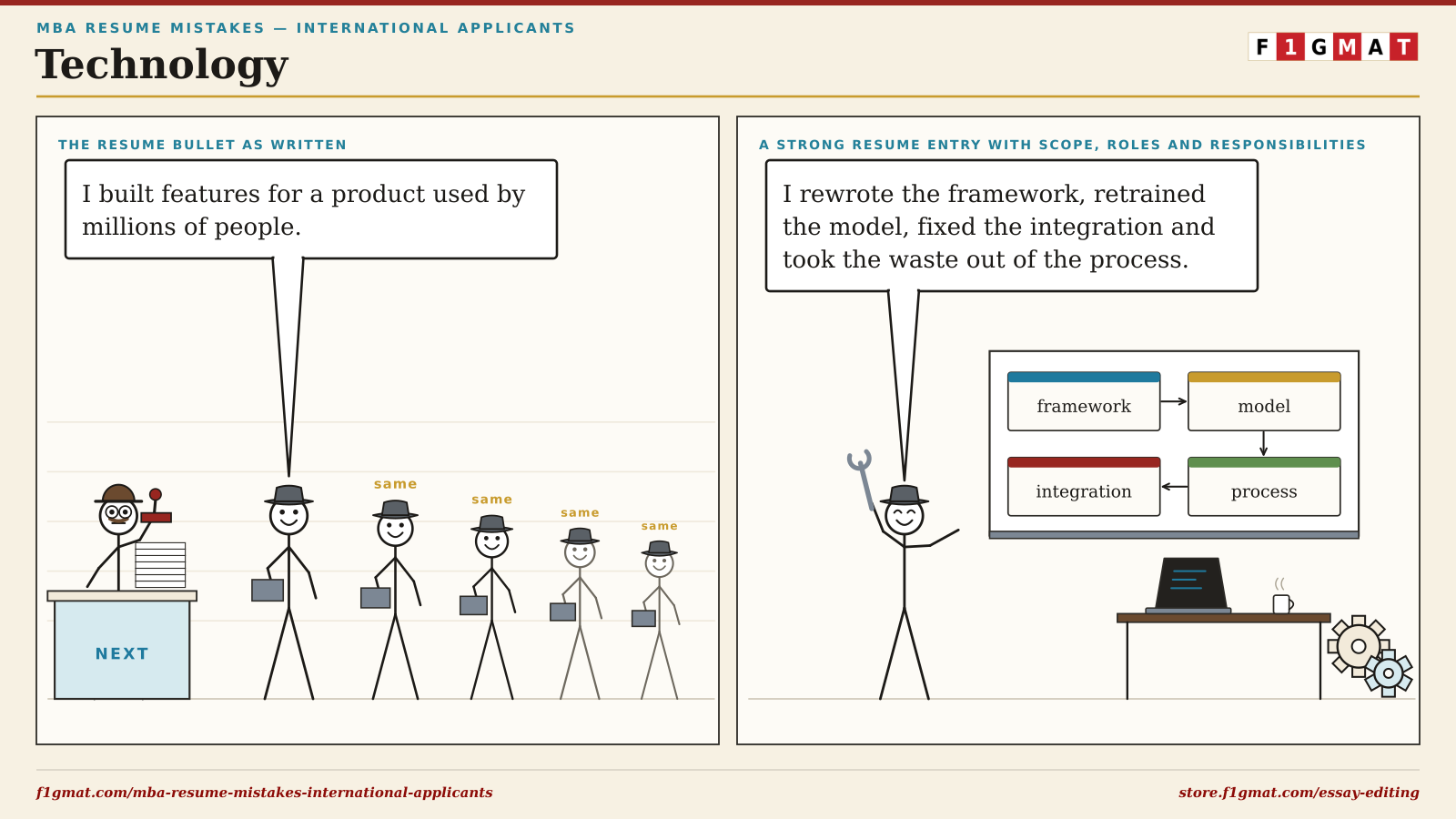
Most technology applicants go for the low-hanging fruit and cite expected professional milestones. Instead of that, show diversity in contributions, including proactively addressing technology (frameworks, models, and integration) and process inefficiencies.
A deep understanding of the business, technical, cultural, systems, and interpersonal challenges faced by the client/market will differentiate your contribution from competing international applicants.
Branding by Association
Out of desperation, many applicants try to associate themselves with functions that are at the center of the action.
Accounting - Associating with Finance
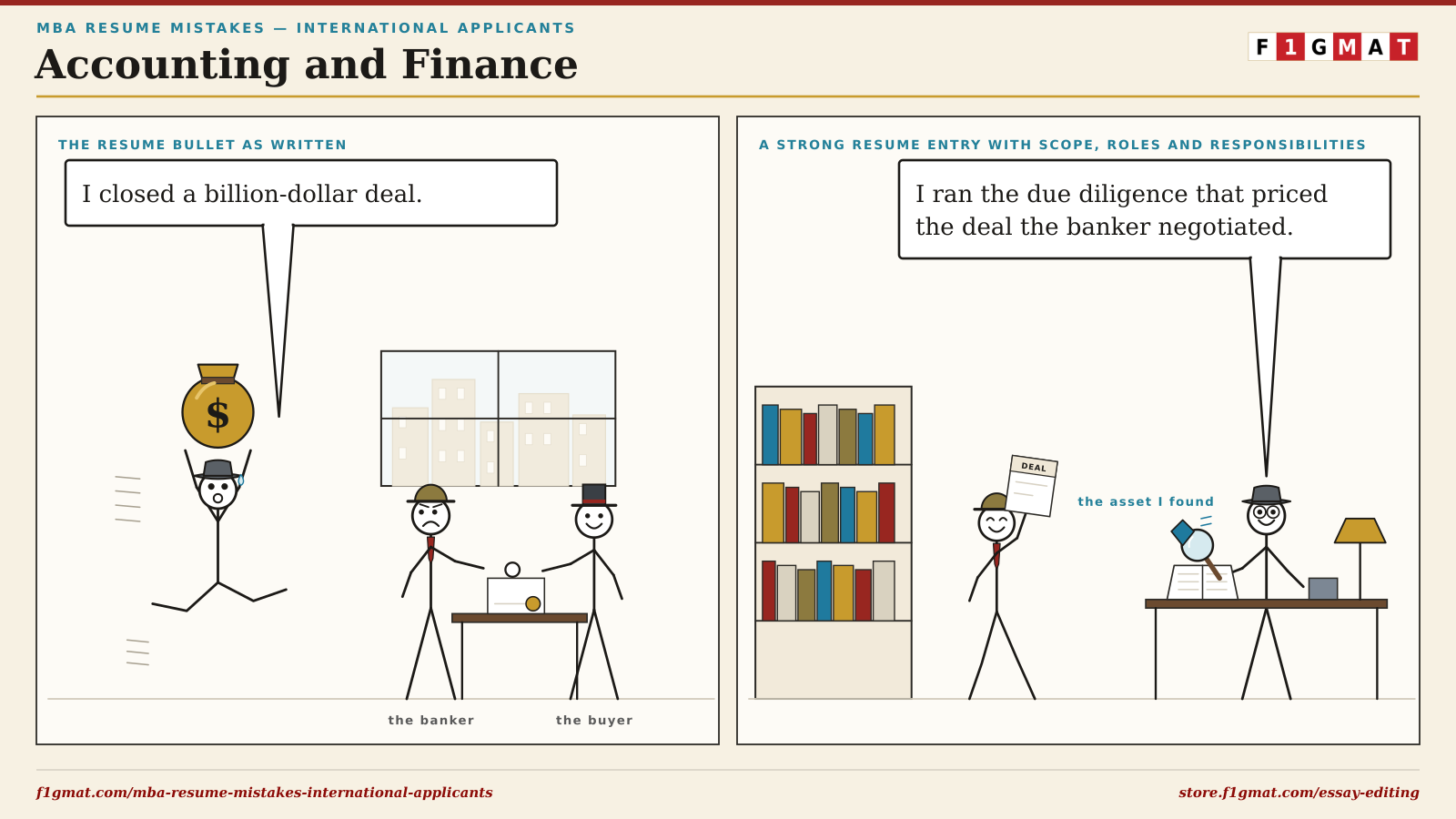
This is a common one I have seen among accounting professionals who are part of due diligence in billion-dollar deals. But the reality is that there was an Investment Banking professional who was leading the negotiations.
Unless your input about an accounting strategy, revenue recognition, valuation, or finding underappreciated assets had a huge impact on the deal, which could be validated by a supervisor, taking credit for the wrong metric or function could backfire.
Operations/Strategy - Associating with Consultants
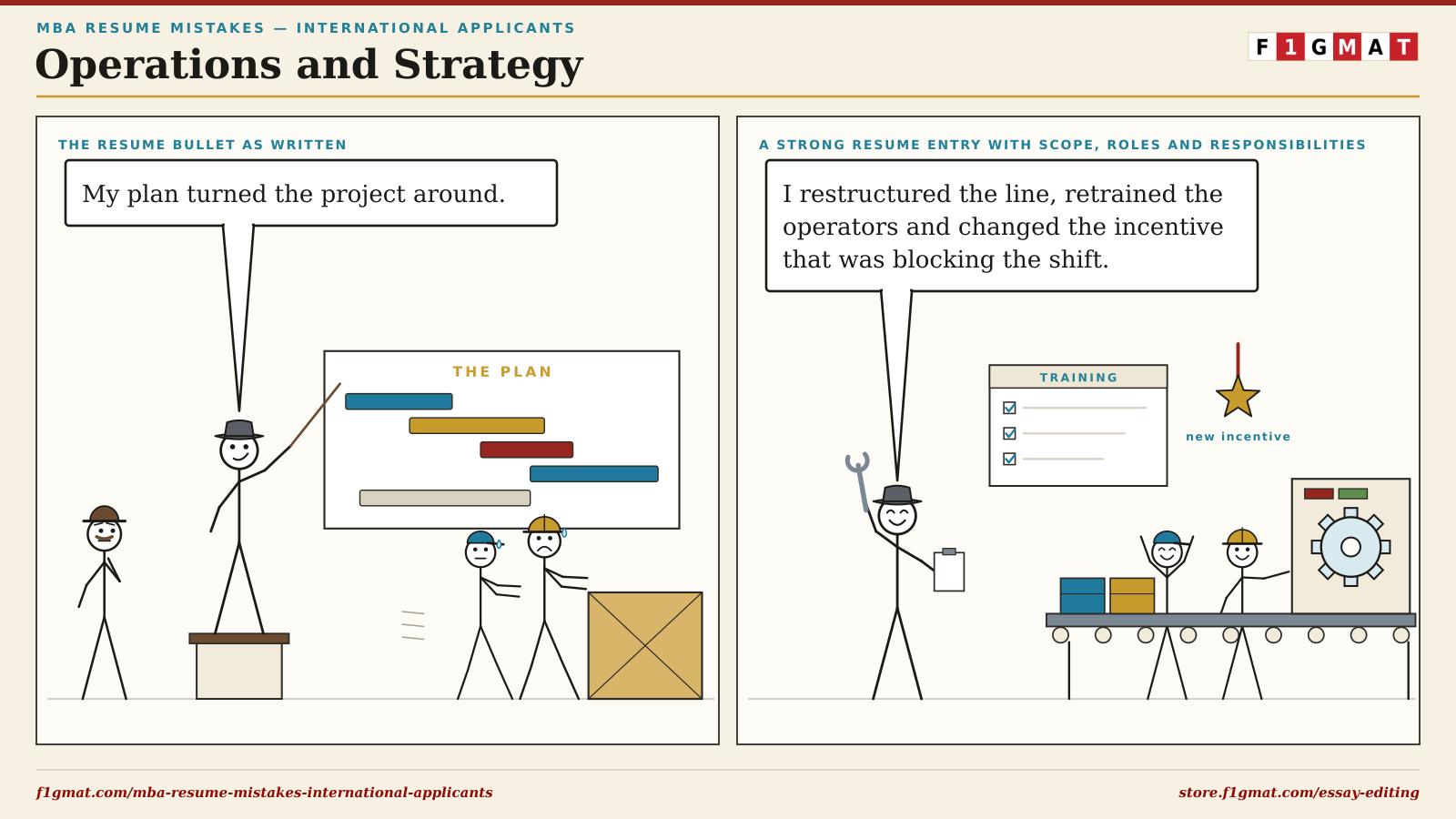
Another mismatch in resume entries is when an operations professional or strategist attributes the success of a project to their planning over the execution of the idea.
A balanced resume entry, highlighting the scale of the operations while 'specifically' mentioning the strategy or the operational maneuver the applicant introduced (optimization, change in organizational structure, training modules, and incentives), would build believable resume entries and prevent false branding by association.
When I spent time with such applicants, I noticed that there were so many unique contributions that had a ripple effect on the organization's data management, accounting practices, operations, and process standardization.
Resume Editing is not just about formatting.
Find your unique place in a competitive MBA application pool.