A first draft has one job - to get your story out of your head and onto the page before you worry about the structure or the word count or your writing style. Here are the four shortcuts I use that you can adopt now for your MBA Essays.
1) No Word Limit Writing
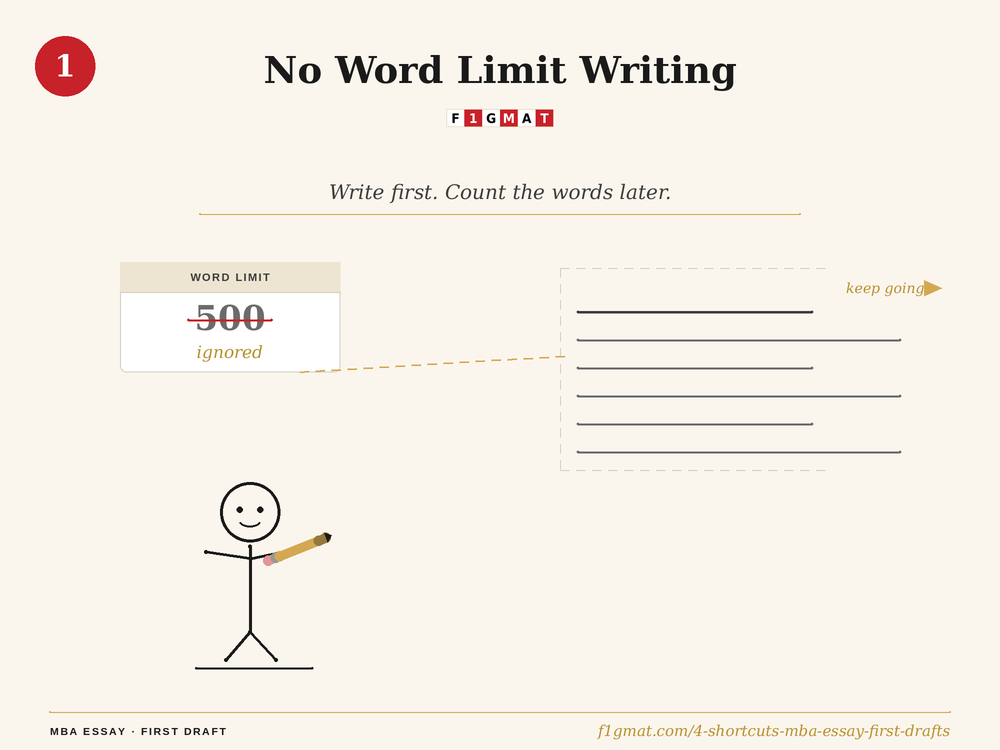
This is a process where you have an essay prompt, and you are writing freely without any concern whether the narrative will fit into the word limit. This is my recommended approach for anyone who is writing an open-ended essay about your life that is not captured in the resume or application questions.
What this does is that you are not constrained by any preconceived notion of how an essay should be structured, whether you are sharing too much or whether the essay addresses all aspects of your life.
It is a free flow of phrases that captures events, people, and decisions that have defined who you are.
2) Paragraph Writing
This strategy works for experienced writers or anyone with a background in creative writing, blogging, or marketing.
I use this strategy to write Sample Essays for F1GMAT's Essay Guides.
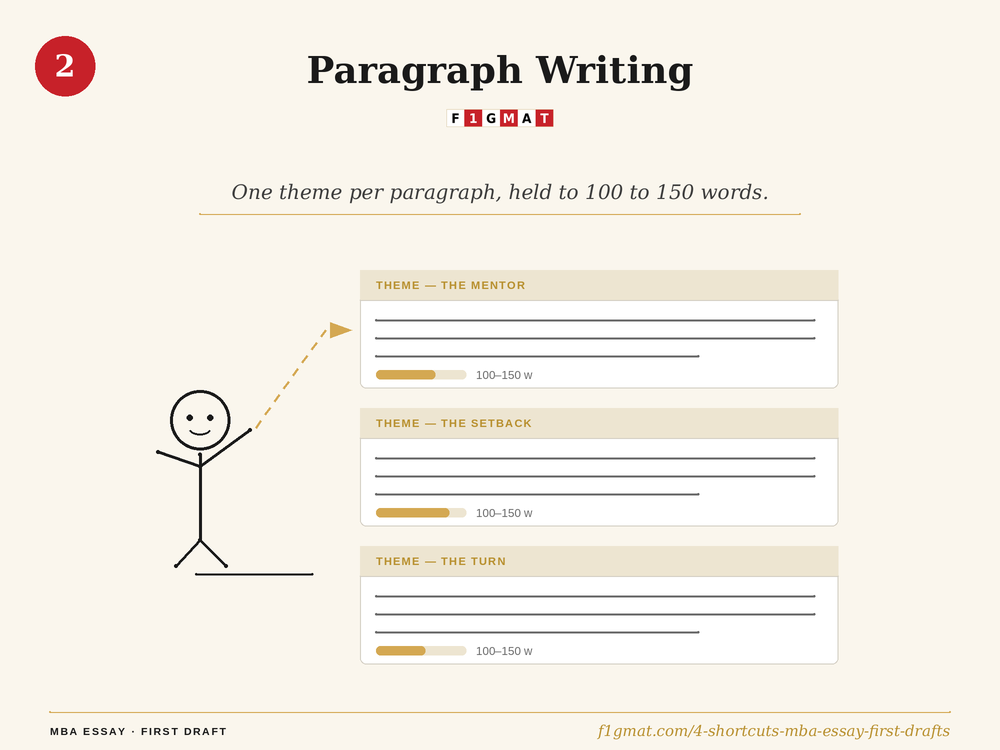
I have a theme for a paragraph then I write freely within the word limit of a paragraph which is typically 100-150 words.
You can adopt this strategy to string together multiple related themes into one coherent story.
The theme should not contradict in such a way that the reader is taken away from you to the story structure.
3) Zig Zag Writing
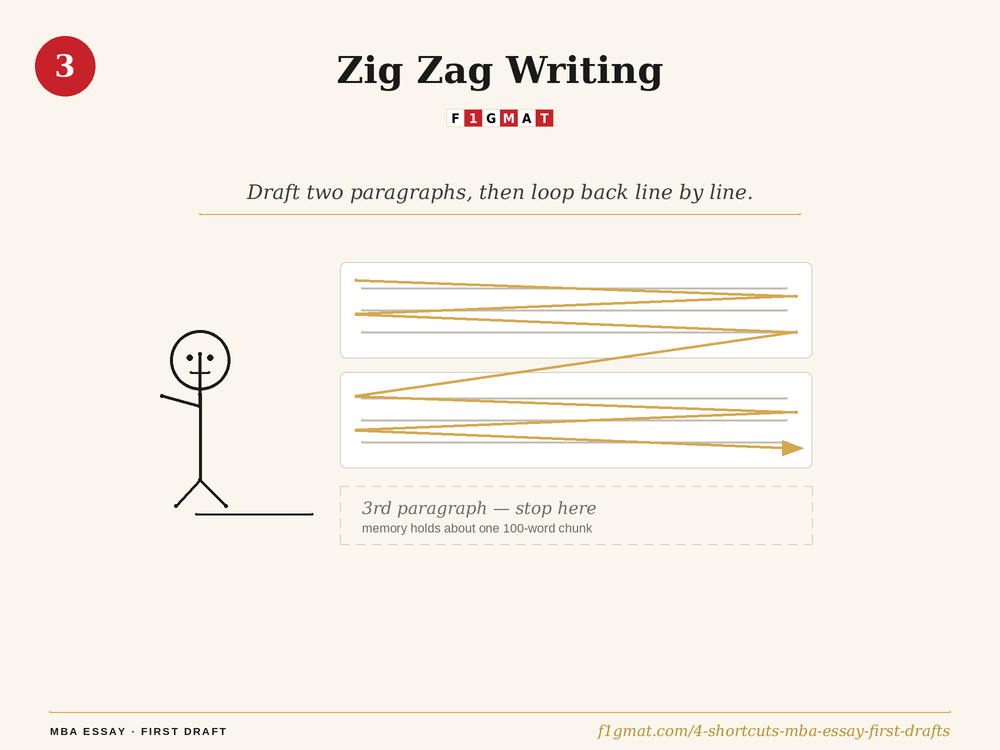
Zig Zag Writing is a combination of writing 1-2 paragraphs, then going back to each line starting from the first paragraph and improving the structure and transitions of both paragraphs.
If you try to use zig-zag writing for 3 paragraphs, it is tough because we remember information in chunks of 100 words.
So I recommend limiting your zig zag writing to 2 paragraphs.
Keep iterating through the two paragraphs until you have a version that is authentic.
4) Iterative Writing and Editing
This is a process that I use while editing MBA application essays.
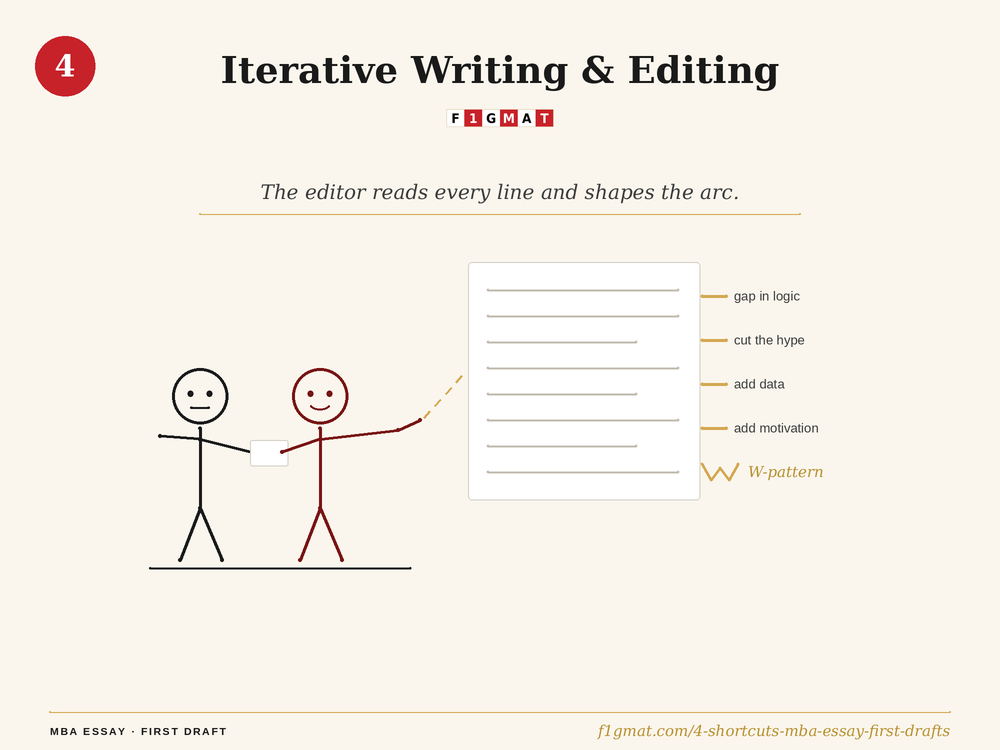
The client writes a version of the essay.
I go line by line, point out inconsistencies or gaps in comprehension or spot exaggerations or suggest adding data or highlight lack of motivation or even help clients understand the importance of W-Patterns – a structure of storytelling that keeps the admission team's interest in your profile.
And there is no one style of writing the first draft that is going to work for you.
Some don't want to go back to their first paragraph without completing the entire narrative.
Some want to make sure that they perfect the first paragraph before moving to the second and third, and fourth.
If you need my help with Editing your MBA Application Essays, Subscribe to F1GMAT's Essay Editing Service
You can also see how I write essays by Downloading F1GMAT's Essay Guides
