The Knight-Hennessy Scholars program is one of the most prestigious graduate scholarships housed at Stanford University. It was established to foster a global, interdisciplinary community of future leaders, offering not just financial support but also opportunities for personal and professional development. The program supports scholars to address complex challenges through visionary leadership, cross-cultural collaboration, and multidisciplinary understanding.
In this in-depth analysis of approaching the Knight-Hennessy Scholarship and American Scholarship short-answer questions and essays, we cover:
• Mission and Values
• Background Information
• Eligibility, Funds Offered, and Scholarship Benefits
• Ideal Candidate – Personality Types and Traits
• What to Highlight
• What Not to Highlight
• How to Stand Out
• Short Answers – Tips
• Essay - Tips
Mission and Values
“The goal of Knight-Hennessy Scholars (KHS) is to educate and prepare a community of scholars for leadership roles in academia, industry, government, nonprofits, and the community at large.”
The mission of Knight-Hennessy Scholars is to nurture leaders who will drive positive change across industries, governments, nonprofits, and academia. The core values revolve around three pillars: Independence of Thought, Purposeful Leadership, and a Civic Mindset. The program emphasizes multicultural perspectives, collaborative learning, and a commitment to the greater good, with the aim of creating a transformative experience that will enable graduates to make a meaningful impact on the world’s most pressing issues.
Background Information of the Fund – Why the Fund Was Developed
Founded in 2016 by Phil Knight, co-founder of Nike, and John Hennessy, Stanford’s 10th president, the Knight-Hennessy Scholars program emerged from the recognition that modern leadership requires more than academic brilliance—it demands a deep understanding of global issues and interdisciplinary cooperation.
Knight and Hennessy envisioned a community of diverse scholars equipped to navigate complex challenges, whether in climate change, healthcare, or education. Their $750 million endowment established Knight-Hennessy as the largest fully endowed graduate fellowship in the world.
Eligibility, Funds Offered, and Scholarship Benefits
Knight-Hennessy Scholars are graduate students across Stanford’s seven schools. Scholars receive funding for up to three years, which covers full tuition, living expenses, and travel allowances.
In addition to financial support, scholars benefit from leadership development programs, the King Global Leadership Program (KGLP), and the opportunity to work on innovative projects like the KHeystone Project. The program’s multicultural environment encourages collaboration and life-long connections with peers from various disciplines and countries.
Ideal Candidate – Personality Types and Traits
The ideal Knight-Hennessy scholar embodies several key traits that align with the program’s values:
• Independence of Thought: Visionary thinkers who are open-minded, curious, and driven by the excitement of addressing global challenges.
• Purposeful Leadership: Ethical, resilient, and motivated individuals who inspire others and make decisive moves toward large-scale, positive change.
• Civic Mindset: Collaborative leaders with a passion for service, empathy, and the desire to contribute to the greater good.
• Cross-Cultural Perspective: Those who embrace diversity, learn from different perspectives, understand that complex issues require cooperation across boundaries.
• Innovative Problem Solving: Individuals who are not only prepared to tackle existing problems but are also proactive in envisioning future solutions.
These traits are developed and nurtured throughout the scholar’s journey, from participating in leadership workshops to working on high-impact projects addressing issues such as education inequality, mental health, and healthcare access.
What to Highlight
When crafting your essay, focus on showcasing experiences that demonstrate a multicultural and multidisciplinary mindset. Knight-Hennessy scholars are expected to tackle global challenges, and that requires adaptability and a broad perspective.
Highlight moments where you worked with diverse teams or on cross-disciplinary projects. Be specific—mention how these experiences helped you grow as a leader or problem-solver. For example, the scholarship emphasizes the need for "visionary thinkers who are curious, open-minded, and eager for cross-cultural perspectives." If you've engaged in activities that pushed you beyond your comfort zone or challenged you to approach problems creatively, this is your time to shine.
Also, don’t forget to mention your commitment to meaningful change.
Knight-Hennessy scholars are driven by purpose, with a passion for solving significant world issues. Whether it’s through community service, social impact work, or leadership in a professional setting, emphasize your "resilience, ethical leadership, and drive to inspire others to achieve positive change at scale."
 Work with Atul Jose - Founding Consultant and Essay Specialist
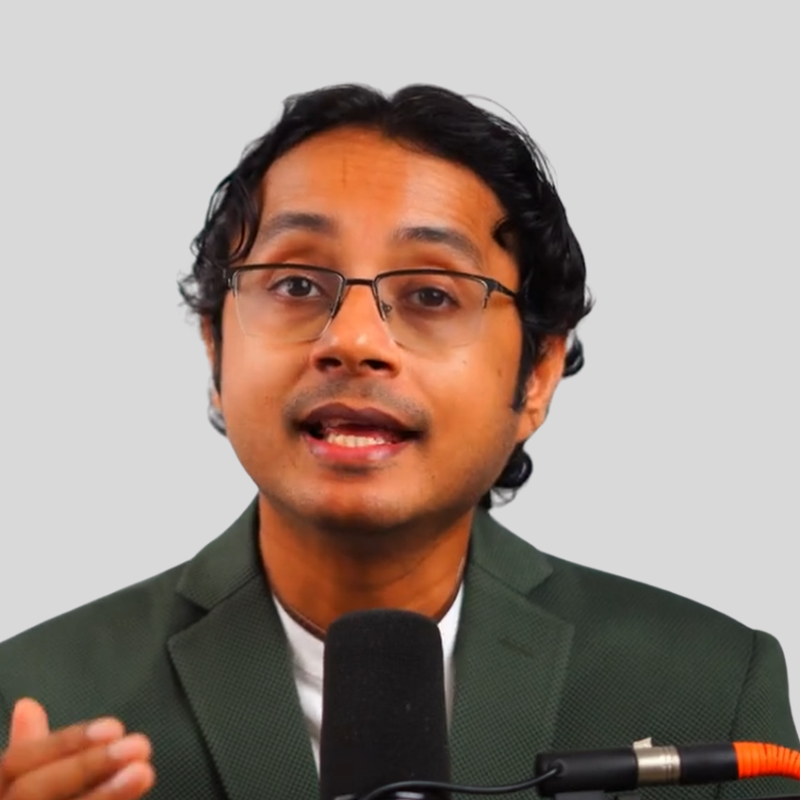 Work with Atul Jose - Founding Consultant and Essay Specialist
With the word limit typically in the 500 to 1500 range, it is not easy to structure the essay without losing momentum.
I, Atul Jose - F1GMAT’s Lead Consultant and Essay Specialist, will help you structure the scholarship essay by:
1) Shortlisting relevant life stories
I will help you find unique life experiences that would differentiate you from the highly competitive scholarship application pool.
2) Structuring the Essay
I have developed a keen sense of storytelling from over a decade and a half of editing essays and writing essay examples for F1GMAT’s Essay Guides.
The skills that a writer/editor brings to the table are different from what a former admissions officer or a consultant who has limited writing skills brings
Review Skills # Writing Skills
Movie Critics # Movie Directors
It is easy to comment, but it is tough to structure the essay from the perspective of the applicant and turn the essay into a winning scholarship essay.
3) Aligning with the Mission of the Fund
A big part of editing and guiding applicants is in educating them about the mission of the fund.
Some funds have very ‘specific’ traits that they are looking for in an applicant.
If you don’t highlight them and lean towards general leadership narratives, the essay won’t work.
I will guide you through the writing process.
I will also iteratively edit the essays without losing your original voice.
Subscribe to F1GMAT's Scholarship/Fellowship Essay Editing Service for help
For any questions about the service, email me, Atul Jose, at [email protected]
What Not to Highlight
While achievements are important, don't turn your essay into a laundry list of accolades.
Knight-Hennessy is not just looking for high-achievers; they are searching for leaders with humility and a civic mindset.
Avoid boasting about personal accomplishments without tying them to a larger impact.
For instance, focusing too much on personal gain can undermine the values of the scholarship. The program prioritizes scholars who are "oriented to act in service of others" and passionate about the greater good, so an overly self-centered narrative might raise red flags.
Generic or traditional leadership stories might fall flat in an environment that celebrates bold, creative thinkers.
Steer clear of overly formal or stiff descriptions—Knight-Hennessy scholars are encouraged to explore "creative problem-solving, decision-making during uncertainty, and effective collaboration," so highlight experiences that reflect these dynamic, forward-thinking qualities.
How to Stand Out
To stand out, show how you align with the multidisciplinary and multicultural ethos of the program.
Present specific examples of projects where you worked across fields or cultures, demonstrating your ability to navigate different perspectives.
Share innovative ideas you have developed and how you’ve led initiatives that positively impacted communities. Most importantly, convey your long-term vision for how you will apply the Knight-Hennessy experience to address global challenges and make a difference.
In the following section, we will delve into essay tips to help you effectively articulate your personal journey, values, and aspirations in a way that resonates with the Knight-Hennessy Scholars program's mission.
Short Answers - Tips
Short Answer: The short-answer questions invite you to share in your own words what you have done, who you are, and what you aspire to do in the future.
1. Describe your short-term and long-term academic and professional intentions. (250-word limit)
How to Approach
1. Introduction: Story Context and Personal Motivation
Start with a personal story highlighting an impactful experience shaping your career intentions. The story should reflect values aligning with Knight-Hennessy Scholars' values, such as leadership, innovation, and service. This adds depth and clarity to your goals.
Example: Look at Daniel’s journey. Growing up in Mexico, Daniel witnessed economic disparities firsthand and realized at 16 that his region’s inequalities fuelled his passion for economics and social entrepreneurship. This early realization led him to explore ways to address systemic issues through business ventures.
2. Short-term Goals: Immediate Academic and Career Plans
Clearly state your immediate academic and professional goals post-MBA or after your master's degree. Focus on the next 1–3 years, outlining specific roles, companies, or industries you aim to join and the impact you want to have.
Example: Daniel initially joined a startup in New York focused on mental health services post-Stanford MBA. His short-term goal involved using his skills to scale mental health solutions across underserved regions, leveraging his entrepreneurial background.
Knight-Hennessy Alignment: Connect this to how the Knight-Hennessy Scholars program’s academic and leadership training would enhance your ability to meet these short-term objectives. Be specific about how opportunities like retreats, seminars, or access to faculty can help you achieve these goals.
Example: Mention how the Knight-Hennessy retreats, such as those Daniel attended at Asilomar and Sierra Camp, provided transformative learning experiences. Explain how you expect to benefit from similar opportunities.
3. Long-term Goals: Vision for Impact and Growth
Describe your long-term vision, typically 5–10 years down the line. Show how you intend to create systemic change or innovate in your chosen field. Emphasize your desire for large-scale impact, tying it to the Knight-Hennessy ethos of shaping global leaders who address complex challenges.
Example: Daniel’s long-term ambition was to return to Latin America to establish a company that generates better financial and social outcomes for underserved populations, aligning with Knight-Hennessy’s focus on driving progress through bold leadership.
Knight-Hennessy Impact: Discuss how Knight-Hennessy’s interdisciplinary, collaborative, and global community would enable your long-term success. Mention specific mentors, faculty, or alumni who could guide you in scaling your impact.
Example: As Daniel was inspired by Knight-Hennessy scholar Alain Pineda and GSB alum David Velez, highlight a similar connection to a mentor that motivates you.
4. KHS Program Integration: Leveraging the Community
Detail how the Knight-Hennessy Scholars program specifically supports your goals. Be precise in discussing how access to guest speakers, hands-on projects, and leadership training will directly contribute to achieving your short- and long-term objectives.
Example: Daniel participated in a Travel Study trip to South Africa with fellow scholars. Describe how such unique learning experiences could give you a fresh perspective on your industry’s challenges and broaden your understanding of global issues.
Community Engagement: Express your intent to actively engage with the Knight-Hennessy community. Explain how the diverse backgrounds of the scholars can shape your perspective and help you achieve your goals.
Example: Daniel mentioned how being part of the KHS community opened up new pathways and lifelong friendships. Highlight how similar interactions can expand your global network and increase your chances of success.
5. Conclusion: Summarizing Vision and Values Alignment
Summarize your aspirations, tying them back to your original motivation and the Knight-Hennessy mission. Reinforce how your academic and professional goals align with KHS’s core values, such as leadership, service, innovation, and global impact.
Example: Daniel’s long-term aim of improving the financial health of underserved Latin American populations aligns with KHS’s vision of empowering scholars to address critical challenges in their regions.
2. Please tell us when you: a) engaged with someone with a different perspective, b) acted with courage, and c) fell short of expectations. (250-word limit combined)
How to Approach
To approach this short question, you must focus on showcasing the key values of the Knight-Hennessy Scholars (KHS) program: leadership, resilience, and an open-minded approach to diverse perspectives. KHS emphasizes building a community of leaders who are innovative and committed to global progress. Your response should reflect how your experiences align with KHS's mission to empower scholars to challenge the status quo, embrace global challenges, and continuously grow from their experiences.
1. Introduction: Setting the Stage
Start by briefly introducing the importance of engaging with diverse perspectives and demonstrating courage, particularly in global leadership. Relate this to the program’s emphasis on developing leaders who can collaborate across cultures and sectors.
Example: For instance, in his interview, Daniel discussed how his experiences working with social entrepreneurs across Latin America exposed him to differing perspectives and challenges, which expanded his worldview. Highlighting this helps reinforce the value of diversity in thought and action, which is central to the KHS program.
2. a) Engaging with Someone with a Different Perspective
Begin by narrating a specific situation where you interacted with someone who held a different perspective or worldview. Describe the challenge that arose from these differences and highlight how you approached it with an open mind.
A study by McKinsey found that organizations with diverse leadership teams were 36% more likely to outperform their peers. This highlights the importance of engaging with diverse perspectives to drive innovation and success.
Most persistent challenges are around navigating beliefs around culture that require a person who respects and strategically highlights common ground to bring change.
Example: For instance, Daniel engaged with social entrepreneurs across Latin America, each working in different socio-economic contexts. Similarly, your example should illustrate how you actively listened, respected the other person's viewpoint, and used that engagement to create a positive outcome. Provide details about the context (e.g., cross-cultural, academic, or professional) and reflect on how this experience helped you grow as a leader.
3. b) Acting with Courage
Courage is one of the defining traits of a Knight-Hennessy scholar. Describe a situation where you acted with courage, whether it was in a professional, academic, or personal setting. Be specific about the challenges you faced, why the situation required courage, and what was at stake. Did you challenge conventional thinking? Did you take a risk that others avoided?
Explain how this aligns with the Knight-Hennessy value of creating leaders who are unafraid to take bold action.
Research by the International Leadership Association shows that leaders who exhibit courage are more likely to foster trust and innovation in their organizations.
Courage could mean confronting current systems, best practices, or incentive structures.
Courage could also mean building public opinion against an exploitative practice or an incentive structure that encourages inefficiency.
Example: Daniel Reyes’s work in social entrepreneurship often required courage, especially when dealing with complex social and economic problems in underserved regions. For instance, he took bold steps at Muni to address inequality by providing additional income and savings opportunities for communities. Your example should similarly show how you tackled a tough issue despite fear or uncertainty and how this decision contributed to a positive outcome.
4. c) Falling Short of Expectations
According to a Harvard Business Review, leaders who openly acknowledge and learn from their failures are more likely to foster a culture of continuous improvement in their teams.
Knight-Hennessy scholars are expected to demonstrate resilience and adaptability.
In this part, describe a time when you fell short of expectations, whether personally or professionally.
Be honest and reflect on why you fell short and, most importantly, how you responded to it.
Did you learn from the failure?
Did you seek feedback and improve?
This reflection is critical because KHS values scholars who are self-aware and continuously strive for growth.
Example: You might reference how Daniel learned from the limitations of nonprofits and transitioned to social entrepreneurship, where scalability was more feasible.
In your case, highlight how your failure led to a critical learning moment that shaped your leadership and problem-solving abilities.
5. Conclusion: Growth and Alignment with Knight-Hennessy Values
Conclude by tying all three experiences back to the Knight-Hennessy mission.
Emphasize how each of these experiences engaging with diverse perspectives, acting with courage, and learning from failure has shaped you into a leader who is ready to contribute to the KHS community.
Highlight the program’s goals of cultivating leaders who are resilient, globally minded, and committed to positive change.
3. Please tell us eight improbable facts (things that are unlikely but true) about you. (150-word limit combined)
How to Approach
The Knight-Hennessy Scholars program asks applicants to share “eight improbable facts” as part of its application process. This unusual prompt serves a specific purpose: it seeks to uncover unique, authentic aspects of your identity and experiences that are not easily discerned from traditional academic or professional accomplishments. This question is designed to dig deeper into your personal story, highlighting what makes you stand out from other highly qualified candidates.
This question reflects the program’s overarching goal of nurturing leaders who will drive positive change across industries, governments, nonprofits, and academia.
The prompt isn't just about finding quirky or surprising things about you, like the Fuqua 25 Random Things About you.
Motivation Behind the Question
The "improbable facts" question is a unique way to assess candidates' multicultural perspectives, curiosity, and independence of thought, all of which align with the program's mission and pillars.
By asking for unexpected or unusual facts, KHS encourages applicants to showcase their authentic selves beyond traditional metrics of success. It’s a way to see how candidates exhibit purposeful leadership through their civic mindset, how they think independently, and how their experiences reflect their commitment to the greater good.
This prompt likely originated from a desire to humanize applicants and allow them to present aspects of their lives that might not fit into conventional categories like "academic excellence" or "career achievements."
By asking for “improbable” facts, the program is also encouraging applicants to move away from typical resume-driven descriptions and dig into the nuances that make them unique.
Connection to Knight-Hennessy’s Core Values
The question aligns with KHS's mission to nurture leaders who will tackle global challenges. By presenting improbable facts, you demonstrate:
• Independence of Thought: Sharing facts that showcase unique perspectives, intellectual curiosity, or experiences that differ from the norm.
• Purposeful Leadership: Highlight how certain improbable facts reflect moments where you took initiative, led in unconventional ways, or pursued goals with a sense of purpose.
• Civic Mindset: Some facts can reflect your contributions to the community, cross-cultural engagement, or a commitment to making an impact for the greater good.
This question likely originated as a way to gauge applicants' ability to stand out while embodying the qualities that the program seeks to foster in its scholars.
Key Attributes of Knight-Hennessy Scholars
Knight-Hennessy Scholars typically possess several key traits that can inform how you approach this question:
• Global Citizenship: Scholars are expected to have a deep sense of responsibility toward global challenges. Sharing experiences that reflect your global perspective or intercultural understanding could be highly impactful.
• Diverse Leadership: The program values leadership that takes many forms. Some scholars lead in their communities, others in scientific research, and others through activism.
• Personal Growth: The committee is also looking for applicants who demonstrate growth through adversity or learning from mistakes, showing a willingness to adapt and evolve.
Tips for Approaching This Question
• Highlight Unique and Unexpected Aspects of Yourself: Think about experiences, talents, or characteristics that differentiate you from other candidates. These can be personal anecdotes, skills, or events that are rare or extraordinary in some way.
• Showcase Diverse Sides of Your Personality: Don’t limit yourself to one domain of your life (e.g., academic or professional). Include a mix of personal, cultural, intellectual, and perhaps even humorous facts that present you as a well-rounded individual.
• Connect to Program Values: While the question might seem light-hearted, you should still align your responses with the qualities that Knight-Hennessy seeks. For instance, if you traveled to volunteer in a foreign country, that could connect with the program’s values of leadership and global engagement.
• Be Honest and Vulnerable: Don’t shy away from sharing facts that reveal challenges or failures you’ve faced. The question gives you space to be vulnerable, showing resilience in your personal growth.
• Provide Context if Needed: Some facts might need a brief explanation to showcase why they are improbable or significant. While keeping it short, providing context will help the admissions committee understand the deeper meaning behind the fact.
• Balance the Serious with the Playful: Feel free to include light-hearted or quirky facts alongside more serious ones. This helps convey a well-rounded personality and shows that you are comfortable not taking yourself too seriously.
• Keep It Concise and Impactful: Each fact should be a couple of sentences at most, as the word limit is 150. Be concise, but aim to evoke curiosity and provide a sense of who you are beyond your resume.
Example from Knight-Hennessy Scholar - Mr. Hicke
Mr. Hicke, a Knight-Hennessy Scholar, exemplifies a well-rounded approach to this kind of question. His background includes a mix of academic excellence and diverse personal experiences. Drawing from his example, you can structure your "improbable facts" in a way that reflects broad interests and dynamic leadership.
For instance:
• Diverse experiences: Mr. Hicke might share something like, “I once spent six months working on a farm in rural Tanzania to better understand microfinance's impact on rural economies."
• Purposeful Leadership: He might also include, “I organized a cross-cultural conference on sustainable business practices in Latin America while still in university,” which demonstrates purposeful leadership through global impact.
• Civic Mindset: Mr. Hicke could further highlight his commitment to the greater good by sharing, “I developed a social impact project that connected underprivileged youth with mentorship opportunities in the tech industry.”
• Global perspective: His multicultural background could inform improbable facts, such as, “I’ve lived on three different continents before the age of 25.”
Using this approach, you could also reflect on moments that shaped you as a leader, highlighting challenges you overcame or unique situations that taught you valuable lessons.
Best Possible Things to Include – Eight Improbable Facts
When crafting your own eight improbable facts, keep the following points in mind:
• Cross-cultural experiences: Describe unusual experiences that exposed you to diverse perspectives or cultures.
• Personal achievements or talents: Include facts about skills or accomplishments that are uncommon but showcase your ability to succeed in different environments.
• Challenges and resilience: Highlight improbable personal stories where you had to demonstrate perseverance or creativity in overcoming challenges.
• Leadership in unexpected contexts: Share moments where you led in situations where leadership was needed but not typically recognized (e.g., organizing a grassroots community event).
• Unusual learning experiences: Have you studied something obscure or developed expertise in an area unrelated to your field? Highlight it to show your intellectual curiosity.
By combining all of these elements, your eight improbable facts can serve as a vivid snapshot of who you are, reflecting the spirit of the Knight-Hennessy Scholars program. This is an opportunity to express your individuality while still aligning with the program’s core values.
Knight-Hennessy Scholarship Essay - Tips
Essay: The essay prompt invites you to reflect deeply on your life’s journey and the people, events, and circumstances that have impacted it. There is no right answer, topic, or format — only you can tell your own story — and yet we hope you will focus much less on what you have done and much more on who you are. The strongest essays balance introspection with recognition of external influences and are so personal that no one else could have possibly written it. The essay topic: Connect the dots.
How have the influences in your life shaped you? (500-word limit)
How to Approach
The Knight-Hennessy Scholars program seeks applicants who have not only achieved personal success but also demonstrated the ability to reflect deeply on the factors that have shaped their identity, worldview, and leadership potential. This essay offers a unique opportunity for applicants to share their journey in a way that aligns with the mission and values of the program—Independence of Thought, Purposeful Leadership, and a Civic Mindset.
1. Start with Genuine Self-Reflection
The prompt asks for introspection, focusing more on who you are than on what you’ve done. The first step is to reflect on your journey—your life experiences, values, and motivations. Think deeply about the moments, people, or circumstances that have shaped your worldview. The strongest essays will be personal, revealing insights that only you can share. Avoid focusing on external achievements or qualifications and instead dive into your inner world.
Ask yourself: What key events or influences in my life have significantly shaped my character and values?
Connection to Knight-Hennessy’s Core Values: As you reflect, consider how your experiences have fostered your Independence of Thought, Purposeful Leadership, and Civic Mindset. These qualities are central to the Knight-Hennessy Scholars program, and your ability to link your personal journey to these values will strengthen your essay.
2. Identify Key Influences
The essay prompt encourages you to connect the dots between the influences that have impacted your life. These could be personal relationships, cultural experiences, challenges, or even failures that have helped you grow.
Knight-Hennessy looks for leaders who are open-minded, resilient, and innovative—traits often developed through diverse life experiences.
Highlight specific influences: Were you inspired by a mentor? Did a specific experience—like volunteering in a different culture or leading a team under challenging circumstances—transform your perspective? Be specific about the external factors and how they have shaped your identity.
Example: Take inspiration from Knight-Hennessy Scholar Jean-Philippe Hicke. His experience working across cultural boundaries and leading cross-sector projects shaped his Purposeful Leadership and Civic Mindset. He could say, "Growing up in a multicultural family, I learned to navigate different worldviews, which later became the foundation of my ability to lead with empathy and purpose."
3. Create a Coherent Narrative
While reflecting on various influences, it is essential to connect them in a coherent way that builds toward who you are today. The essay prompt explicitly asks for the “connections” between these influences. Avoid presenting your experiences as isolated anecdotes; instead, show how each one contributes to a larger narrative of growth and purpose.
Create flow between ideas: Think of your essay as a journey, with each influence acting as a stepping stone that has contributed to your overall development. The strongest essays will connect these experiences in a way that makes sense chronologically or thematically.
Connection to Knight-Hennessy’s Mission: Knight-Hennessy Scholars are prepared to tackle complex global challenges. As you weave your narrative, highlight how your life experiences have cultivated your multidisciplinary approach, collaboration skills, and commitment to the greater good—key elements of the program’s mission.
4. Focus on Personal Growth and Values
Knight-Hennessy wants to know who you are, not just what you have accomplished. While discussing external influences, focus on how these experiences have shaped your core values, leadership style, and vision for the future.
Use this opportunity to show how you embody the program’s pillars: Independence of Thought, Purposeful Leadership, and a Civic Mindset.
Be authentic: Don’t try to fit into a preconceived model of what you think the program is looking for. The most compelling essays are deeply personal, showcasing vulnerability and self-awareness.
Example: Consider how Mr. Hicke might frame his essay. He could discuss how growing up in diverse environments fostered his Civic Mindset and motivated him to lead initiatives aimed at bridging societal gaps. For instance, “Volunteering in rural communities ignited my passion for healthcare access, shaping my purpose to lead initiatives that promote equity.”
5. Balance Internal and External Factors
While the essay focuses on personal introspection, it is important to also acknowledge the external forces that have impacted you. This balance of internal reflection and external influence is key to a well-rounded narrative.
Example of Balance: You might explain how your family’s financial struggles pushed you to be resilient and independent while also discussing how a mentor or community support network helped you rise above these challenges.
Connection to Knight-Hennessy’s Vision: The program values collaboration and cross-cultural understanding. Consider discussing how you’ve been influenced by different cultures or communities and how this shapes your approach to leadership and problem-solving.
6. Link Your Journey to Future Goals
As you connect the dots of your past influences, ensure that your essay also looks forward to how these experiences will shape your future, particularly in the context of the Knight-Hennessy Scholars program. The scholarship is designed to prepare leaders who will tackle global challenges, so highlight how your past experiences have prepared you to take on future leadership roles that align with this mission.
Set a clear vision: How do the influences in your life lead you to a greater purpose or mission? What change do you hope to drive as a result of these experiences?
Connection to Knight-Hennessy’s Goal: Ensure that your future aspirations align with the Knight-Hennessy mission of driving positive change across industries, governments, and communities. For example, if you’ve worked on healthcare access initiatives, you might describe how the program will help you scale these efforts globally.
7. Stay Humble and Service-Oriented
Knight-Hennessy scholars are selected not only for their leadership potential but also for their humility and dedication to serving others.
Avoid coming across as overly self-promotional or focused on personal gain. Instead, emphasize how the influences in your life have driven you to contribute to the greater good.
Example: Instead of focusing on personal accomplishments, frame them within the context of how they have enabled you to make a difference.
“While leading my university’s social impact club, I learned that leadership is not about being at the forefront but about creating opportunities for others to grow.”
Connection to Knight-Hennessy’s Values: Demonstrate a Civic Mindset by highlighting your commitment to service, collaboration, and a desire to create lasting impact beyond personal achievements.
8. Keep it Personal and Unique
Finally, the essay prompt stresses that the strongest essays are deeply personal and unique.
Ensure that your essay is a reflection of your authentic self—something that no one else could write.
Avoid clichés or generic leadership stories.
Knight-Hennessy values visionary thinkers who can navigate uncertainty and think independently, so don’t shy away from sharing unconventional experiences or perspectives.
Focus on your individuality: Share the experiences and perspectives that make you distinct, even if they don’t fit traditional leadership narratives.
Conclusion
In answering this essay question, your goal should be to create a narrative that reflects your personal journey while also aligning with Knight-Hennessy’s values of Independence of Thought, Purposeful Leadership, and a Civic Mindset.
By sharing how external influences have shaped your growth and vision for the future, you will demonstrate that you are not only a capable leader but also someone who can contribute meaningfully to the global challenges of tomorrow.
Reference