Kellogg's Adcom reads close to 5,200 applications each admissions cycle and values applicants who bring intentionality to their writing.
Intentionality means three things: a specific post-MBA role at a specific kind of company, a Kellogg faculty member or course that gets you there, and one moment from your past that proves you fit the Kellogg culture.
F1GMAT's Kellogg MBA Essay Tips Guide covers: the five applicant archetypes that map to Kellogg's most common goal targets, the three faculty members worth naming and what each teaches; the ten specializations and the two-pairing logic that beats the one-specialization default; the non-coursework assets named by what they do, and the recurring themes Class of 2026 students gave as their reason for choosing Kellogg.
Contents
- What Changed in the 2026–2027 Kellogg MBA Application
- Overview and History of the Kellogg MBA
- Kellogg MBA Mission, Vision, and Values - What the Admissions Committee Looks For
- The Ideal Kellogg MBA Candidate
- Kellogg MBA Essay Tips: The Single 550-Word Essay (Part I)
- The Journey — Build a Hero Origin Story Around a Real Turning Point
- Why Now — Mix Industry Development and Personal Development
- Goals — Measure Feasibility with Placement Data
- Refining your Kellogg MBA Goals Essay with Employment Data
- Why Kellogg — Name a Faculty, A Course, and a Specialization
- Non-Coursework Kellogg MBA Assets and How to Use Them
- Centers of Excellence at Kellogg MBA - Who Should Quote Them?
- Kellogg MBA Essay Tips: The Contribution Essay (Part II)
- Kellogg MBA Video Essay Tips — Five Questions, 60 Seconds Each
- Internalize, Don't Memorize — Use The Secret Actors Use
- Kellogg MBA Reapplicant Essay Tips (250 Words)
- Common Mistakes in Kellogg MBA Essays
- Kellogg MBA Essay Tips — Final Pre-Submit Checklist
- References
What Changed in the 2026–2027 Kellogg MBA Application
- One 550-word essay question answered in two parts has replaced two 450-word essays. Net loss: 350 words of written space, a 39% reduction.
- The video essay grew from 3 questions to 5, each timed at 60 seconds. Net gain: 67% more video weight.
- The optional / extenuating-circumstances essay was removed entirely.
- The 250-word reapplicant essay remains the same
- Round 1 deadline is September 9, 2026 (decision December 9). Round 2 deadline is January 6, 2027 (decision March 24). Round 3 deadline is March 31, 2027 (decision May 12).
- Generative AI is now considered “supplementary”. We can infer that the number of video questions was increased because the admissions team found a high percentage of AI-assisted writing. Use your own written voice for the video. Script them.
- Kellogg is using the increased video essay questions to validate the voice written in the essay.
Overview and History of the Kellogg MBA
Founded in 1908 as The School of Commerce, Kellogg was the first to introduce the One-Year MBA in 1965. The school was also the first to pioneer team-based learning in 1969.
In 1979, the school was named the J.L. Kellogg Graduate School of Management following a foundation gift that also funded the James L. Allen Center for Executive Education.
The two-year Full-Time MBA program begins in September. With a core curriculum in accounting, marketing, finance, and operations, the MBA program offers eight majors (or a General Management track), and cross-functional pathways in AI & Analytics, Private Equity & Venture Capital, and Sustainability.
Students can waive core courses based on prior experience. There is a catalog of 1,000 hands-on learning opportunities, including an option to choose one of 20+ exchange programs.
Kellogg MBA Mission, Vision, and Values - What the Admissions Committee Looks For
Mission: “Prepare our graduates to think creatively, lead authentically, and embrace change with confidence.”
Vision: Develop business leaders who create a significant positive and sustainable impact on the world.
Kellogg’s admissions committee evaluates your goals against:
- Ethics: You should display a strong ethical foundation while narrating leadership choices
- Collaborative mindset: The decisions you made should have some elements of 'how it impacted' my team or client or stakeholder angle.
- Global perspective: For problems that require cross-border regulatory knowledge, the essay or example must explictly use lines that show you knowledge of international markets
- Growth with Mentors: When citing examples where you grew, include mentors, alumni and cite the value of career service teams. Kellogg has a strong career service team. You should show awareness of their efforts.
- Research and Data-driven decision making: Another important trait the Kellogg MBA Admissions team measure is your research capabilities. A phrase or a line showing the 'effort' you took to do the research - field visit, networking beyond the obvious source and connecting disparate data are all examples of data-driven decision making.
- Inclusive: Kellogg strongly believes in inclusive classes. The class profile is the biggest evidence - 50% women (Class of 2026. First M7 to reach gender parity), 21% Asian American, 17% Hispanic/Latinx American, 7% U.S. underrepresented minorities, 11% LGBTQ+, 9% U.S. military veterans (Class of 2027, record high under the new Matt Caldwell Veterans Program), 10% first-generation college students, and 37–40% international.
The Ideal Kellogg MBA Candidate
Kellogg values candidates who demonstrate empathy and can collaborate cross-culturally.
Successful Kellogg MBA candidates exhibit:
- Collaborative leadership: Comfort and willingness to engage with diverse teams and employ the diverse perspectives they bring to the discussions.
- Innovation and adaptability: The courage to challenge conventional thinking, use data-driven analysis to build the counterintuitive case, and receive buy-in to implement them in uncertain market or functional environments.
- Ethical decision-making. A strong sense of right vs. wrong and the integrity to traverse the tough but right path, which upholds social responsibilities
- Global mindset. An appreciation for cultural diversity and an interest in international business dynamics.
- Resilience and self-awareness. The ability to grow from challenges and bring a purpose-driven approach to leadership.
Kellogg MBA Essay Tips: The Single 550-Word Essay (Part I)
The 2026–2027 Prompt
Part I: An MBA is a significant investment of time, energy, and resources, and the decision to pursue one deserves serious reflection. Tell us about the pivotal experiences and decisions that have brought you to this moment in your career, how they have shaped your ambitions, and why now is the right time to take this next step.
Part II: Now turn the lens outward: beyond what you hope to gain, what do you hope to contribute to the students who will learn alongside you? (550 words total)
How To Approach Kellogg’s 2026–2027 Essay
Part I asks you to do four things in roughly 275 words: explain the pivotal experiences that brought you here, articulate your ambitions, justify the timing, and demonstrate Kellogg fit. That averages 70 words per sub-question.
The word arithmetic is the most under-communicated fact about the new Kellogg essay.
Most applicants try to give all four sub-questions equal treatment and write a forgettable essay where nothing is fully developed.
The contrarian approach is to deliberately under-answer the sub-question that your resume and recommenders already cover, and spend the saved words on the sub-question only your essay can answer.
The Journey — Build a Hero Origin Story Around a Real Turning Point
The pivotal-experiences sub-question evaluates whether you understand your own narrative.
Kellogg is not asking for a chronology of promotions.
Kellogg is asking for the story-defining moments that explain how you became someone whose ambitions logically lead to an MBA.
This is the Hero Origin Story archetype, one of the most powerful narrative structures in MBA essays. F1GMAT’s framework on the Hero Origin Story archetype breaks down how to identify the moment where your character shifted from passive observer to active agent — the moment of self-recognition that everything else in your career traces back to.
Anchor the origin story to a real turning point
A hero origin story is a story structure.
A turning point is the specific moment inside that structure where the character’s trajectory changes.
The two must work together to create a memorable Kellogg MBA Essay.
The origin story tells the reader what changed about you; the turning point shows them the exact instant the change happened.
F1GMAT’s analysis of Turning Points in MBA Essays catalogs three short-story structures that work in admissions essays, modeled on O. Henry’s reversal endings, Maupassant’s irony, Katherine Mansfield’s perspective shift, and Chekhov’s epiphany moments.
Each short story structure gives you a way to draft the turning points inside your origin story.
The Maupassant Irony works when your turning point is a single moment with an unexpected reveal.
This style is best for applicants whose pivotal experience is one event (a project that exposed a system, a conversation that recontextualized everything the essay builds in the first half).
The Mansfield Perspective shift works when the turning point is internal.
This style is best for applicants whose change is psychological; a realization that was building up over weeks but became clear in one moment.
The Chekhov Epiphany works when the turning point is internal, and a perspective is developed when something you’d been observing for years becomes a clear signal to take on a new direction.
This style is best for applicants whose journey by design is slow and methodical (working in traditional industries with steep career ladders). The lessons are accumulated without a sudden epiphany. The length of the journey gives the ephipany the believability.
Choose the structure that matches your experience.
Forcing a Maupassant-style Irony onto a Mansfield-style Perspective shift will read as an engineered narrative.
Possible Selves – Finding your Professional Identity
Herminia Ibarra’s research in Working Identity (2003)[1] shows that successful career transitions require what she calls “possible selves” experimentation.
Applicants who write a clear origin story are demonstrating they’ve already done this internal work — they know which version of themselves they’re moving toward.
Joseph Campbell’s monomyth framework[2] adds the second layer.
According to Campbell, every credible hero’s journey includes a “call to adventure,” “refusal of the call,” and “crossing the threshold.”
Your Part I should contain at least one of these three structures, clearly defined with transitions and ‘big’ moments.
The mistake most applicants make
Writing a chronological resume narrative is the #1 mistake that applicants make.
“I graduated from X, joined Y firm, got promoted to Z...”
This is what your resume already says.
The journey question rewards the moment you become someone whose next step is an MBA, not the resume of someone who happens to be applying.
Example for Marcus (Marcus works for McKinsey consulting in Chicago, 4 years post-undergrad experience, targeting impact investing)
Marcus is one of 32% of Kellogg’s class coming from consulting backgrounds, with a profile that overlaps with thousands of M7 applicants. His uniqueness is his journey.
A chronological journey opener would read: “After graduating from Morehouse with a finance degree, I joined McKinsey’s Chicago office in 2022...”
This is the resume-rephrasing the AdCom advises against.
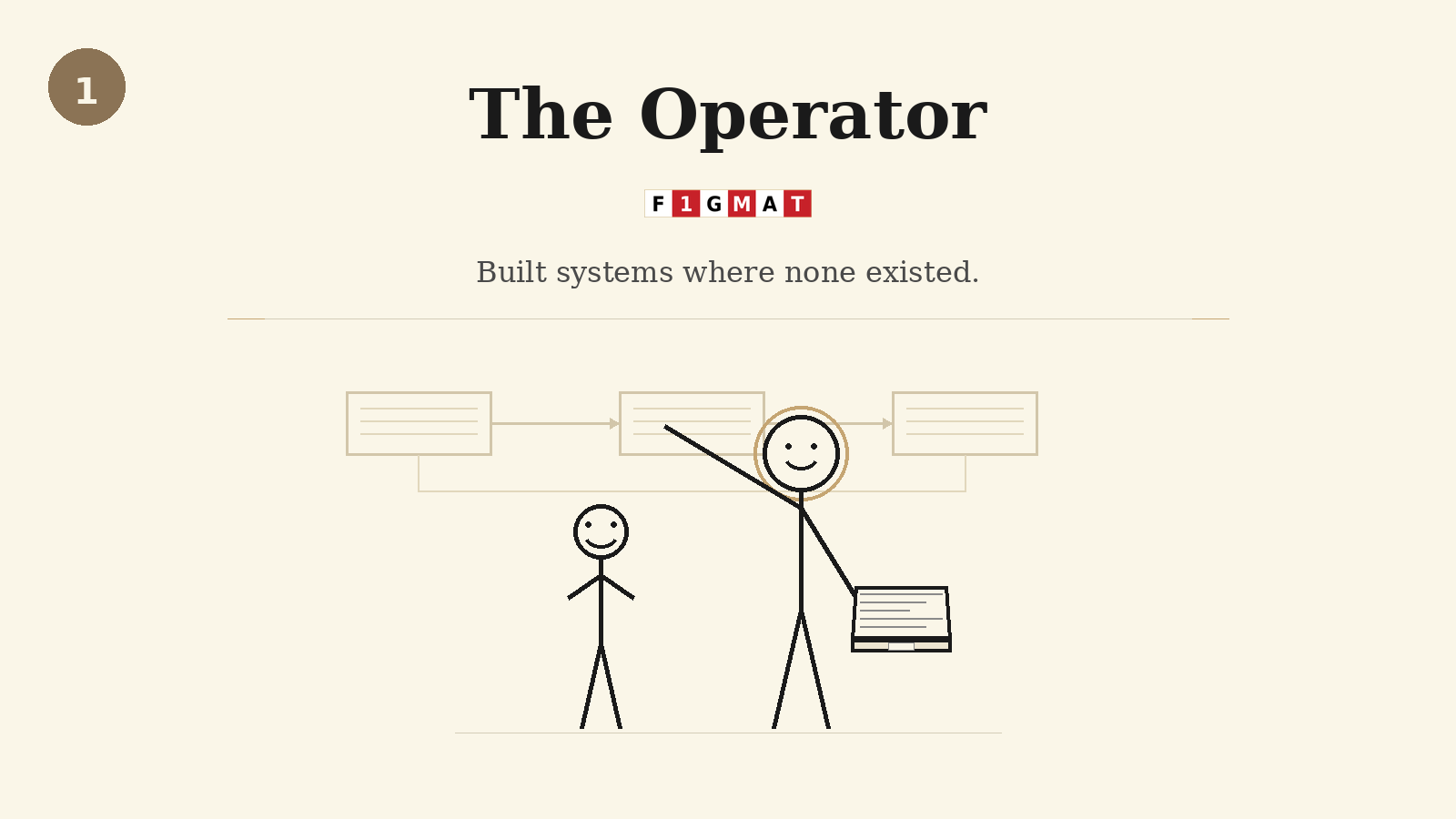
Let us use a hero’s origin story opener, built on a Chekhov-style epiphany:
“For eighteen months at McKinsey, I had been the only Black analyst on every project I staffed onto. I noticed it. I didn’t say anything. Then, in October 2024, sitting in a strategy session with a Detroit-based supplier-development client, the company’s CEO turned to me and said: You’re the only person at this table who understands what we mean by community.’ I understood the value I can offer in high-stakes conversations”
The Chekhov structure works here because the turning point is the moment a long-noticed pattern merges with a uniqueness that gave wings to that applicant.
The reader knows Marcus is real before they know his firm.
The sentence positions his career pivot toward impact investing.
The transition post-MBA Kellogg goal still is not obvious, but the opener is not a cliched resume rephrasing written in a chronological manner.
The journey sub-question deserves about 85–95 words of your Part I word budget.
Why Now — Mix Industry Development and Personal Development
“Why now” is the sub-question most applicants write badly.
The default version reads: “Now is the right time because I’m at an inflection point in my career and ready to take the next step.”
This sentence appears in approximately 30% of Kellogg essays. It means nothing.
It doesn’t reveal the triggering event, the turning points or the ‘readiness’ to take on the big leap.
The strong “why now” answer combines two timing elements - industry development (what’s shifting externally that makes a 2026–2027 MBA optimal) and personal development (what’s shifting internally that makes you ready to use it).
Why Now as a Measure of your Motivation
GMAC’s 2024 Application Trends Survey[3] found that candidates who articulate why “now” is the ideal time for an MBA are perceived as more intentional and prepared by admissions committee.
Your “why now” must show you’ve identified both the external opportunity and the internal readiness.
Industry development
F1GMAT premium publishes deep quarterly industry analyses you can cross-reference:
Consulting: See F1GMAT’s Consulting Q1 2026 Trends and Consulting Q4 2025 Trends for shifts in MBB hiring patterns, AI-driven engagement restructuring, and the rise of specialty practices.
Investment Banking: Investment Banking Q1 2026 Trends., covering the deal-volume recovery from the 2024 trough and how private credit is reshaping LBO underwriting at the sponsor-finance level.
Private Equity: Private Equity Q1 2026 Trends, with detail on extended hold periods and the operating-partner roles increasingly recruiting from MBA programs.
Venture Capital: Venture Capital Q1 2026 Trends, tracking the AI-versus-everything-else bifurcation in deal flow and the megafund consolidation reshaping associate hiring.
Technology: Technology Q1 2026 Trends, covering the AI-product-org rebuild at large-cap tech and the post-layoff rebalance in PM hiring across mid-cap firms.
Healthcare: Healthcare Q4 2025 Trends, covering the value-based-care expansion in payer-provider integration and the healthtech IPO window reopening after the 2024 freeze.
Naming a specific industry shift gives your “why now” a strong motivation.
Personal development
This is the part most applicants skip.
What changed in you over the last 12–24 months that you weren’t ready for an MBA two years ago?
Examples: a project that exposed your skill gap, a promotion that revealed the ceiling of your current skills, a deliberate test of a possible future role through a side project, a family or life event that shifted your time horizon, and financial readiness through specific milestones.
The two forces must align.
An industry shift without personal readiness reads as opportunistic.
Personal readiness without industry timing reads as lacking self-awareness.
Example for Sofia (Mexican-American, Hispanic/Latinx; Goldman Sachs investment banking analyst in NYC, 3.5 years post-undergrad, targeting climate tech investing):
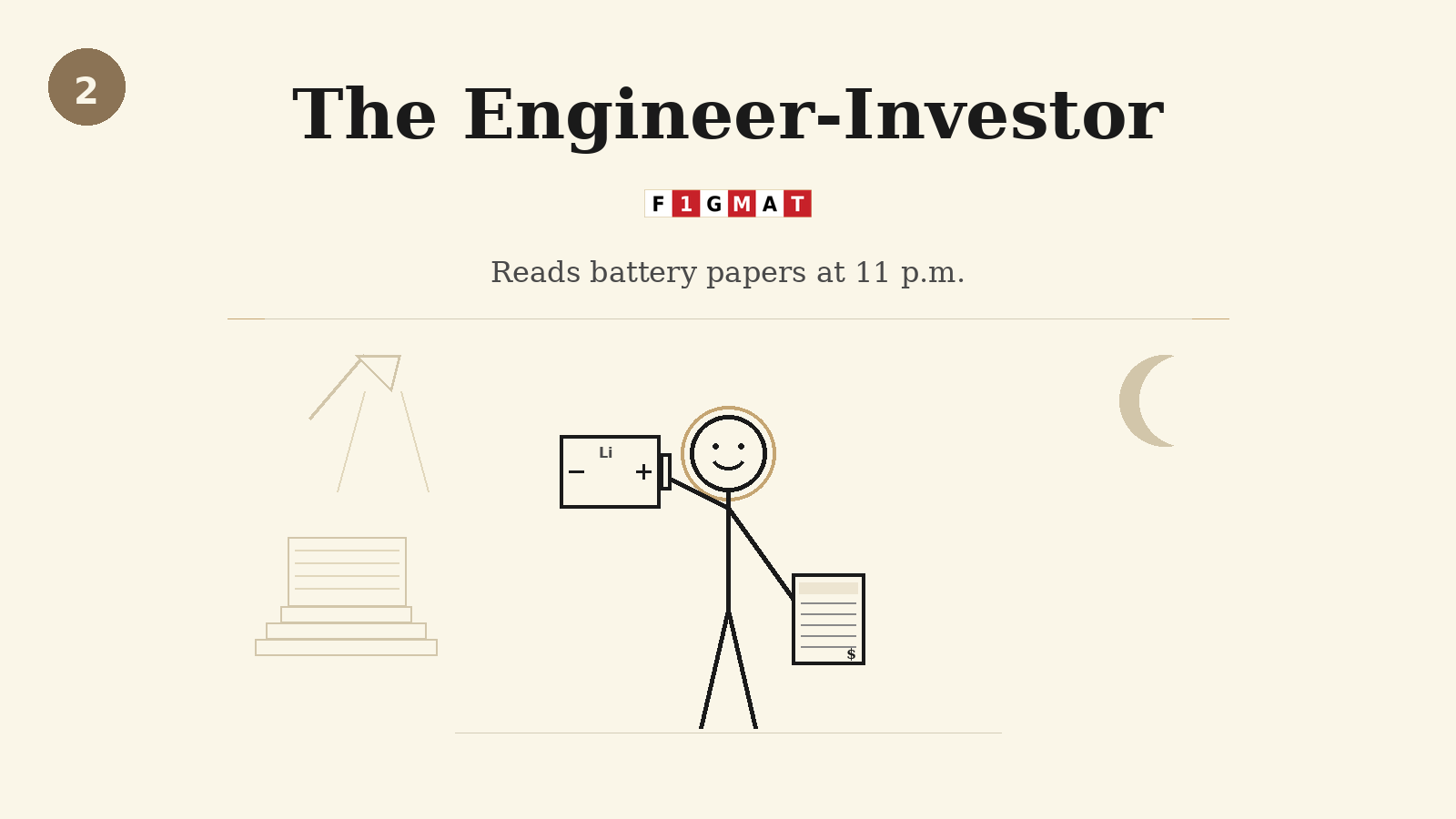
“Goldman's natural-resources coverage team has restructured around energy transition in the eighteen months I've been here. In 2024, climate-related deal flow represented 23% of our pipeline; by Q1 2026 it had reached 41%. The driver is the Inflation Reduction Act's tax-credit transferability provision, a 2022 federal law that lets clean-energy developers sell their wind, solar, and battery tax credits to profitable corporations for cash. Before the law, those credits were trapped on a developer's balance sheet and only useful if the developer itself owed federal taxes. Today every utility-scale renewable project triggers a parallel transaction to monetize its credits. I was structuring and pricing each one of the credit.
I've moved from supporting LBO models for traditional energy clients to leading diligence on grid-scale storage developers.
The pattern recognition I've built across nine transitions clients is now the foundation of a buy-side career.
Six months ago I started spending late nights reading about battery chemistry papers . I learned why a lithium-iron-phosphate cell ages differently than a nickel-manganese-cobalt one, why a four-hour storage system is feasible in California and a two-hour system in Texas, why the inverter and not the battery is usually the limiting component in a grid-scale project.
I can build a discounted-cash-flow model on a battery developer in two hours. I cannot tell that developer which of three engineering trade-offs to make next quarter, because I have never operated anything. That is the gap an investor at a climate fund must close before underwriting a hardware company, and it is not a gap a sell-side desk can fill.
Kellogg's The Energy & Sustainability Pathway gives me the engineering-economics coursework my finance training skipped. Most importantly, Kellogg will place me next to classmates who have done what I have only modeled - a manufacturing operator from Ford's EV transition, a former Tesla cell engineer now in product, a McCormick joint-degree student building grid-management software.
Two years of unstructured conversation with people who have built the things I have priced is the operator literacy no course can teach."
The industry development is clearly presented as a motivation for a buy-side career but it is the personal motivation of unstructured conversation with Kellogg peers that is selling the goals.
Goals — Measure Feasibility with Placement Data
The post-MBA goal should also be based on feasibility.
The overused templates read like this: “After Kellogg, I want to transition into product management at a high-growth technology company, leveraging my analytical background...”
Kellogg’s admissions committee reads thousands of such examples.
The sentence is generic and forgettable.
A strong post-MBA goals line should be based on real Kellogg MBA placements[4].
While evaluating the opportunities, look at the representation and the median base salary.
If your current base salary exceeds or is within 10-15% percentage of the post-MBA salary, with or without PPP adjustment, your pitch, no matter how persuasive, will not be bought by the AdCom.
The motivation is based on both representation and salary increment.
Obviously, you can’t mention salary increase as a motivation, but be aware of the packages a Kellogg MBA earns.
The industry Distribution
Financial Services rose to 21% at a $175,000 base and $35,000 signing, supported by the 2025 M&A boom and the rise of specialist advisor roles at JPMorgan and Evercore. Technology held at 19%, but the median base fell from $157,000 to $151,500 as hiring shifted from FAANG generalist roles to Enterprise SaaS and AI-infrastructure firms like Snowflake and Scale AI; the $40,000 signing bonus remains the highest for any industry.
Consumer Packaged Goods, driven by Revenue Growth Management roles at PepsiCo, General Mills, and NIKE grew to 9% at a $128,000 base and $32,500 signing bonus.
Healthcare fell to 6% at $142,500 base, a lower-volume, higher-pay pattern reflecting specialized commercialization roles at Lilly and Amgen.
Manufacturing, driven by the 2025 reshoring wave from Trump tariffs rose to 3% at $159,500 base, the highest year-over-year base-pay growth.
Media/Entertainment held at 2% at $150,861, a niche, network-driven outcome.
The industry table is the first place to test a stated goal.
If your goal is in an industry with below 5% representation, the essay must explain the personal networking skills to achieve the goal.
| Industry | % of Hires | Median Base | Median Signing | YoY Change |
|---|---|---|---|---|
| Consulting | 38% | $190,000 | $30,000 | +3 pts |
| Financial Services | 21% | $175,000 | $35,000 | +2 pts |
| Technology | 19% | $151,500 | $40,000 | –1 pt |
| Consumer Packaged Goods | 9% | $128,000 | $32,500 | +2 pts |
| Healthcare | 6% | $142,500 | $30,000 | –3 pts |
| Manufacturing | 3% | $159,500 | $25,000 | +1 pt |
| Media / Entertainment | 2% | $150,861 | NA | Flat |
The function distribution
Consulting was the largest functional representation at 38.15% of the class with a total compensation of $220,000 total compensation.
Marketing and sales takes 19% at $185,000 total.
Finance was 15.90% at $215,000 total compensation.
General management also had a strong representation of 11.27% at $180,000 total salary.
Product management holds at 8.90% with $204,050 total.
Corporate strategy is 8% at $190,000.
Brand management is 6% at $168,000.
Investment banking is 5.20% but commands the highest cash package in finance at $225,000 ($175,000 base, $50,000 sign-on).
Business development is 3.18% at $205,000 – another function experiencing a boom from an AI-crowded product market.
Private equity is 3.18% at a $175,000 base, with carry and sign-on varying widely by fund and no standardized disclosure across the cohort.
Operations and logistics is 2.89% at $171,400.
The most common reason for an MBA is to switch functions. Once you have worked out the feasibility part based on industry data, your goals should be confidently narrated around the available Kellogg post-MBA job functions.
Availability is more important than feasibility.
The feasibility challenge will arise in cases where the representation is below 5% - like Business development, PE, and Operations/Logistics. Here, pre-MBA experience matters.
| Function | % of Hires | Median Base | Median Sign-on | Total Compensation |
|---|---|---|---|---|
| Consulting | 38.15% | $190,000 | $30,000 | $220,000 |
| Marketing and Sales | 19% | $150,000 | $35,000 | $185,000 |
| Finance | 15.90% | $175,000 | $40,000 | $215,000 |
| General Management | 11.27% | $150,000 | $30,000 | $180,000 |
| Product Management | 8.90% | $169,050 | $35,000 | $204,050 |
| Corporate Strategy / Strategic Planning | 8% | $160,000 | $30,000 | $190,000 |
| Brand Management | 6% | $128,000 | $40,000 | $168,000 |
| Investment Banking | 5.20% | $175,000 | $50,000 | $225,000 |
| Business Development | 3.18% | $170,000 | $35,000 | $205,000 |
| Private Equity | 3.18% | $175,000 | NA | NA |
| Operations / Logistics | 2.89% | $146,400 | NA | $171,400 |
The regional distribution
Kellogg is overwhelmingly a US-placement school (94.38%), with the Midwest taking the largest share at 39%, and Chicago as the gravitational center for both volume and pay.
Seattle pays the lowest of any major US metro because hiring there skews toward operations and program management, where the pay is not as competitive as product strategy.
The Mid-Atlantic produces the highest regional base ($190,000) despite a small 5% share, because federal consulting and economic-advisory roles in DC earn the best pay.
| Region | % of Hires | Median Base |
|---|---|---|
| United States | 94.38% | $175,000 |
| Midwest | 39% | $175,000 |
| Chicago Metro (Illinois) | 33.75% | $180,000 |
| West | 24.38% | $167,000 |
| San Francisco Metro | 10.94% | $175,636 |
| Seattle Metro | 7.80% | $145,000 |
| Northeast | 18.44% | $175,000 |
| New York Metro | 15.94% | $175,000 |
| Mid-Atlantic | 5% | $190,000 |
| Washington DC Metro | 3.13% | $189,000 |
| South | 3.75% | $185,000 |
| Georgia (Atlanta) | 2.50% | $191,000 |
| Southwest | 3.75% | $162,500 |
| International | 5.63% | $129,848 |
| Asia | 3.75% | $129,618 |
The top employers: BCG hires the largest single Kellogg cohort at 41 students, followed by Amazon at 25, McKinsey at 23, and Bain at 22.
The three MBB firms combined placed 86 students, more than one in five of the entire class.
Capital One follows at 9, a sign that Kellogg’s strength in analytics-driven consumer finance is now larger than its bulge-bracket investment-banking pipeline.
PwC Strategy& took 7, PepsiCo took 6, Accenture and Deloitte took 5 each.
JPMorgan Chase, Adobe, Bank of America, Samsung, and Lilly each hired 4.
Evercore, General Mills, NIKE, Evercore Partners, and Amgen each placed 3.
If you can name three Kellogg alumni at your target employer, your goals statement gains immediate credibility.
If you cannot, either your target employer is outside the established pipeline (in which case, explain what gives you access that the pipeline does not), or you have not done the alumni research the adcom expects.
| Employer | Hires | Employer | Hires |
|---|---|---|---|
| BCG | 41 | Adobe | 4 |
| Amazon | 25 | Bank of America | 4 |
| McKinsey & Company | 23 | Samsung | 4 |
| Bain & Company | 22 | Lilly | 4 |
| Capital One | 9 | Evercore | 3 |
| PwC Strategy& | 7 | General Mills | 3 |
| PepsiCo | 6 | NIKE | 3 |
| Accenture | 5 | Evercore Partners | 3 |
| Deloitte | 5 | Amgen | 3 |
| JPMorgan Chase & Co. | 4 |
Refining your Kellogg MBA Goals Essay with Employment Data
Use these three data sets to refine your goals essay:
Consulting
You are aligned with Kellogg’s single largest placement channel when you mention BCG, McKinsey, or Bain (the three firms that hired 86 students between them). The three firms are the most feasible. If you are currently working in one of the three, it makes logical sense. For everyone else, the case should be built on why the three and how you fit in with a Kellogg MBA.
For specialist roles in Chicago, quote PwC Strategy& or Accenture.
Tech (Product Management or Operating roles)
Amazon is the largest single tech employer with 25 hires, whereas Adobe and Samsung hired 4 each.
Sign-on bonuses dropped from $40,000 to $35,000 between 2024 and 2025, while base pay stayed flat. The placements are falling, and the salary negotiation potential is low. Under the circumstances, the reasons for entering Technology should be narrated by highlighting the function you are planning to enter, like Business development or general management, where the demand was strong. Research and pick companies where the Kellogg Alum density is high.
Finance (IB, PE, Asset Management)
Investment banking at 5.20% and private equity at 3.18% should be inferred as opportunities that Kellogg MBA candidates pursued on their own.
Capital One is the largest single financial-services hire at 9, which shows that most Kellogg MBA finance candidates are entering analytics-heavy consumer finance roles, not bulge-bracket IB associate roles.
Adjust your goals accordingly.
Impact Investing, Climate Tech, or Social Enterprise
Kellogg’s Asset Management Practicum is a three-quarter sequence in which students manage live long/short equity portfolios totaling over $27 million under faculty supervision. The institutional-grade experience top-tier investment firms screen for at the associate level will help Kellogg MBA graduates while advising on impact investing opportunities.
Since Kellogg's Innovation & Entrepreneurship Initiative (KIEI) hosts the impact track, including Megan Kashner's Impact Investing course and the Golub Capital Social Impact Lab, students interested in gaining a peer-to-peer learning experience must mention the lab and the nonprofit projects they serve each quarter.
The Energy & Sustainability Pathway adds the carbon-accounting and clean-energy-finance coursework the standard finance core does not cover.
Naming one of these in your goals paragraph shows your research and motivation.
Healthcare
Healthcare at Kellogg (HCAK) is the pathway-plus-club combination that builds the school's healthcare placement.
Three required electives worth prioritizing are Healthcare Strategy Consulting Lab (a live-client engagement with a hospital system, payer, or pharma firm) and Medical Technology Financing and Commercialization (the device-and-diagnostics finance course that maps to the buy-side and operator roles biotech firms hire MBAs into).
The Certificate in the Business of Healthcare adds a decisive step in demonstrating motivation to recruiters that you have chosen healthcare as a deliberate career move.
Lilly hired 4 and Amgen 3.
These roles are typically in Midwest and national corporate offices, in Pharmaceutical commercial strategy and biotech portfolio-planning. You need prior healthcare exposure or strong analytics capability to cite such goals where firms screen candidates for long-term goal alignment.
Long-Term Goal and Personal Identity
The short-term goals should be based on feasibility and pre-MBA to post-MBA ROI calculations, but to stand out with long-term goals, you must lean into your primary identity.
Applicants use ethnicity, nationality, gender, sexuality, economic background, social challenges they overcame, and similar stressors while crafting a long-term goal.
Example for James (Taiwanese-American, Stripe senior PM in San Francisco, 5 years post-undergrad, targeting a senior operator role at a healthcare technology company):
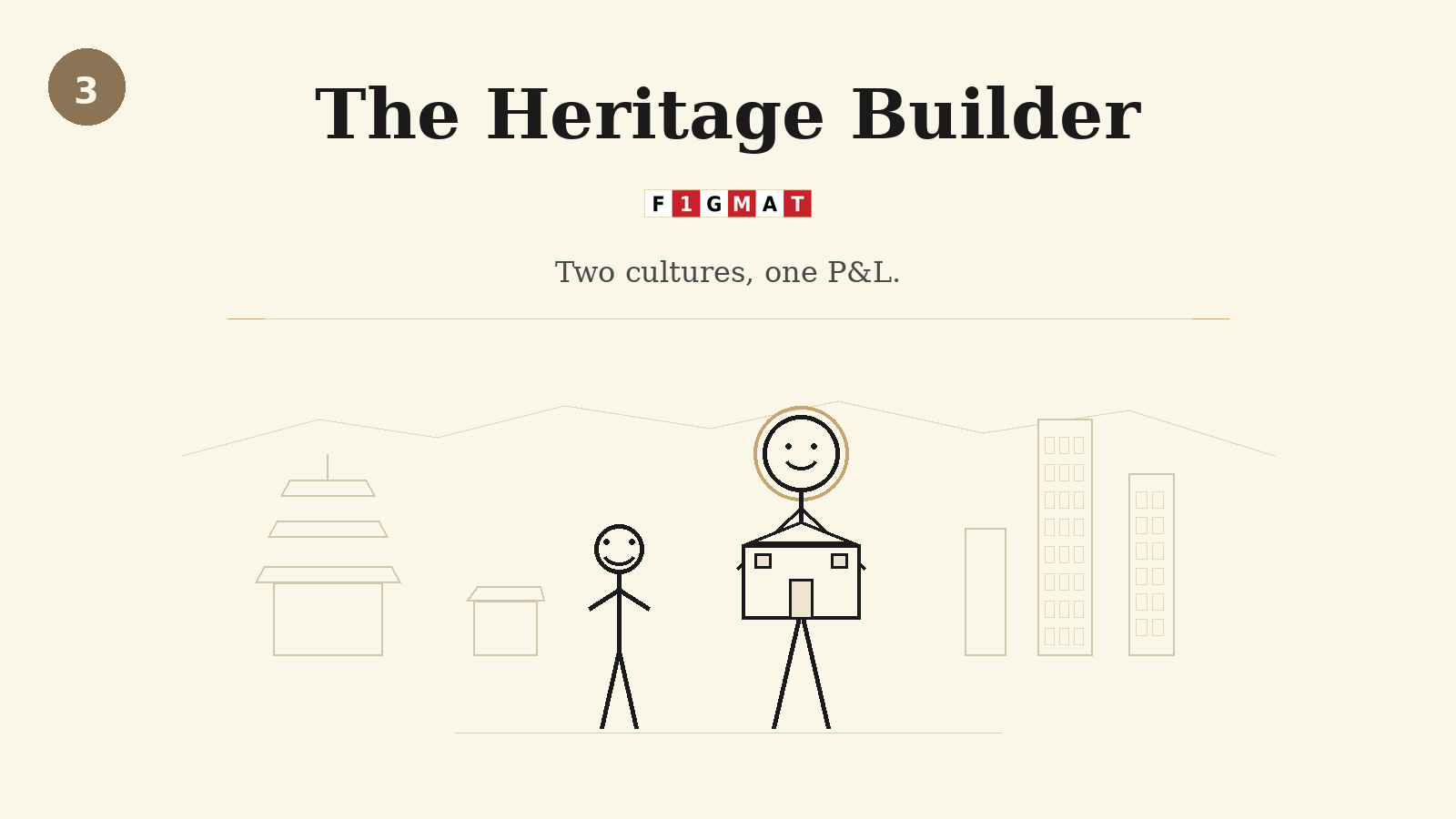
“In the short-term I plan to join Tempus AI or Flatiron Health as a senior product manager on their oncology data platforms. I've built a strong payments-infrastructure expertise around the complex clinical data interoperability problem. Since Healthcare at Kellogg’s industry treks place students directly into both organizations each year, I am looking to transition into a product and operations role.
My long-term goal is to lead as a Chief Product Officer at a clinical-AI company. Once I have learned to make decisions at larger scale, I plan to work on precision-medicine for genetic diseases that disproportionally affect Asian patient populations. I know that healthtech companies have systematically underserved the demographic. The venture will service a market I intimately understand”
Feasibility: 8.90% product-management placement at $204,050 total salary
Long-Term Goal and Personal Identity: I plan to work on precision-medicine for genetic diseases that disproportionally affect Asian patient populations
Why Kellogg — Name a Faculty, A Course, and a Specialization
A common mistake while naming courses or specializations is that if you interchange the themes for Wharton or Booth, they all sound the same.
One way to overcome this challenge is by quoting professors.
Faculty and Courses to Name
Three Kellogg faculty members are ideal for applicants targeting Marketing, Strategy, and Social IMPACT[5].
- Florian Zettelmeyer is the Nancy L. Ertle Professor of Marketing and the founding director of the Program on Data Analytics at Kellogg. He has been voted Outstanding Professor of the Year by Kellogg MBA students.
Outside of teaching, he serves as a senior science leader at Amazon, where he leads the Advertising Economics organization, an applied unit using economics and data science for Amazon’s advertising business.
His MBA electives include Customer Analytics, the core analytics course for the AI and Analytics specialization.
Kellogg’s stated teaching philosophy for the specialization (with Zettelmeyer and co-sponsors Brian Uzzi and Eric Anderson) is to produce AI-savvy MBAs who have a passion for business problems and who are fluent enough in AI to converse with and manage teams of data scientists.
Name the professor if your goal involves gaining a deeper perspective on pricing, customer analytics, or AI integration in marketing or products.
- Sarit Markovich is a Clinical Professor of Strategy and Associate Chair of the Strategy Department.
Her background combines computer science (undergraduate, Tel Aviv) with economics (PhD, Tel Aviv; post-doc at the University of Chicago).
She teaches FinTech Strategy (STRT-461-5 Innovation in Financial Services Markets), structured around case studies of M-Pesa in Kenya, Ant Group in China, and challenger fintechs in Mexico and Israel.
The course teaches students to evaluate competitive dynamics in two-sided platforms (Uber, Airbnb, M-Pesa, Alipay) where the company matches two user groups (Airbnb matches hosts and guests. Visa matches cardholders and merchants) and each side's value depends on the other side's scale. Students will learn to - in her own words, distinguish "the potential gold from the glitter" of VC-funded fintechs.
- Megan Kashner is a Clinical Professor and the Director of Social Impact and Sustainability at Kellogg.
She founded Benevolent, a platform that connects individual donors with low-income families.
She runs the Kellogg-Morgan Stanley Sustainable Investing Challenge, the Moskowitz Prize, and the global Impact and Sustainable Finance Faculty Consortium.
Her courses, Social Change Essentials (formerly The Business of Social Change) and the Social Impact Lab, teach impact measurement, blended capital, and consultative project work for live social-impact organizations.
Name her if your goal involves impact investing, social entrepreneurship, or sustainable finance.
A few applicants go a level deeper and name David Schonthal ’09 MBA (Faculty Director of the Zell Fellows Program, who teaches Strategies for Growth and Scaling), Phillip Braun (current lead for the Asset Management Practicum), or Brian Uzzi (Faculty Sponsor of the AI and Analytics specialization who teaches networks and complexity research).
The Ten Specializations: A Mix-and-Match Table
Another way to add depth to your ‘value from Kellogg’ of Part 1 is by naming a specialization.
Kellogg renamed its “pathways” to “specializations” in the 2026 catalog.
There are ten specializations, each built as an integrated cross-functional sequence of electives.
Do note that specializations are not noted on the transcript. They function as a tool for organizing your electives.
| Specialization | Best fit for | Faculty / center anchor |
|---|---|---|
| AI and Analytics | Product managers, consultants, AI-implementation roles | Florian Zettelmeyer; Brian Uzzi; Eric Anderson |
| Asset Management | Buy-side equity research, institutional investing, hedge funds | Phillip Braun; Robert Korajczyk; Investment Management Club |
| Entrepreneurship | First-time founders, ETA acquirers, family-business operators | David Schonthal; Zell Fellows; The Garage |
| Growth and Scaling | Operators joining Series B to D companies, second-time founders | David Schonthal |
| Healthcare at Kellogg (HCAK) | Pharma commercial, biotech, healthtech operators, provider operations | Healthcare at Kellogg center |
| Private Equity and Venture Capital | PE associates, growth-equity associates, VC investors | Heizer Center; PE/VC Club |
| Real Estate | Real-estate PE, REIT operations, real-asset investing | Guthrie Center for Real Estate Research |
| Social Impact and Responsible Leadership | Impact investing, nonprofit leadership, ESG roles | Megan Kashner; David Matsa; Klaus Weber |
| Sustainability: Climate, Environment, & Energy | Climate tech investing, energy transition, corporate sustainability | Megan Kashner; Paul Christensen |
| Technology Management | Tech PMs, platform operators, fintech operators | Sarit Markovich; Mohan Sawhney |
Mix-and-match logic
Pick ONE primary specialization that aligns with your target role
Add a SECOND only if it adds a different functional capability.
The second pairings combine an industry-focused specialization with a function-focused one.
For Example: A healthcare consultant picks HCAK as primary (industry) and AI and Analytics as second (function).
A climate-fund investor targets PE/VC (function) and Sustainability (industry).
Avoid picking three or more. Adcom reads three specializations as indecisive.
The weakest pairings are two industry-only specializations from adjacent verticals (Healthcare plus Social Impact, or Real Estate plus Asset Management when both are framed as industries). One specialization should offer you functional depth.
Non-Coursework Kellogg MBA Assets and How to Use Them
The third element of “why Kellogg” is a specific non-coursework asset[6] and a plan for using it.
The Global Hub
The 415,000-square-foot LEED Platinum building on Lake Michigan, opened in 2017, is Kellogg’s learning space.
The functional point most applicants miss is that the Hub is open to MBA students whether or not they have class, and the weekly Friday TG (Kellogg's abbreviation of "TGIF," a 5-to-6 p.m. happy hour in Collaboration Plaza on the first floor, hosted on rotation by the school's 100-plus student clubs over beers and appetizers, with professors and administration mixed in among students) is where cross-cohort connections actually form.
The applicant who names a specific TG conversation they intend to start (with the Zell Fellows cohort, or with an international-student community from a country they have ties to) shows that they understand the Hub as social infrastructure.
The Asset Management Practicum
A three-quarter sequence (FINC 456, 457, 458) in which students manage live long/short equity portfolios totaling $27 million, drawn from the Northwestern endowment. Application is required and slots are limited.
The Practicum has grown from $2.7 million at its 2007 founding to its current $27 million size through both endowment contributions and student-driven returns.
Students serve two roles.
One as analysts who pitch long or short positions on individual stocks, and second as portfolio managers who allocate, monitor risk, and rebalance.
Professor Phillip Braun currently leads the practicum, with the original architecture from Robert Korajczyk.
The Practicum runs a New York City trek each year to pitch live stock ideas to working portfolio managers.
The applicant who names the Practicum in a goals paragraph should also know that they will produce two stock pitches across the practicum and that these pitches become the most valuable interview artifact for buy-side roles.
The Zell Fellows Program
Founded in 2013 by the late Sam Zell and endowed in perpetuity through a $25 million Zell Family Foundation gift after Zell’s 2023 passing, the program admits roughly 20 second-year MBA students each year.
Students can choose from two tracks - New Venture (build something) and Entrepreneurship Through Acquisition (acquire and grow an existing small business).
David Schonthal ’09 MBA is faculty director.
Of the roughly 200 alumni to date, 77 New Venture ventures are still operating with combined funding above $705 million.
Fellows receive mentorship, executive coaching, treks to meet entrepreneurs domestically and internationally, financial stipends, and access to the Zell Global Entrepreneur Network across partner schools.
Application is required at the end of first year.
The applicant who quotes Zell Fellows should specify which track they intend to apply for and why their pre-MBA experience qualifies them for the track.
KIEI (Kellogg Innovation and Entrepreneurship Initiative)
Founded in 2012 and now led by David Schonthal '09 MBA, KIEI organizes Kellogg's entrepreneurship infrastructure into three journeys named for what the student is trying to do.
The Inventor journey is for students building a new venture from scratch.
The Builder journey serves students joining or scaling a growth-stage company.
Buyers acquire an existing small business via the Entrepreneurship Through Acquisition track.
Schonthal himself teaches New Venture Discovery (ENTR 462), the first course most aspiring founders take in their first year.
The most practical funding mechanism inside KIEI is the Pritzker Group Venture Fellows Program, a 12-week summer placement at 1871 (Chicago's main startup hub), with a $20,000 initial investment and mentorship from Pritzker Group Venture Capital professionals.
The entrepreneurial applicant must quote New Venture Discovery taught by Schonthal, or the Pritzker Fellows Program with its $20,000 check.
Centers of Excellence at Kellogg MBA - Who Should Quote Them?
1. Heizer Center for Private Equity and Venture Capital
Faculty director Mitchell Petersen leads the Heizer Center[7], the academic home for the PE/VC specialization.
The annual Kellogg Private Equity and Venture Capital Conference at the Global Hub held on October 29 convened working partners from Chicago-area funds.
If your post-MBA goal is to work with a Chicago-based fund, mention the networking opportunities the event offers. For practical experience, the Private Equity Lab is the application-based course in which students intern with a participating PE firm for class credit, working through deal selection and due diligence, and writing investment memos on live transactions.
Another networking opportunity is through the annual treks where students visit PE and VC firms in Chicago, Boston, New York, and San Francisco.
Mention them all if your goal is to enter a PE/VC firm in Chicago.
2. Guthrie Center for Real Estate Research
Director Efraim Benmelech, the Harold L. Stuart Professor of Finance, leads the Guthrie Center[8], the academic home for the Real Estate specialization.
The flagship event is the annual Kellogg Real Estate Conference and Venture Competition, which convenes industry leaders for market updates and capital-markets panels with managing directors from Grosvenor Capital, JP Morgan Chase Commercial Real Estate, Tishman Speyer, and PGIM Real Estate Global Debt.
The invitation-only Venture Competition lets MBA student teams pitch live real-estate ideas to a high-profile judging panel for cash and in-kind prizes.
The Real Estate Club organizes annual treks to top firms in New York and Chicago.
The applicant who names the Guthrie Center with a specific firm they want exposure to (Tishman Speyer or PGIM Real Estate) shows real-asset-investing intent.
3. Kellogg-Morgan Stanley Sustainable Investing Challenge
Founded in 2011 by Dave Chen, Adjunct Professor of Finance at Kellogg and CEO of Equilibrium Capital, and now led at Kellogg by Megan Kashner, the Challenge[9] is a global graduate-student competition in which teams design investment vehicles for environmental or social problems and pitch them to a Morgan Stanley judging panel in London.
The 2026 edition of the challenge attracted 186 teams from 107 schools across 65 countries, where the winner proposed flood-resilience financing for Bangladesh (Oxford, 2025) and mangrove restoration in Indonesia (University of Chicago and Duke, 2026).
A Northwestern team finished second in 2025, with a blended-capital proposal addressing groundwater depletion in Punjab.
The applicant with social impact goals must first define the problem before hinting at presenting the case in the challenge while building team from Kellogg peers to address the specific environmental or social problem.
Never mention ‘exploration’
When you quote any club or initiative, never mention “exploration,” “discovering what’s next,” or “broadening my horizons”
Every contribution, every value that you would acquire, should be measurable and help in achieving your goal.
Example for Priya (Indian national, McKinsey India consultant in Mumbai, 4.5 years post-undergrad, targeting an associate role at an energy-transition fund)
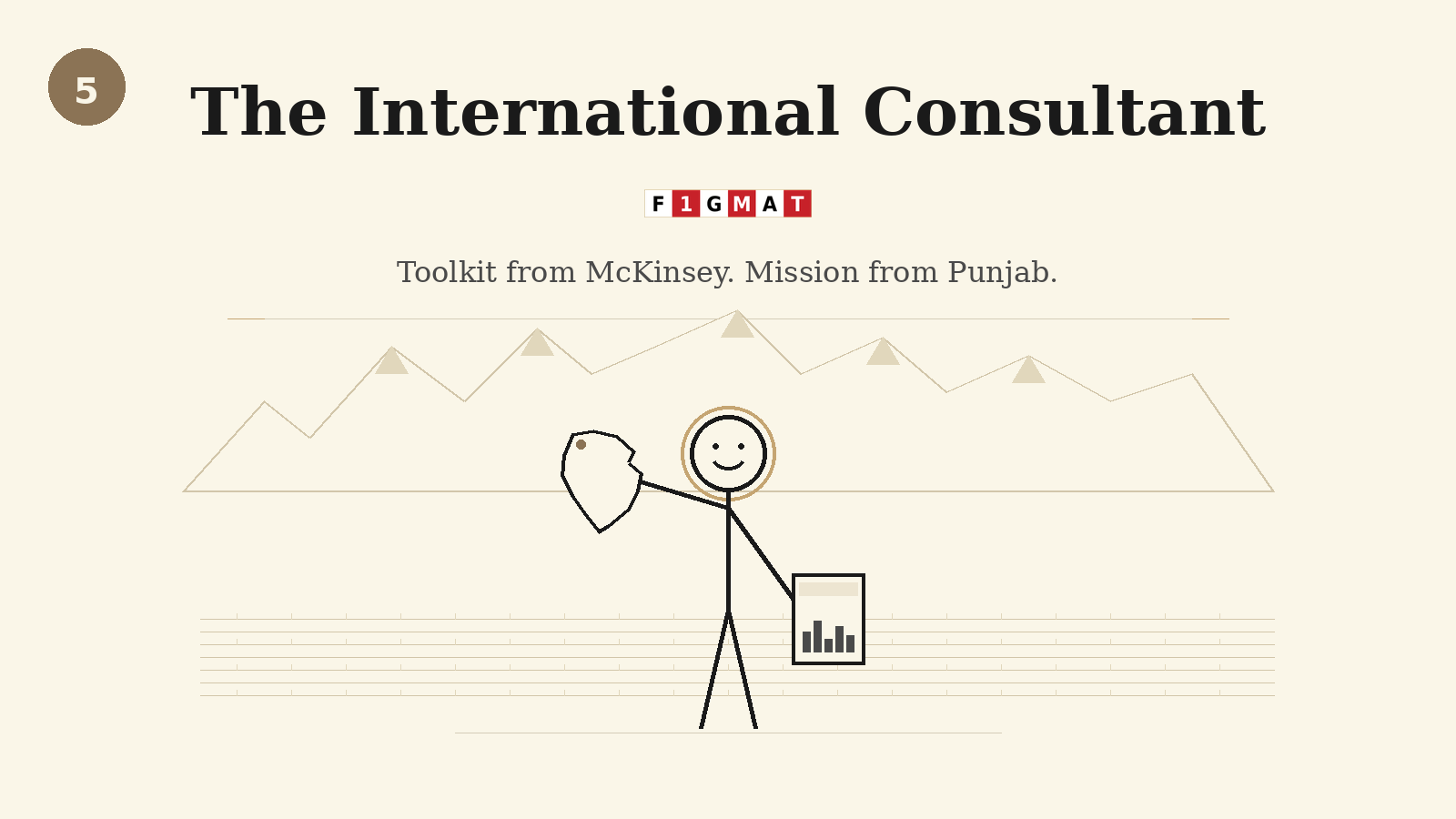
“I look forward to Megan Kashner’s Impact Investing course and Kellogg’s Asset Management Practicum. Compared to similar investing and asset management practicum at Booth or Sloan, Kellogg will help me practice climate-fund diligence on real deals before graduation.
The scale and complexity are not easily accessible, even at McKinsey.
But the biggest opportunity for me is in networking. Kellogg’s location places me 20 minutes from Argonne National Laboratory, where two Breakthrough Energy Ventures portfolio companies licensed their core IP. A lot of my associate-level diligence required technical second opinions. I am eager to network and learn from the founders and key technical leadership.”
Priya has mentioned the professor, the course, the practicum, the fund specialization, compared with Booth and Sloan, compared with McKinsey, and finally added another dimension to her motivation, to gain a network for decoding technical due diligence around energy ventures by mentioning Argonne National Laboratory.
Kellogg MBA Essay Tips: The Contribution Essay (Part II)
Why You Are Qualified for Each Club You Name
Part II – the contribution part of the essay is where 80% of applicants name a club they’ll lead, a perspective they’ll bring, and a value they’ll model. They all sound earnest, but they are easy to forget.
Kellogg’s admissions committee cannot fact-check your future contributions.
What they CAN evaluate is whether your past behaviors prove you’re qualified to make those contributions.
The first mistake is starting with a Kellogg club and then reverse-engineering qualifications.
The reverse should be the approach - start with your traits and map them to clubs that need those traits.
This should be the central exercise.
The Trait-to-Club Mapping Table
Before naming any Kellogg club in your essay, complete this mapping exercise.
The first column is the trait you’ve already demonstrated through past behaviors (based on your resume).
The second column is Skills.
The third column is the Kellogg club, course, or program where that trait creates real value.
| Your demonstrated trait | Skills | Kellogg fit (club / specialization / course) |
|---|---|---|
| Cross-functional translation (engineering +/- business) | Bridging technical and commercial teams | Energy & Sustainability Club; Sustainability Pathway; KIEI |
| Investment diligence (financial modeling on real deals) | Operating in buy-side classroom simulations | Asset Management Practicum; PE/VC Club; PE & VC Pathway |
| First-generation professional navigation | Mentoring peers with non-traditional backgrounds | Black Management Association (or relevant affinity club); Kellogg Mentorship programs |
| Cross-cultural team facilitation (international work) | Leading multi-region team projects | Global Initiatives in Management (GIM); Kellogg Worldwide Experiences |
| Public-speaking and adcom-tested communication | Leading student-led pitch competitions | Kellogg Energy Conference; Marketing Conference; Healthcare at Kellogg |
| Founder-style scrappy resourcefulness (built side venture) | Catalyzing classmates’ early-stage ideas | Zell Fellows Program; NUvention; KIEI |
| Military operations leadership under uncertainty | Leading high-stakes team simulations | Veterans Association at Kellogg; Matt Caldwell Veterans Program; Kellogg Defense & Aerospace Club |
If you cannot name a past behavior that demonstrates the trait, you cannot credibly promise the contribution.
If the club doesn’t actually need the trait, you’re picking the wrong club.
Example for Captain Sarah (US Army veteran of Polish-American background, West Point graduate, 7 years active duty, including two combat deployments, transitioning to a portfolio-operations role at a private equity firm; representative of Kellogg’s growing 9% veteran cohort under the new Matt Caldwell Veterans Program):
“During my second deployment, I commanded a 32-soldier engineering platoon. They were responsible for clearing supply routes outside Erbil.
For our Mission planning, I had to translate between brigade-staff strategy and squad-level execution in time horizons that ran from hours to weeks. That translation skill, taking a goal stated in PowerPoint and converting it into a sequence one team can execute under uncertainty is the contribution I will bring to Kellogg’s Private Equity & Venture Capital Club. The second-year operating-partner teams require classmates who can break down and put holes in post-acquisition integration plans the same way my staff officers interrogated movement orders.
I will also help build the Matt Caldwell Veterans Program’s mentorship pipeline for incoming first-year veterans, drawing on my role as the West Point Class of 2018’s mentorship chair.”
Kellogg MBA Video Essay Tips — Five Questions, 60 Seconds Each
What Changed in the 2026–2027 Video Round
Kellogg expanded the video round from 3 questions to 5 in 2026–2027, each capped at 60 seconds. The questions appear on your Application Status Page after you submit and pay.
You have 96 hours to complete all five.
Why More Video Evaluation?
If Kellogg’s adcom previously weighted written essays at 60% and video at 40%, the 2026–2027 reweighting is closer to 40% written / 60% video.
Once you understand the change in evaluation, ignore all advice of not practicing or sounding overscripted for the video essay
Preparation is the single biggest advantage for you.
Before we go into the internalizing techniques, look at the five categories of Kellogg Video Questions.
The Five Categories of Kellogg Video Questions
Kellogg does not publish the video questions, but based on applicant reported questions, we can broadly classify the video questions into five categories:
1. Personal Background and Self-Reflection
Includes the ice-breaker that has been consistent across previous cycles:
“Please introduce yourself to the admissions committee by sharing something about yourself we would not know from reading your resume.”
Other variations include questions around values, misconceptions coworkers have about you, and what prepared you for graduate-level education.
Candidates should accurately cover broad strengths and even perceived weaknesses or real weakness that they are working on now.
2. Adaptability and Resilience
The Adaptability and Resilience questions asks the candidate to describe a moment when they had to operate outside their comfort zone. The same category of question could also ask about last-minute pivots away from an original plan, along with strategy reshaping plan after new information made the original approach unworkable.
Candidates should identify specific trigger event and the decision the candidate made, plus the downstream consequence on the team or the project before explaining the solution.
3. Feedback and Advice
The Feedback and Advice question asks the candidate to describe a moment when they received feedback they initially disagreed with, or to explain how a piece of advice they implemented changed an outcome they care about.
Kellogg is testing intellectual humility and the gap between receiving advice and acting on it.
The answer must clearly ‘mark’ the moment the candidate pivoted based on the feedback.
4. Leadership, Impact, and Work Style
The Leadership, Impact, and Work Style question is the broadest of the four.
The set of questions asks the candidate to describe the cultures in which they perform best, the leaders they admire and why, an example of value they created in a previous role, a moment when they had positive impact on a team or an organization, a failure they recovered from, and how they collaborate with colleagues whose work styles differ from theirs.
Candidates must base all their answers on demonstrating a habit of collaboration and resilience. The school is also figuring out if you would fit into the Kellogg culture.
5. Motivation, Goals, and School Fit
The Motivation, Goals, and School Fit is the most consequential question as the school knows that the candidate is also actively considering other M7 programs - Harvard, Stanford, Wharton, Booth, Sloan, Columbia.
The strongest answers builds on the Why Kellogg answer and map it perfectly to their specific personal journey where Kellogg is the right next step.
Internalize, Don't Memorize — Use The Secret Actors Use
I want to correct a standard piece of advice that floats around the consultant blogosphere.
The misguided "don't over-prepare" has been the death knell for many applicants.
They stumble through answers, pause too long to pivot, and don't cover the points that make the answer memorable.
Natural delivery is different from preparation[10].
Actors on Internalizing Dialogues
Hopkins is famous for over-preparation.
In a 2006 Hollywood Reporter interview with Wolf Schneider, he described the technique directly: "I learn the text cold, read it maybe 100 or 200 times. It's a trick I play on myself just to make sure I really know it. Then I'm at ease, and I can improvise."
By the time the camera rolls, he is not retrieving the words. He has said that once he delivers a line in a take, he forgets it forever.
The same distinction runs through the Shakespearean greats.
Time Out's review of Andrew Scott's 2017 Almeida Hamlet captured what internalization sounds like in the room.
Scott was "sobbing out the soliloquies as if he was thinking of the words for the very first time."
Each of these actors is practicing until the words stop being external objects to retrieve and start being available the way their own voice is available.
This is the distinction that matters when you prepare for Video Essays or MBA Admissions interviews - monologue versus internalization.
For the Kellogg video essay, the right preparation is over-preparation that makes your script disappear.
Most applicants under-prepare and panic, then resort to a memorized monologue.
The Hopkins approach is to over-prepare so completely that prep becomes invisible.
Jackson's article[11] notes that 200 reads "may be a bit extreme" for most working actors, and the same caveat applies to MBA applicants, but the principle holds.
Three Rounds of Practice
The internalization process for each of your five bucket stories:
- Round 1 (10–15 repetitions): Write the story out. Read it aloud, slowly, paying attention to the specific words. After the 5th repetition, start rewriting any sentences that feel like a resume and replace them with conversational phrasings.
By repetition 10–15, the words have settled.
- Round 2 (15–20 repetitions): Tell the story to a mirror or camera, without reading from the page. The first three takes will be stiff. Around takes 8–12, you'll find the natural pacing. You will start observing where you pause, where you emphasize, and where you conclude.
By repetition 15–20, you have a story you can tell.
- Round 3 (10–15 repetitions): Record yourself on the actual camera setup you'll use for submission.
Watch the playback.
Make small adjustments to pacing, eye contact, and breath.
By repetition 30–50, the story is internalized.
When the actual question appears in the 96-hour Kellogg window, you will find moments of genuine improvisation that will improve the scripted answers.
Time investment: 30–50 repetitions per story, across 5 stories, at 60 seconds each plus debrief time, is roughly 6–10 hours per story.
Total: 30–50 hours of video prep. This is the investment that is required to face the prioritization of video essays for the Kellogg MBA Application.
Recording Day — Setup, Pacing, and Production Quality
- A Setup checklist(one-time investment, under $80 if you don't own the equipment)
- A $40 ring light positioned at eye level, slightly to one side - your good side. If you are tired, or sleep deprived, lighting from the side eliminates the under-eye shadow that makes you look tired. The side lighting also gives a cinematic feel. For most, the safe bet is an evenly lit room with no glare.
- A lapel microphone or a USB condenser mic positioned six to eight inches off-camera or Shure Mic (the best option but you need an amplifier).
- A clean background. Books on a shelf, a plain wall, or a tested virtual background. No windows behind you (backlighting), no bedroom (signals lack of seriousness).
- A shirt or blouse you would wear to a client meeting. A suit if you want to show seriousness, but no T-shirts or shirts with printed text.
- The webcam at eye level, not below it. Below-eye angles read as dominating. You don't want to give the impression that you are any way less collaborative.
Pacing tips
- Target for 45–55 seconds of answers: The countdown timer will put additional pressure, but during practice, try without the timer. After 20 practice sessions, you won't need the timer. Leave 10 second buffer to slow down your answer and show emotions. It is a performance.
- Use the second take, not the first or third. First takes are stiff, third takes are over delivered or under delivered (if you lost all the energy delivering the 2nd). The second take is usually the sweet spot.
- A small, natural "um" at the 15-second mark is better than a flawless answer. Kellogg's Lance Bennett, Director of Diversity Admissions, has publicly emphasized that authenticity beats prepared answers in the video round. Even if you know all the lines, use artificial pauses to smoothen the delivery
Kellogg MBA Reapplicant Essay Tips (250 Words)
If you applied to Kellogg in 2025–2026 and were dinged or waitlisted, the 250-word reapplicant essay is the most under-leveraged piece of the application.
The Inflection-Moment
Admissions reviewers can see your new test score and your new title on the resume. They cannot see what changed in you during the year you were away.
250 words is enough for exactly one inflection moment from the past year that reshaped your self-understanding.
Lead with the moment.
Connect it to why you’re a better fit for Kellogg now than you were 12 months ago.
Skip the “I’ve grown” generalities.
Show one specific instance of growth.
This is where F1GMAT’s Turning Points framework is most directly useful.
The reapplicant essay is structurally a turning-point essay - one moment, one shift, one resolution.
The Maupassant Irony structure fits this form best because of the tight word count.
Acknowledge the Prior Application
“When I applied last admissions cycle, my goals were too narrow even though I had ambitious plans,” shows self-awareness.
Acknowledge the failure first, even if it costs you 20-30 words.
Common Mistakes in Kellogg MBA Essays
The patterns I see most when I edit M7 essays:
- Naming clubs without trait-mapping:Listing the Healthcare Club, the Energy Club, and the Marketing Conference is the cliched way of answering any contribution essay. Instead, map the club to a trait you’ve demonstrated that is verifiable with a past behavior.
The MBB consultant trap:McKinsey, Bain, and BCG applicants default to “I joined consulting to learn the toolkit. I want to apply it to...”
Kellogg reads 500–1,000 of these. Lead with a client engagement before mentioning the consulting company.
- The “we” overcorrection: Hiding behind team language to seem collaborative.
- Generic Kellogg fit: “Collaborative culture” and “diverse community” appear in every essay. Replace with named faculty, named concentrations, and named non-coursework asset (Global Hub, KIEI, Asset Management Practicum).
- Word arithmetic Blindness: Treating Part I as one essay instead of four sub-questions in 275 words. Decide in advance which sub-question you will under-answer. Those sections can be developed by your resume or your recommendation letter.
- Under-prepping the video round: Spending 40 hours on the essay and 4 hours on the video. With the 67% video weight increase, this ratio is now inverted. Spend more time preparing for the Video essay.
- Memorizing instead of internalizing for video: Reading a script versus knowing the story so deeply that you emote the moment, and the admissions person will feel that you are saying the words for the first time.
- No identified turning point in the journey: Many applicants write a journey without any turning points. A journey without a turning point reads like a resume entry.
- AI voice mismatch: A polished, AI-edited written essay paired with an authentic, human video reads as two different applicants. Pick one voice and let it run through both.
Kellogg MBA Essay Tips — Final Pre-Submit Checklist
Before you submit your Kellogg MBA Application, run your application through these checks.
They are uncomfortable on purpose.
On Part I:
☐ Did you write a hero origin story moment, not a career chronology?
☐ Did you identify the specific turning point inside that origin story (Maupassant, Mansfield, or Chekhov structure)?
☐ Did you under-answer one of the four sub-questions deliberately?
☐ Does your “why now” combine an industry trend AND a personal development moment?
☐ Does your post-MBA goal name a real company or role at a specific kind of company that Kellogg actually places into?
☐ Is the “why Kellogg” paragraph swappable with Booth, Wharton, or Sloan? If yes, rewrite.
☐ Did you name a Kellogg professor or course beyond the obvious ones?
On Part II:
☐ Did you complete a trait-to-club mapping table before naming any club?
☐ Is each club you named tied to a trait demonstrated by a past behavior?
☐ Could your Part II content be pasted into a Booth or Wharton essay without changes? If yes, rewrite.
☐ Did you reference the Global Hub, KIEI, or a Chicago-specific asset?
☐ Did you tell a story where you disagreed with someone AND showed empathy?
On Video Essays:
☐ Have you internalized (30–50 repetitions per story) the script?
☐ Do you have a category-strong story for each category (Personal, Adaptability, Feedback, Leadership, Kellogg-fit)?
☐ Is your camera at eye level with a consistent light source and a clean background?
☐ Are your target answers 45–55 seconds long?
☐ Have you decided to use your second take, not your first or third?
On Voice:
☐ Read your essay out loud. Does it sound like you talking, or like a polished writer talking?
☐ Did you use “impactful,” “leveraged,” or “passionate” more than once? Each is a tell.
☐ If you used AI for drafting, did you rewrite every sentence in your own voice? The video round will expose a voice mismatch.
On the Reapplicant 250:
☐ Did you lead with a moment?
☐ Did you use the Maupassant Irony structure (single sharp moment with unexpected reveal)?
☐ Did you acknowledge (briefly) the prior failure?
References
- Working Identity: Unconventional Strategies for Reinventing Your Career — Herminia Ibarra (Harvard Business School Press, 2003) ↩
- The Hero with a Thousand Faces — Joseph Campbell (1949) ↩
- Application Trends Survey 2024 — Graduate Management Admission Council (GMAC) ↩
- Kellogg Full-Time MBA Employment Report — Career Management Center, Northwestern University ↩
- Kellogg Faculty Directory — Kellogg School of Management, Northwestern University ↩
- Kellogg Full-Time MBA Student Experience — Kellogg School of Management, Northwestern University ↩
- Larry and Carol Levy Institute for Entrepreneurial Practice — Heizer Center for Private Equity and Venture Capital, Kellogg School of Management ↩
- Guthrie Center for Real Estate Research — Kellogg School of Management, Northwestern University ↩
- Kellogg-Morgan Stanley Sustainable Investing Challenge — Kellogg School of Management and Morgan Stanley Institute for Sustainable Investing ↩
- An Actor Prepares — Constantin Stanislavski (Theatre Arts Books, 1936) ↩
- "How to Memorize Lines When Shooting Out of Order" — Charis Joy Jackson, Backstage ↩
