In this in-depth analysis of the Berkeley Haas MBA Employment outcome for the 2025 graduating class by job location, we cover
1. North America: 96.7% of Haas Graduates Hired
2. The West: The Engine of Haas in 2025
3. San Francisco & Peninsula: Enterprise AI and Cloud Spending Driving Demand
4. South Bay, California: Hardware-software integration and infrastructure commercialization.
5. Seattle, Washington: AI-Driven Productivity and Cloud Infrastructure
6. Greater Los Angeles: Media and AdTech Hiring
7. East Bay: Operations, Logistics, and scaling Support functions
8. Mid Atlantic: Secondary Tech and Consulting Spillover
9. Northeast: Finance and Strategy Driving Placement
10. Midwest: Corporate Leadership and Industrial Strategy Supported Premium Pay in a Smaller Market
11. Southwest: Energy, Infrastructure, and Consulting Drove High Total Compensation
12. South: Limited Hiring Reflects Sector Mix and Corporate Caution
13. International: Cross-Border Hiring Remained Structurally Constrained
1. North America: 96.7% of Haas Graduates Hired
In 2025, nearly all Berkeley Haas MBA graduates who entered the job market (96.7%) accepted roles in North America, with a median base salary of $168,500 and a median signing bonus of $30,000, resulting in total compensation of $198,500.
This strong U.S. concentration is consistent with Haas’s historical placement patterns; over the last several years, roughly 95–97% of Haas MBAs have located domestically because the school’s proximity to Silicon Valley and its deep West Coast employer network translate into repeat, structured pipelines rather than ad-hoc international placements.
Rebound in Technology Hiring in Select Job Functions
Two macro forces underpinned this: first, the rebound of U.S. technology hiring in 2025, where roles at platform, enterprise software, and internet-services firms returned as economic leaders after layoffs in 2023–24, increased local opportunities; second, policy-driven demand in finance and consulting, which remained U.S-centric, concentrated in major financial and corporate hubs. These combined to keep regional hiring domestic rather than globally dispersed.
2. The West: The Engine of Haas in 2025
In 2025, the West accounted for 81.7% of Berkeley Haas MBA placements, with a median base salary of $169,100, a median signing bonus of $30,000, and total median compensation of $199,100. This concentration is not an anomaly nor a single-industry story; it reflects the West’s role as the primary execution hub for three of Haas’s dominant employment channels in 2025: consulting (27.5% by function), technology (38.6% by industry), and finance-adjacent roles supporting growth, infrastructure, and restructuring.
Between Q4 2024 and Q2 2025, the West experienced a convergence of measurable developments:
• Large-scale capital expenditure in AI infrastructure and cloud computing, particularly in Northern California and Seattle, has increased demand for MBA talent in product strategy, commercialization, and enterprise go-to-market roles.
• A shift in consulting demand toward implementation, post-merger integration, and AI deployment, with West Coast enterprises becoming anchor clients for these mandates.
• Selective reopening of venture and growth financing, especially for enterprise software, AI-enabled platforms, and energy-adjacent infrastructure, creating finance, strategy, and operations roles embedded within operating companies rather than pure investment firms.
These dynamics explain both the scale of hiring and the compensation dispersion across West Coast cities, which is better understood by examining each sub-market individually.
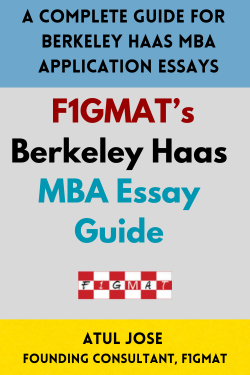
Question 1: What makes you feel alive when you are doing it, and why? (300 words maximum) (Video Essay)
Question 2: What are your short-term and long-term career goals, and how will an MBA from Haas help you achieve those goals? Short-term career goals should be achievable within 3-5 years post-MBA, whereas long-term goals may span a decade or more and encompass broader professional aspirations. (300 words max)
Question 3: Distance Traveled: At Berkeley Haas, we consider "distance traveled" as the contextual information that helps us understand the unique circumstances, challenges, or influences that have shaped your personal and professional journey.
We invite you to share aspects of your background, personal circumstances, or significant experiences that have meaningfully impacted who you are today and how you've reached this point. Please tell us how these experiences have influenced your perspectives, decisions, and aspirations, and how they contribute to the person you are becoming. (300 words max)
3. San Francisco & Peninsula: Enterprise AI and Cloud Spending Driving Demand
The San Francisco Peninsula was the single largest placement market, absorbing 49.0% of Haas graduates in 2025, with a median base salary of $175,000, a median signing bonus of $30,000, and total compensation of $205,000.
Rise of Enterprise AI and Cloud Infrastructure catering to AI
This outcome was driven by two overlapping forces. First, enterprise AI and cloud infrastructure spending accelerated materially in late-2024, with large platform firms increasing investment in data centers, AI accelerators, and enterprise software stacks. While engineering hiring remained disciplined, these firms expanded product management, pricing strategy, enterprise sales strategy, and platform monetization teams, roles where MBAs are central. This aligns directly with Haas’s high placement into technology and consulting-adjacent functions.
Peninsula – Core Consulting Execution Market
Second, the Peninsula served as a core consulting execution market in 2025. Major consulting firms staffed significant portions of their AI implementation, digital transformation, and operating-model redesign engagements directly out of Bay Area offices because client teams were co-located there. As a result, many Haas graduates classified under “consulting” were embedded in long-term delivery programs rather than short strategy sprints. This explains why compensation remained high but stable: firms paid for sustained execution capability, not speculative growth.
4. South Bay, California: hardware-software integration and infrastructure commercialization.
The South Bay accounted for 14.4% of placements, with a median base salary of $160,000, a median signing bonus of $17,500, and total compensation of $177,500.
Infrastructure Commercialization and Hardware-Software Integration
Hiring in this sub-region was shaped primarily by hardware-software integration and infrastructure commercialization. During 2024–2025, semiconductor-linked ecosystems, AI compute vendors, and platform infrastructure firms expanded roles in product commercialization, supply-chain coordination, and business operations. These positions require MBAs who can translate technical roadmaps into scalable business outcomes.
The compensation structure reflects this reality. Base salaries were solid, but bonuses were lower than in consulting-heavy markets because these roles are tied to longer product and infrastructure cycles, where upside is captured through promotion and equity rather than upfront incentives.
5. Seattle, Washington: AI-Driven Productivity and Cloud Infrastructure
Seattle absorbed 8.5% of Haas placements, with a median base salary of $142,800, a notably high median signing bonus of $55,000, and total compensation of $197,800.
This pay structure is highly indicative of the region’s hiring logic in 2025. Cloud computing, enterprise software, and e-commerce firms headquartered in Seattle continued to invest heavily in AI-driven productivity, logistics optimization, and cloud economics, but did so under strict fixed-cost discipline. Employers, therefore, relied more heavily on signing bonuses and performance-linked incentives to attract MBAs with the ability to deliver immediate impact in product, strategy, and operations roles.
Seattle’s compensation mix signals risk-managed hiring rather than weak demand: firms paid competitively but structured offers to preserve flexibility in an uncertain macro environment.
6. Greater Los Angeles: Media and AdTech Hiring
Greater Los Angeles represented 3.3% of placements, but with the highest compensation profile in the West: a median base salary of $190,000, a median signing bonus of $50,000, and total compensation of $240,000.
Media and AdTech Driving Up Compensation
This premium reflects LA’s distinct industry mix. In 2024–2025, digital media, streaming platforms, advertising-technology firms, and consumer entertainment businesses underwent strategic restructuring, monetization redesign, and platform consolidation. These initiatives generated demand for MBAs in corporate strategy, revenue optimization, and consulting roles, often tied to time-sensitive transformations.
Because these roles are fewer in number but high in strategic leverage, employers competed aggressively on compensation, resulting in outsized bonuses and base salaries relative to other West Coast markets.
 Essay Editing - Consult with Atul Jose (Essay Specialist, F1GMAT)
The skills that a writer/editor brings to the table are different from what a former admissions officer or a consultant who has limited writing skills brings
Review Skills # Writing Skills
Movie Critics # Movie Directors
For any questions about the service, email me, Atul Jose, at [email protected]
As F1GMAT’s Lead Consultant and Essay Specialist, I will help you structure the essay by:
1) Incorporating your Personal Brand
I will help you find unique life experiences that would differentiate you from the highly competitive Berkeley Haas MBA application pool.
2) Including Storytelling elements
I have developed a keen sense of storytelling from over a decade and a half of editing essays and writing essay examples for F1GMAT’s Essay Guides.
The skills that a writer/editor brings to the table are different from what a former admissions officer or a consultant who has limited writing skills brings
Review Skills # Writing Skills
Movie Critics # Movie Directors
It is easy to comment, but it is tough to structure the essay from the perspective of the applicant and turn the essay into a winning application essay.
3) Aligning with the Culture of the School
A big part of editing and guiding applicants is in educating them about the culture of the school
Some schools have very ‘specific’ traits that they are looking for in an applicant.
If you don’t highlight them and lean towards general leadership or cultural narratives, the essay won’t work.
I will guide you through the writing process.
I will also iteratively edit the essays without losing your original voice.
7. East Bay: Operations, Logistics, and scaling Support functions
The East Bay accounted for 5.2% of placements, with a median base salary of $136,000, a median signing bonus of $35,000, and total compensation of $171,000.
Hiring here was concentrated in operations, logistics, and scale-support functions for large technology and industrial firms. As companies prioritized resilience, cost control, and supply-chain reliability in 2025, East Bay operations hubs expanded roles focused on execution rather than strategy. These positions typically carry lower base salaries than consulting or product strategy roles but offer stable employment and clear advancement pathways.
8. Mid Atlantic: Secondary Tech and Consulting Spillover
The Mid-Atlantic region absorbed 5.2% of the class in 2025, with a median base of $150,300 and a $27,500 bonus (total $177,800). While modest in share compared with the West, this area’s outcomes reflect a genuine shift in employer behaviour during 2024–25: consulting and finance firms with national practices increasingly used Mid Atlantic hubs (e.g., Washington, DC and Philadelphia) for policy-linked, regulated market, and public sector adjacent work.
High Bonus Hires
Throughout 2024–25, regulatory uncertainty in fintech, healthcare, and energy led firms to build advisory practices centered around compliance and policy execution, often located in Washington or nearby markets. These practices simultaneously hired fewer MBAs than traditional consulting practices in the Northeast but offered compensation packages that were competitive on bonus terms with national standards, explaining the region’s median compensation profile.
9. Northeast: Finance and Strategy Driving Placement
The Northeast accounted for 4.6% of placements in 2025, with a median base of $157,100, a $30,000 bonus, and $187,100 total compensation. Compared with prior years, when the Northeast occasionally reached 7–8% share for Haas placements, this outcome suggests a relative stabilization rather than growth in demand.
The Pull of Tech too Strong for Clear Diversification into Northeast
The Northeast remains strong in finance, consulting, and corporate strategy roles, particularly in New York and Boston. However, in 2024–25, these markets saw capital deployment remain selective, with firms favouring experience over expansion. For example, while NYC finance hubs continued to recruit MBAs into restructuring and deal execution functions, the pace of hires did not accelerate meaningfully as tech revived on the West Coast, which drew a larger share of MBA placements.
10. Midwest: Corporate Leadership and Industrial Strategy Supported Premium Pay in a Smaller Market
The Midwest absorbed 2.0% of Haas graduates, but with a median base salary of $175,000, a median signing bonus of $30,000, and total compensation of $205,000, one of the strongest pay profiles outside the West.
Senior Roles in Demand
This outcome is best explained by role concentration rather than hiring volume. In 2024–2025, Midwest employers, particularly large corporations in manufacturing, industrials, healthcare services, and consumer goods, prioritized general management, operations leadership, and enterprise strategy roles tied to productivity improvement, automation, and margin discipline. These roles are few in number but senior in scope.
General Management Roles for Haas Graduates in the Midwest
Haas graduates entering the Midwest in 2025 were not filling rotational pipelines; they were hired into high-responsibility leadership and transformation roles, which justifies the elevated base salary. This pattern aligns with Haas’s strength in general management and operations placements and explains why the Midwest appears small in share but strong in compensation.
11. Southwest: Energy, Infrastructure, and Consulting Drove High Total Compensation
The Southwest accounted for 2.0% of placements, with a median base salary of $192,000, a median signing bonus of $30,000, and total compensation of $222,000, the highest regional median base salary in the dataset.
Energy, Infrastructure and Consulting Advisory Roles in Demand
This premium is directly linked to energy, infrastructure, and consulting activity concentrated in Texas and adjacent markets during 2024–2025. Energy firms, utilities, and infrastructure developers expanded leadership and strategy teams in response to grid investment, energy transition projects, and capital deployment tied to U.S. energy security and resilience. Consulting firms also staffed high-value operational and capital-project advisory roles in these markets.
These roles are capital-intensive, execution-critical, and time-sensitive, which explains the elevated compensation. Haas’s limited but high-pay presence in the Southwest reflects selective placement into senior-impact roles, not broad market penetration.
12. South: Limited Hiring Reflects Sector Mix and Corporate Caution
The South represented 1.3% of Haas placements, with insufficient data to report consistent salary figures. This low share is consistent with both Haas’s historic placement patterns and the region’s 2025 economic structure.
Mid-Market firms weren’t a match for West Coast Candidates
While the South has growing corporate and logistics activity, much of the region’s hiring growth in 2024–2025 occurred in cost-sensitive functions, operations, and mid-market firms, which are less likely to recruit MBAs from West Coast-oriented programs. Where Haas graduates did place, roles were often specialized or firm-specific, limiting sample size and salary transparency.
13. International: Cross-Border Hiring Remained Structurally Constrained
International placements accounted for approximately 3.4% of the class: 2.0% in Asia, 0.7% in Europe, and 0.7% in Latin America, with no stable salary benchmarks reported.
The primary constraint in 2025 was not student interest but employer risk management. Across late-2024 and early-2025, many global firms restricted cross-border hiring due to visa uncertainty, geopolitical risk, and localized economic slowdowns.
As a result, international roles were typically filled through internal transfers or regionally trained candidates rather than U.S. MBA recruitment.
The school’s industry mix, technology, consulting, and finance, remained globally active, but firms preferred to place talent domestically.
| Region | Percent of Hires | Median Base Salary | Median signing bonus | Total Salary |
| North America | 96.7% | $168,500 | $30,000 | $198,500 |
| Mid Atlantic | 5.2% | $150,300 | $27,500 | $177,800 |
| Midwest | 2% | $175,000 | $30,000 | $205,000 |
| Northeast | 4.6% | $157,100 | $30,000 | $187,100 |
| South | 1.3% | NA | NA | NA |
| Southwest | 2% | $192,000 | $30,000 | $222,000 |
| West | 81.7% | $169,100 | $30,000 | $199,100 |
| East Bay-CA | 5.2% | $136,000 | $35,000 | $171,000 |
| Greater los Angeles-CA | 3.3% | $190,000 | $50,000 | $240,000 |
| San Francisco, Peninsula-CA | 49% | $175,000 | $30,000 | $205,000 |
| Seattle-WA | 8.5% | $142,800 | $55,000 | $197,800 |
| South Bay-CA | 14.4% | $160,000 | $17,500 | $177,500 |
International | Percent of Hires | Median Base Salary | Median signing bonus | Total Salary |
| Asia | 2% | NA | NA | NA |
| Europe | .7% | NA | NA | NA |
| Latin America | 0.7% | NA | NA | NA |
Reference
