Business School Ranking

INSEAD MBA Ranking, Class Profile and Employment Report: 82% of Students Changed Sector, Function or Location

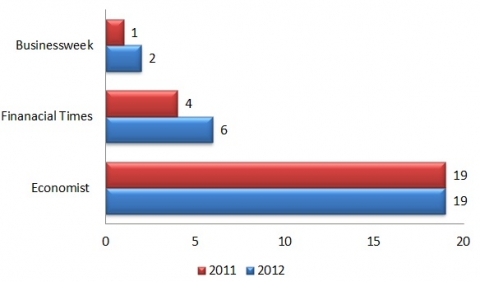
The INSEAD MBA with its diverse class profile, international faculty and three campuses is ranked among the top Business Schools in the world. Although all the top Business School ranking publications have rated INSEAD highly, it seems to be dropping a notch over the past year. The Economist ranks it a surprisingly low 19, the same over the past two years. The Businessweek Non-US MBA rankings see it slip from No. 1 to the No. 2 spot behind London Business School over the last year. The Financial Times’ Global MBA Rankings see INSEAD move from #5 to #4 and then back down to #6 over the last three years.


INSEAD MBA Average Rank: 9

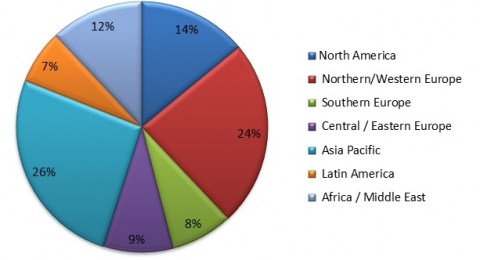
INSEAD MBA Class Profile - Nationality

Insead MBA Nationality


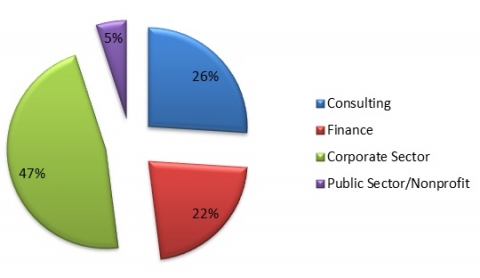
INSEAD MBA Class Profile - Pre-MBA Experience
Insead MBA Pre MBA Experience

IE takes the top Spot for Overall MBA Ranking, HEC Paris for 3 Year Average Rank and London Business School for Full-time MBA

The Financial Times European MBA Ranking for 2012 has been released.  IE Business School has taken the top spot, followed by HEC Paris and London Business School. The FT ranking is different from other rankings as it also provides MBA aspirants with the three Year Average ranks, which is an important metric to measure consistency. If you consider the three-year average rank, HEC Paris is ranked number one, followed by a tie between London Business School and Insead, with the third position taken by IE Business School.

BusinessWeek Part Time MBA rankings 2012

BusinessWeek Part Time MBA Ranking
BusinessWeek Part Time MBA rankings
for 2012 have been announced. Elon’s Martha and Spencer Love School of Business has continued to retain the top spot. UCLA Anderson School of Management took the second place while Tepper School of Business retained the third place. 

An interesting trend seen this year is that all the top 10 positions remained unchanged from the previous year.


Evaluate the Summary of Top Part Time MBA Rankings

BusinessWeek Full-time MBA Rankings 2012

The Business Week Full-time MBA rankings are finally out. The rankings are based on comprehensive evaluation of 236 FT MBA programs. The top 10 in 2012 looks very similar to that of 2011.  There are just two new entrants, Cornell and Darden MBA. While Darden was already on the verge of the top ten lists last year (was ranked #11), Johnson has been the biggest mover, jumping six places to #7.

Columbia and Haas MBA were knocked out of the top ten ranking this year. They are now ranked at 13th and 14th position respectively. While the Stanford Full-time MBA program has moved up to 4th. The top three (Booth, Harvard and Wharton) have held their positions for the third consecutive year. Among the three, Harvard has the highest average salary of $138,164 for the Financial Services Sector, an average that grew to $200,000, 10 to 20 years after graduating.

Evaluate the Summary of Top 10 Full-time MBA Rankings below or you can visit BW for details.

Booth, Tuck and Darden - Winners (The Economist MBA Ranking 2012)

The Economist ranking 2012-13 for Full-time MBA Program has been released.  The return of Chicago Booth as the best Full-time MBA program has been the biggest surprise. Booth MBA is known for its Quant focus but to top the Economist Full-time MBA program, you need more than one strong point. The Four Business School ranking evaluation factors include: open new career opportunities (35%); personal development/educational experience (35%); increasing salary (20%); and the potential to network (10%).

The split up of each evaluation factors are as follows:

Open New Career Opportunities (35%)


a) Diversity of Recruiters (25%)
b) Assessment of Career Services (25%)
c) Jobs Found through Career Service (25%)
d) Student Assessment (25%)

Personal Development/Educational Experience (35%)

a) Faculty Quality

Ratio of Faculty to Students – 5%
Percentage of Faculty with PHD – 10%
Faculty Rating by Students – 10%

b) Student Quality

Average GMAT Score – 18.75%
Average Length of Work Experience – 6.25%

c) Student Diversity

International Diversity Score – 8.33%
Percentage of Women Students - 8.33%
Student Rating of cultures and Classmates – 8.33%

d) Education Experience

How to evaluate business school rankings?


Business Schools rankingPersonal post-MBA goals may be more important than school ranking. Overall, well ranked schools may be weak in the area of your interest. You should focus on schools that are the best fit with your personal post MBA goals. However, take into account the possible business schools “anomalies”. For example, an applicant interested in investment banking who enrolls in a “marketing” school will potentially have a less competitive recruiting process.

Top US MBA Programs - The Economist MBA Rankings 2011

USA has struggled to maintain the pre-2008 Economic growth in the past 4 years but it is still the favourite destination for MBA aspirants. According to QS 2011-12 Jobs and Salary report, there was a 24% increase in MBA jobs in 2011, compared to 5% in 2010. The recovery has been slow. But the Financial and manufacturing sectors has made considerable improvements compared to 2009, contributing to the 24% growth.

Top UK MBA Programs - The Economist MBA Rankings 2011

According to QS 2011-12 Jobs and Salary Report 2011-12, UK is at 6th place for the top 10 countries with MBA demand. It is behind India, US, Mexico, China and Argentina. This is a considerable improvement in growth compared to 2010-11. Although there has been a 36% increase in demand for MBA in 2011-12 compared to 2010, the MBA demand growth in UK has been primarily influenced by the service sector.

77.1% of UK’s GDP is contributed by services sector, predominantly by banking, insurance, and business services. But the surge in demand for MBA jobs was contributed by the booming consulting sector. Most recruiters look into top Business Schools in UK. The Economist MBA Ranking differentiates itself from other ranking publication by comparing one-year with two-year MBA programs. It allows candidates to make an informed decision about the quality of the MBA program in general before choosing programs based on duration.

The first column is the relative rank of UK MBA programs compared to Full-time MBA Programs globally.

The Economist MBA Ranking 2011/12 - Surprise Winners

The Economist MBA RankingThe Economist ranking 2011-12 for Full-time MBA Program has been released. The Four Business School ranking evaluation factors include: new career opportunities (35%); personal development/educational experience (35%); increasing salary (20%); and the potential to network (10%).

Tuck School of Business has topped the charts, beating the likes of IMD, Chicago Booth, Harvard, Darden and Columbia Business School. The ranking saw the dramatic rise of Darden School of Business from 11th to 4th rank. It also saw the fall of Wharton MBA program from 8th to 15th. Harvard and Stanford has fallen by one rank to 5th and 8th respectively. IMD MBA program is one of the few MBA programs in Europe that saw steady rise in ranking. IMD improved its ranking from 6th to 3rd position. Columbia MBA program has also improved its ranking from 12th to 7th.

The Economist MBA ranking is among the few Business School ranking releases that compares One-year Full-time MBA programs with Two-Year Full-time MBA programs. Some people consider 'The Economist' MBA ranking as a testimonial of truly resilient Business Schools; schools that have done an excellent job in finding the right jobs for their MBA candidates.

Top 100 Post-MBA Salary - FT Global MBA Ranking 2012

Financial Times Global Ranking provides a more diverse collection of Business Schools around the world, including that from US, Europe, Asia, South America and Australia. For candidates, the post-MBA Salary is an integral data point for calculating return on investment.

Another important element of Post-MBA Salary calculation is the percentage increase in Salary. By looking at Post-MBA Salary in itself will give you very little information on the actual value of an MBA program in the short-term. Maybe the schools are selective and take in candidates with excellent work experience or academics that can fetch him/her a high salary even without an MBA. So analysing post-MBA Salary with percentage increase in salary is critical.

While evaluating the percentage increase, research about the geographical location of the post-MBA Jobs. If a Business School has a high percentage of international students, the percentage increase in salary can be deceiving. Evaluate the salary equivalent of your current job in US or European markets before calculating the salary increase. If you are a resident of US or Europe, the weighted salary will average out differences in salary across industries.

The Economist UK MBA Ranking - 2010/11

Submitted by leo on

According to the latest Economist Full-time MBA Ranking, UK Business Schools had a poor year compared to schools in the US and Europe. However, the Economist MBA Ranking witnessed a new entrant, "University of Bath - School of Management" in the top five B-School (UK) list. London Business School and Cambridge Judge Business School saw the biggest dip in ranking, followed by Warwick Business School. University of Bath - School of Management, Cranfield and Henley Business School showed steady rise. In realty, the three schools have shown considerable improvement in quality as 'The Economist' MBA ranking is based on weighted average of data from 2010(50%), 2009(30%) and 2008(20%).

Harvard MBA Ranking

Submitted by F1GMAT on

Harvard Business School dropped one spot to 2nd rank in the latest US News MBA ranking, just behind Stanford. According to Businessweek, Harvard has upheld the 2nd spot. In the Economist MBA ranking, HBS has improved its ranking by one position from 5th to 4th and in the Financial Times MBA Ranking 2011, HBS has maintained 3rd place.

Stanford GSB MBA Ranking

Submitted by leo on

Stanford GSB MBA is the number one MBA program according to US News MBA Ranking 2011, outclassing the likes of Harvard, Wharton, Insead and London Business School.  Stanford GSB is ranked 5th in BusinessWeek and 4th in Financial Times 2011 ranking .The Full-time MBA program is at Number 7 in The Economist 2010 MBA Ranking.

Stanford GSB MBA Ranking

Business School

US News MBA Ranking 2012 - Harvard Makes a Comeback

US News MBA Ranking for
2012/13
has been published.  With an evaluation of
over 441 MBA Programs, US News has created a comprehensive ranking of
MBA programs based on specialties that include Accounting,
Entrepreneurship, Executive MBA, Finance, Information Systems,
International MBA, General Management, Marketing, Non-Profit, Part-time
MBA, Operations and Supply Chain Management.

Harvard has finally caught up with Stanford to
share the top spot in the latest US News Business School ranking. The
third position is taken by Wharton. An interesting development in the
2012-13 ranking is the number of schools that have tied in the fourth
position. MIT Sloan, Kellogg and Chicago Booth have shared this
position.

Overall Ranking

1. Harvard
University
1. Stanford University
3. University of
Pennsylvania (Wharton)
4. Massachusetts Institute of Technology
(Sloan)
4. Northwestern University (Kellogg)
4.
University of Chicago (Booth)

US News Business School
Ranking by specialties give us insight on programs that excel in
specific focus areas.  Notable top spots are: McCombs in Accounting, Babson in
Entrepreneurship, MIT in Information Systems, Wharton in Executive MBA,

The Economist MBA Ranking 2010/11 - True Champions

The Economist MBA RankingThe Economist ranking 2010-11 for Full-time MBA Program has been released. The ranking was based on evaluating 132 leading business schools around the world. Ranking Criteria include Diversity of recruiters, Value of Career Services, Jobs found through Career Service, Student Assessment, Quality of Faculty and Students, Student Diversity, Education Experience, Increase in Salary, Post-MBA Salary, Alumni Network, International reach of Alumni and Alumni Effectiveness. The survey happened in two stages, which required the inputs from Business Schools and Current Students/Alumni. 18,712 students and graduates participated in the survey. By taking a weighted average of 2010 (50%), 2009 (30%) and 2008 (20%), a well rounded picture about the quality of the school was created.