Stanford GSB MBA is the number one MBA program according to US News MBA Ranking 2011, outclassing the likes of Harvard, Wharton, Insead and London Business School. Stanford GSB is ranked 5th in BusinessWeek and 4th in Financial Times 2011 ranking .The Full-time MBA program is at Number 7 in The Economist 2010 MBA Ranking.
Stanford GSB MBA Ranking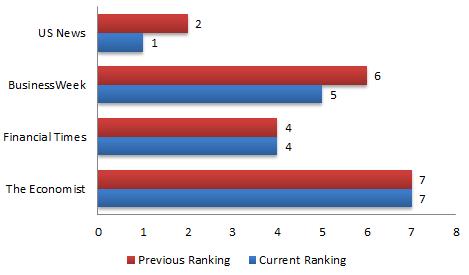
Average Rank: 4.25
Stanford MBA Acceptance Rate (2010-11)
Total Application: 7204
Acceptance Ratio: 6-9%
The MBA class enrollment for 2012 MBA Class is 389. If you go by the growth in the application volume, Stanford MBA has shown a steady growth of 14-15% annually with the number of enrollments for the MBA class growing at 7%, over the past 4 years . A reversal in application volume growth occurred for the class of 2012 with -4% decrease in application from that of the class of 2011. Does it mean that you have a better chance to get into Stanford GSB MBA program? Not necessarily, but a 14-15% application volume growth to -4% shrinkage is an interesting trend and the 2013 data will give us a clear idea on the reversal of trends.
Stanford MBA Budget (2010-11)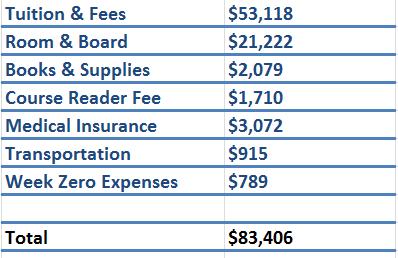
Median Total Compensation: $165,000
Median Base Salary: $120,000
Stanford MBA GMAT
Range: 540-800
Median: 730
Stanford MBA Class Profile (2010-11)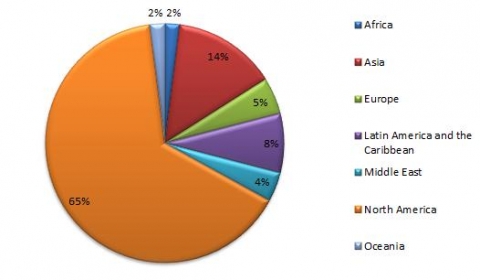
Interesting statistics to note here is that Stanford MBA Admissions team has ensured diversity in class composition not only on nationality but also on gender distribution and minority representation. For the class entering 2010-11, 39% students were female and 23% were from minority.
Stanford MBA Undergraduate Major (2012)
Students from Engineering background has come down over the past 4 years with 2011 class comprising of 36% as against 31% in 2012.
Recommended Downloads
Stanford MBA Essay Guide
Stanford MBA Interview Guide
Please Note
The ranking factors used by US News, Businessweek, Financial Times and The Economist include Selectivity, Rating by Deans and MBA Programs Director, Ratings by recruiters, Career Progression, Diversity of Recruiters, Diversity of Faculty, Diversity of Students, International Experience of Students, Assessment of career services, Jobs found through Career Services, Placement Statistics, Student Assessment, Faculty Quality, Student Quality, Education Experience, Increase in Salary, Diversity and Reach of Alumni network.
1. US News MBA Ranking is published in March (Current Ranking is from 2011 and Previous Ranking from 2010)
2. Businessweek Full-time MBA Ranking is published in late October or early November in even-numbered years(Current Ranking is from 2010 and Previous Ranking from 2008)
3. Financial Times MBA Ranking is published in February(Current Ranking is from 2011 and Previous Ranking from 2010)
4. The Economist MBA Ranking is published in September(Current Ranking is from 2010 and Previous ranking from 2009)
P.S: F1GMAT has taken great care in ensuring that the information is accurate. If you have found errors or inconsistencies in data, please report to us using Issue with the Article link.
Would like to see Business School stats and News? Tell us what you want to read (Click here and select Suggestions)

Essay A: What matters most to you, and why? (650 Words)
Essay B: Why Stanford? (350 Words)
Optional Question: Think about times you’ve created a positive impact, whether in professional, extracurricular, academic, or other settings. What was your impact? What made it significant to you or to others? (600 Words) (200 words – each example)
Download F1GMAT's Stanford MBA Essay Guide
(24+ Sample Essays & 300+ Pages of Essay Writing Wisdom)
 About the Author
I am Atul Jose, Founding Consultant of F1GMAT, an MBA admissions consultancy that has worked with applicants since 2009.
For the past 15 years I have edited the application files of admits to the M7 programs: Harvard Business School, Stanford Graduate School of Business, the Wharton School, MIT Sloan, Chicago Booth, Kellogg School of Management, and Columbia Business School, together with admits to Berkeley Haas, Yale School of Management, NYU Stern, Michigan Ross, Duke Fuqua, Darden, Tuck, IMD, London Business School, INSEAD, SDA Bocconi, IESE Business School, HEC Paris, McCombs, and Tepper, plus other programs inside the global top 30.
My work covers the full MBA application deliverable: career planning and profile evaluation, application essay editing, recommendation letter editing, mock interviews and interview preparation, scholarship and fellowship essay editing, and cover letter editing for funding applications. Full bio with credentials and admit history is here.
I am the author of the Winning MBA Essay Guide, the best-selling essay guide covering M7 MBA programs. I have written and updated the guide annually since 2013, which makes the 2026 edition the thirteenth.
The reason I still write and edit essays every cycle: a good MBA essay carries a real applicant's voice. Writing essays for F1GMAT's Books and Editing essays weekly is how I stay calibrated to what current admissions committees respond to.
Contact me for school selection, career planning, essay strategy, narrative development, essay editing, interview preparation, scholarship essay editing, or guidance documents for recommendation letters.