Consumers have reported companies targeting Ads based on their private conversation, but if you look at the number of Ads that an average consumer is exposed, it has increased from 2000 per day in 1990 to 5000 in 2018, across platforms and devices. Under such circumstances, if the technology truly exists to target based on conversation, it would be in the interest of the largest advertising companies - G and F, to offer the service to all advertisers instead of a select few.
Which of the following statement strengthens the author's position?
Out of the top 20 academic organizations, Chinese constitute 17 of those who were patenting in Artificial Intelligence (AI) and among 10 of the 20 publications leading the scientific research publications in the industry. From 2013 to 2016, Chinese organization have overtaken the growth rate of patent filing in other countries. However, Alphabet the US holding company of technology giant Google ranks #1 in terms of acquiring AI companies. Despite the competition, China would lead the world in AI technology by 2030
During world war 1 and 2, the top income tax rate jumped to 77% and 94% respectively. From 1950 to 1980, the tax rates remained above 70%. When the United States faced an unprecedented recession from July 1981, the republicans sponsored the Economic Recovery Tax Act of 1981 that cut the top tax rate to 50%. The Tax Reform Act led by Republic president Nixon in 1986, broadened the tax based and dropped the tax rate to 28% from 1988.
In Latin America, despite the growing influence of international retail chains, small independent supermarkets run by solopreneurs and traditional stores managed by families account for 45% to 61% of all consumer-goods sold. By offering coupons as credit and providing a complete shopping experience - childcare, cheaper bus service to the store, and offering personal attention, international chains could gain market share of low to middle-income Latin Americans.
For the above plan to work, what assumption do the Author most rely on?
India produced a record high - more than 23 million metric ton in pulses in 2016-17. In spite of an above average monsoon and minimum droughts in the agricultural heartland, the government imported equivalent to 1/3rd of the total locally produced pulses under zero-duty imports, contributing towards drastically reducing the price of the pulses to 30% below the peak price in 2016. For Indians to have disposable income and contribute towards 8-9% annual GDP growth rate, imports of pulses should be limited?
Following the 1991 economic crash, Japan was in a two-decade stagnation, only to be revived in 2013, when the change in real GDP per working adult matched the American’s 45% over a 25-year period. The turnaround is credited to Prime Minister Abe’s aggressive money printing policy that has skyrocketed the debt to GDP ratio to 237% in 2017.
To overcome the Opioid abuse seen in patients with chronic pain, the scientists at Stanford University have come up with a solution of silencing the neurons in the brain that register pain. The study conducted on mice along the amygdala region that is similar to humans and responsible for controlling emotions, isolated the region associated with pain from the regions responsible for negative emotions and positive rewards. However, it is the negative manifestation of the pain that protects humans from danger and fatal injuries.
5G technology would enable download speeds of 20 GB/second. The mammoth speed is primarily attributed to the millimeter wave spectrum that requires cellular towers every 500 feet for optimum functioning.
Unlike the critical reasoning question argument structure questions where you have to identify premise, assumptions, secondary facts and conclusion, the question on parallel reasoning require a keen eye on the similarities of the structure and a closer eye on the conclusion.
Q) The Chorus from Sam Smith's "Stay With Me" has an eerie resemblance to Tom Petty's 1989 song - “I Won’t Back Down. Mr. Petty and Jeff Lynne, the Songwriters, filed a copyright violation case and settled out of court. Modern song creation has evolved away from the standard process - starting with the lyrics, the sheet music, and finally the tune. For new song creators, it would be impossible to fight cases where some parts of the song had similar sheet music as the songs in the 70s and 80s.
During GMAT Preparation, Critical Reasoning and Data Sufficiency sections require a great deal of adjustment compared to GMAT Reading Comprehension and Sentence correction. The linear thinking that involve variables, data substitution, rules, and logical thinking might not completely work for 700+ GMAT CR and DS sections. Here is Why!
Q) Vegan Diet proponents have often claimed that low-carb, high-fat diets integral in a non-vegetarian diet is dangerous, and therefore, they have a superior and balanced diet. In fact, vegan diets lack important nutrients, responsible for brain function and blood formation.
Q) If you go by the popularity of Gaming units, as of Jan 4th 2015, Sony’s PS4 sold 18.5 million units and reached 10.9 million PlayStation Plus subscribers, a growth of 37.9% from October 2014. Despite the massive growth, Sony’s PlayStation is behind Microsoft’s Xbox One, which in November 2014 accelerated its sales due to a $50 price cut, and a bundle of free games. On 28th January 2015, Spotify, the leading music subscription service announced an exclusive partnership with PS4, and offered digital music to 64 million PlayStation Network users. With the announcement, Feb 2015 saw a spike in sales for the PS4 units by 45%.
Which one of the following conclusions is valid for the above statements?
GMAT Critical Reasoning Weaken Questions follows a familiar pattern. The argument is constructed in such a way that there are enough gaps between the premises and the conclusion. The new information included in the answer choice either weakens the conclusion directly or negates the premise, and in effect weakens the conclusion.
Reaching a conclusion in an argument depends on the premise(s) and the assumption.
In simple terms,
Premise(s) + Assumption = Conclusion
What confuses GMAT test takers is the extent to which assumptions can be used to reach a conclusion. A wrong answer choice can plant the idea that it is all right to use personal biases, and knowledge outside the given statements to reach a conclusion.
The structure of an argument in GMAT Critical reasoning comes in two forms: Bold Faced and Summary. In Bold Faced question type, the parts of the arguments that the test taker should focus are marked in Bold Font, while for the Summary, the test creators will ask how the argument is structured.
We have learned how to divide an argument into premises and a conclusion. While splitting the argument, you should watch out for the order in which premises are stated. A common deductive fallacy seen in Critical reasoning question is when the premises and conclusions are true but invalid.
The test taker evaluates them separately and finds truth in the statements, thus assuming that truth equals validity. This is not the case, and test creators are using ‘Affirming the Consequent’ fallacy to trap the GMAT test taker.
GMAT Critical reasoning assumption questions depend on arguments that involve Slippery Slope. This type of critical reasoning fallacy might not be mentioned in Official GMAT Guide, but the test creators often use this fallacy in various answer choices. It is easy to spot them if you pay attention to how the conclusions are reached.
Once you get a feel of the various GMAT Critical Reasoning question types, it is important that you understand the fallacies in arguments that would be part of the answer choices. A common one seen in assumption and conclusion question type is the Fallacies resulting from Ad Hominem.
Ad Hominem is a Latin Word that translates to “To the Man” or more precisely “Against the man”. Politicians are experts at using Ad Hominem. In this type of fallacy, the author or source of the argument is attacked instead of attacking the argument per se.
Sanskrit Scholars are a minority in the Syllabus review committee. Since the committee offers recommendations on syllabus changes, the below par representation of Sanskrit Scholars would lead to fewer years of mandatory Sanskrit classes in schools.
If the statements above are correct, they strongly support which of the following?
In 2013, the sea ice in Antarctica reached a record high. 80% of the increase in ice volume can be attributed to the strong westerly winds in the South Pole. The ice level is much higher than the recorded ice level during the 1970s. This proves that Global Warming is a hoax.
The argument above is based on which of the following assumptions?
a) Global warming and sea ice level are correlated. b) Sea Ice Level in Antarctica has a stronger correlation to Global Warming c) One of the effects of Global Warming is the melting of sea ice. d) Increase in Ice Volume is the result of low temperature e) There was no interruption in collecting data about sea ice level from 1970 to 2013
“Infer” is, as you can see, a word with fairly flexible meaning. We most often use it in day-to-day life to mean “make an educated guess.” If your friend Jane says she doesn’t eat hot fudge sundaes, you apply your existing knowledge about the possible reasons someone could have for not enjoying the hot fudge and ice cream deliciousness, and you make an educated guess as to what her reasons could be. On the GMAT, however, “inference” has a different meaning. Think of inferring as the process of deriving the strict logical consequences of assumed premises. Learn how to answer GMAT CR infer Question
Critical reasoning, like its name, is a critical component of the GMAT exam. It is part of the Verbal Section, with 41 questions that need to be completed in 75 minutes. The Critical Reasoning component is comprised of 14 to 16 questions.
Collecting and Interpreting Facts: GMAT Reading Comprehension
Effective Note-taking for GMAT Reading Comprehension
5 Questions to Speed up Summary Creation
Mastering GMAT Reading Comprehension: 3 Best Practices
How to Remember Information
How to improve comprehension by Questioning the Author
How to Read Faster
How to Answer GMAT Reading Comprehension Title question
How to Answer GMAT Reading Comprehension Main Idea Question
How to Answer GMAT Reading comprehension inference question
How to Answer GMAT Reading Comprehension Purpose Question
How to Answer GMAT Reading Comprehension Detail Question
How to Answer the GMAT organization of passage Question
How to Improve GMAT Reading Comprehension Score?
Passage #1: Protein-Rich Diet Passage #2: Pregnant Women and Stress Management Passage #3: F Losing Momentum Passage #4: Conservatives and Automation Passage #5: Collaboration, Team size and Performance Passage #6: Effective Altruism Passage #7: Loneliness Epidemic Passage #8: Space Exploration Passage #9: Lab-Grown Meat Passage #10: Minimum Wage in the US Passage #11: AI and Creativity Passage #12: Bias Against Healthcare in Developing Economies Passage #13: Legacy Admissions Passage #14: Plastic Ban and alternatives Passage #15: Underestimating Homo Sapiens Passage #16: Conspiracy Theories Passage #17: Relative Poverty Passage #18: Why Paintings are expensive Passage #19: US Obesity Epidemics Passage #20: The Future of Advertising Passage #21: Breaking Large Companies Passage #22: Helicopter Parenting Passage #23: Future of Democracy Passage #24: Technology and Global Citizenship
Chapters 1) Introduction 2) 6 Step Strategy to solve GMAT Critical Reasoning Questions 3) How to overcome flawed thinking in GMAT Critical Reasoning? 4) 4 GMAT Critical Reasoning Fallacies 5) Generalization in GMAT Critical Reasoning 6) Inconsistencies in Arguments 7) Eliminate Out of Scope answer choices using Necessary and Sufficient Conditions 8) Ad Hominem in GMAT Critical Reasoning 9) Slippery Slope in GMAT Critical Reasoning 10) Affirming the Consequent – GMAT Critical Reasoning 11) How to Paraphrase GMAT Critical Reasoning Question 12) How to Answer Assumption Question Type 13) How to Answer Conclusion Question Type 14) How to Answer Inference Question Type 15) How to Answer Strengthen Question Type 16) How to Answer Weaken Question Type 17) How to Answer bold-faced and Summary Question Types 18) How to Answer Parallel Reasoning Questions 19) How to Answer the Fill in the Blanks Question Question Bank Question 1: 5G Technology (Inference) Question 2: Water Purifier vs. Minerals (Fill in the Blanks) Question 3: Opioid Abuse (Strengthens) Question 4: Abe and Japan’s Economy (Inference) Question 5: Indians and Pulse Import (Weakens) Question 6: Retail Chains in Latin America (Assumption) Question 7: American Tax Rates – Republican vs. Democrats (Inference) Question 8: AI – China vs the US (Weakens) Question 9: Phone Snooping (Strengthens) Question 10: Traditional Lawns (Assumption) Question 11: Appraisal-Tendency Framework (Inference) Question 12: Meta-Analysis of Diet Trials (Weakens) Question 13: Biases in AI (Strengthens) Question 14: Stock Price and Effectiveness of Leadership (Inference) Question 15: US Border Wall (Weakens) Question 16: Driverless Car and Pollution (Assumption) Question 17: Climate Change (Inference) Question 18: Rent a Furniture (Weakens) Question 19: Marathon Performance and Customized Shoes (Weakens) Question 20: Guaranteed Basic Income (Assumption) Question 21: Brexit (Infer) Question 22: AB vs Traditional Hotels (Assumption) Question 23: Tax Incentive and Job Creation (Weakens) Question 24: Obesity and Sleeve Gastrectomy (Inference) Question 25: Recruiting Executives (Weaken)
Read the Essay Guides and see how we write & edit MBA essays
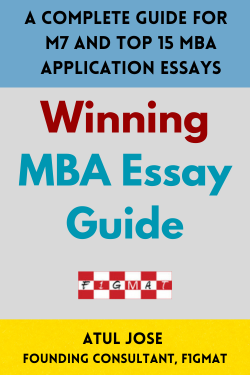
Winning MBA Essay Guide - A Complete Guide for M7 and Top 15 MBA Application Essays
F1GMAT's Winning MBA Essay guide will teach you how to transform your essay into a life journey with trials and tribulations that will move the admission team.
+ Top 15 MBA Programs (Harvard, Stanford, Wharton, Columbia, Booth, MIT, Kellogg, Yale, Haas, Darden, INSEAD, LBS, NYU Stern, Tuck, Duke Fuqua, Ross)
+ The Art of Storytelling + Leadership Narratives + Review Tips + Persuasion Strategies + The Secret to "unleashing" your unique voice + How to prepare and present for the Video Essay + How to write about your Strengths + How to write about your Weaknesses


 Reaching a conclusion in an argument depends on the premise(s) and the assumption.


 Once you get a feel of the various GMAT Critical Reasoning question types, it is important that you understand the fallacies in arguments that would be part of the answer choices. A common one seen in assumption and conclusion question type is the Fallacies resulting from Ad Hominem.
 Sanskrit Scholars are a minority in the Syllabus review committee. Since the committee offers recommendations on syllabus changes, the below par representation of Sanskrit Scholars would lead to fewer years of mandatory Sanskrit classes in schools.
 In 2013, the sea ice in Antarctica reached a record high. 80% of the increase in ice volume can be attributed to the strong westerly winds in the South Pole. The ice level is much higher than the recorded ice level during the 1970s. This proves that Global Warming is a hoax.
 “Infer” is, as you can see, a word with fairly flexible meaning. We most often use it in day-to-day life to mean “make an educated guess.” If your friend Jane says she doesn’t eat hot fudge sundaes, you apply your existing knowledge about the possible reasons someone could have for not enjoying the hot fudge and ice cream deliciousness, and you make an educated guess as to what her reasons could be. On the GMAT, however, “inference” has a different meaning. Think of inferring as the process of deriving the strict logical consequences of assumed premises.
 Critical reasoning, like its name, is a critical component of the GMAT exam. It is part of the Verbal Section, with 41 questions that need to be completed in 75 minutes. The Critical Reasoning component is comprised of 14 to 16 questions.