Intelligible sentences won’t always be grammatically correct, but be careful that you don’t veer too far in the opposite direction and discard wordy answer choices whose meaning is clear.
Trap answers will often on the surface appear to be more “grammatical” than the correct answer. Learn how to spot them!
GMAT Sentence correction tests the use of a preposition at the end of the sentence. From our school days, we are taught that this is a violation of Basic English grammar. But a common mistake that we make while spotting prepositions at the end of the sentence is our inability to differentiate between proposition & a phrasal verb.
Modifiers are words or phrases that modify the subject. Common GMAT Sentence correction modifiers are phrases. You rarely see a word modifying the subject, unless it is the use of “only”, “almost”, and other adverbs.
Misplaced modifiers are easy to spot, and test takers should master this concept before learning the nuances of GMAT Sentence correction.
The question of using I or “Me” - the subject or the object has bemused even the best of the writers. The Authors of classic literature have made this mistake while other modern day writers have unknowingly mixed it up.
Luckily, there is an easy way to check the rule, and spot errors in GMAT Sentence Correction. Read More!
“Whom vs Who” is a commonly tested concept in GMAT Sentence correction. Some experts advice test takers to listen to the sentence while others advice to focus on the ‘subject’. This rule is partly correct, but in a sentence with multiple potential subjects, applying the rule consistently is a challenge.
Possessive pronouns should be handled more or less the same way as the nominative and objective pronouns: make sure that there is a clear antecedent in the sentence and that the pronoun agrees with that antecedent.
Apostrophe placement and pronoun forms are rarely tested on the GMAT, so a quick review of those issues should be enough to ensure that you’ll be prepared for them if they appear on GMAT. Learn how to handle possessive pronouns in GMAT.
It’s important to make sure that whenever you compare two things, those things are similar enough to make a comparison appropriate. For example, if you and a friend are both preparing for the GMAT, but your friend has the luxury of studying full-time while you have a job and a family competing for your attention, it’s not appropriate to compare your score improvements with those of your friend. Learn how to solve GMAT Parallelism Questions.
As you may know, diction refers to word choice. Usually, we use the term “diction” to describe an author’s tone or style - rarely does word choice have an effect on grammar. In some cases, though, it does. The GMAT Sentence Corrections will test you only on those occasions when word choice affects grammar, not when one word will be more effective than another.
I have been struggling with SC since the last 2 months. I have done the Manhattan GMAT SC Guide, as well as, the Official guide multiple times. But my scores are just not going up. I seem to know all the rules like the back of my hand but when it comes to the actual test I seem to make mistakes in the most obvious of places. What is worse is that even after practising so hard I don’t seem to figure out where I am going wrong. Is there anything – just about anything – I can do to improve my accuracy in SC?”
When you deal with the simplest formal logic statement: If X, then Y. But what happens when our necessary or sufficient factors become more complicated? Let’s look at a couple of examples, using the idea of a vegetable salad. The simplest statement and its contrapositive might look like this.
If the salad has lettuce, then it has tomatoes. If the salad has no tomatoes, then it has no lettuce.
When you are forming a contrapositive, you already know that the necessary and sufficient factors are switched around and negated. Learn how.
Many GMAT students complain that the use of passive and active voices on the GMAT is random. Sometimes, the correct answer to a Sentence Correction will be in the passive voice, but other times, a choice will be eliminated for being in the passive voice.
Some GMAT sentence correction questions test not only for the accepted rules of grammar but also for the specific preferred style of the GMAT. Luckily, “who” vs. “whom,” is not one of those issues; this is a pretty straightforward issue, and is usually not tested in a complicated way. However, since even the most knowledgeable and educated writers sometimes misuse “who” and “whom,” it’s worth reviewing a couple of rules that can help guide you in determining the correct usage of these pronouns.
Sentence corrections on the GMAT tests many of the same issues in subject-verb agreement as in pronoun-antecedent agreement: it’s important to distinguish singular nouns from plural ones, even when the test-makers have made it difficult to do so. Learn How!
A common trick used by GMAT test makers is to insert modifying phrases incorrectly. Let us look at 10 Sentences and see how GMAT test creators strategically place modifying phrases, and how to spot the error in usage.
Errors in pronouns—words like he, she, it, they, our, etc.—and antecedents—the words that the pronouns refer to—are among the most common errors in English Grammar.
GMAT Sentence correction(SC) comprises 15 of the total 41 verbal questions, which means that the majority of verbal questions are from GMAT SC. With SC questions, you will be presented with a question followed by five answer choices. The question will be underlined in part. You have to select the best answer choice that rephrases the underlined part of the question. Remember - the first answer choice will repeat the original text so don't bother to read it again. Find out the strategies to solve GMAT Sentence Correction Questions.
Once in a while, the GMAT will hurl a particularly nasty question in your direction, one that seems deliberately designed to make you feel uncertain about all of the answer choices. These sorts of questions will most likely include rare idioms, awkward phrasing, and suspicious pronouns to keep you off balance.
Sentence Correction questions can include up to 54 words, making for incredibly long sentences and time consuming reading. But similar to GMAT SC - Spot Decision Points, knowing what is likely to be a testable section of a sentence and what is not, you can break apart the sentence into the parts that matter to you as a test-taker. Proper nouns, correctly-applied modifiers, adjectives and adverbs can all be streamlined to make for shorter sentences.
For example, in the sentence:
Originally called BackRub, Google was founded by two Stanford PhD students, Larry Page, whose father, Dr. Carl Victor Page, was a computer science professor at Michigan State University, and Sergey Brin.
The proper nouns and excessive adjectives can be eliminated or condensed, bringing you down to:
Originally called BackRub, Google was founded by two students, Larry, whose father, Carl, was a professor, and Sergey.
Verbs make fantastic decision points, as they are involved in subject-verb agreement errors, verb tense errors, and comparison errors (are we comparing an action to an action?). Pronouns also lend themselves well to decisions, as they can disagree in number or they can fail to refer to anything specific. Find out how to spot decision points in GMAT Sentence Correction
The single-most crucial type of Sentence Correction error, Modifiers, Comparisons, and Verb Tenses all share one thing in common: you do not need to be an expert editor to recognize that this sentence is illogical!
The introductory phrase in this sentence, “the single-most type…” is clearly meant to describe one item, but the rest of the sentence lists three. This does not make logical sense! Learn More!
Sentence Correction is not about the grammar! Sentence Correction exists to test your decision making abilities first and foremost, and does so by taking a common and much-shallower-than-you’d-think pool of skills and knowledge and using that as a basis to test your higher-order thinking. Learn about the 3 Crucial GMAT Sentence Correction Strategies
One of the smallest and least noteworthy words in the English language, the word “of” is crucial to your success on the GMAT, on both the quantitative and verbal sides of the exam. Learn Why!
Collecting and Interpreting Facts: GMAT Reading Comprehension
Effective Note-taking for GMAT Reading Comprehension
5 Questions to Speed up Summary Creation
Mastering GMAT Reading Comprehension: 3 Best Practices
How to Remember Information
How to improve comprehension by Questioning the Author
How to Read Faster
How to Answer GMAT Reading Comprehension Title question
How to Answer GMAT Reading Comprehension Main Idea Question
How to Answer GMAT Reading comprehension inference question
How to Answer GMAT Reading Comprehension Purpose Question
How to Answer GMAT Reading Comprehension Detail Question
How to Answer the GMAT organization of passage Question
How to Improve GMAT Reading Comprehension Score?
Passage #1: Protein-Rich Diet Passage #2: Pregnant Women and Stress Management Passage #3: F Losing Momentum Passage #4: Conservatives and Automation Passage #5: Collaboration, Team size and Performance Passage #6: Effective Altruism Passage #7: Loneliness Epidemic Passage #8: Space Exploration Passage #9: Lab-Grown Meat Passage #10: Minimum Wage in the US Passage #11: AI and Creativity Passage #12: Bias Against Healthcare in Developing Economies Passage #13: Legacy Admissions Passage #14: Plastic Ban and alternatives Passage #15: Underestimating Homo Sapiens Passage #16: Conspiracy Theories Passage #17: Relative Poverty Passage #18: Why Paintings are expensive Passage #19: US Obesity Epidemics Passage #20: The Future of Advertising Passage #21: Breaking Large Companies Passage #22: Helicopter Parenting Passage #23: Future of Democracy Passage #24: Technology and Global Citizenship
Chapters 1) Introduction 2) 6 Step Strategy to solve GMAT Critical Reasoning Questions 3) How to overcome flawed thinking in GMAT Critical Reasoning? 4) 4 GMAT Critical Reasoning Fallacies 5) Generalization in GMAT Critical Reasoning 6) Inconsistencies in Arguments 7) Eliminate Out of Scope answer choices using Necessary and Sufficient Conditions 8) Ad Hominem in GMAT Critical Reasoning 9) Slippery Slope in GMAT Critical Reasoning 10) Affirming the Consequent – GMAT Critical Reasoning 11) How to Paraphrase GMAT Critical Reasoning Question 12) How to Answer Assumption Question Type 13) How to Answer Conclusion Question Type 14) How to Answer Inference Question Type 15) How to Answer Strengthen Question Type 16) How to Answer Weaken Question Type 17) How to Answer bold-faced and Summary Question Types 18) How to Answer Parallel Reasoning Questions 19) How to Answer the Fill in the Blanks Question Question Bank Question 1: 5G Technology (Inference) Question 2: Water Purifier vs. Minerals (Fill in the Blanks) Question 3: Opioid Abuse (Strengthens) Question 4: Abe and Japan’s Economy (Inference) Question 5: Indians and Pulse Import (Weakens) Question 6: Retail Chains in Latin America (Assumption) Question 7: American Tax Rates – Republican vs. Democrats (Inference) Question 8: AI – China vs the US (Weakens) Question 9: Phone Snooping (Strengthens) Question 10: Traditional Lawns (Assumption) Question 11: Appraisal-Tendency Framework (Inference) Question 12: Meta-Analysis of Diet Trials (Weakens) Question 13: Biases in AI (Strengthens) Question 14: Stock Price and Effectiveness of Leadership (Inference) Question 15: US Border Wall (Weakens) Question 16: Driverless Car and Pollution (Assumption) Question 17: Climate Change (Inference) Question 18: Rent a Furniture (Weakens) Question 19: Marathon Performance and Customized Shoes (Weakens) Question 20: Guaranteed Basic Income (Assumption) Question 21: Brexit (Infer) Question 22: AB vs Traditional Hotels (Assumption) Question 23: Tax Incentive and Job Creation (Weakens) Question 24: Obesity and Sleeve Gastrectomy (Inference) Question 25: Recruiting Executives (Weaken)
Read the Essay Guides and see how we write & edit MBA essays
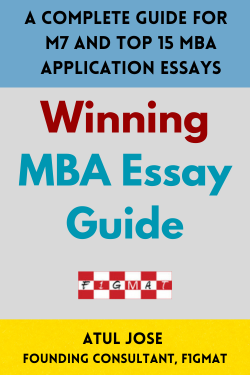
Winning MBA Essay Guide - A Complete Guide for M7 and Top 15 MBA Application Essays
F1GMAT's Winning MBA Essay guide will teach you how to transform your essay into a life journey with trials and tribulations that will move the admission team.
+ Top 15 MBA Programs (Harvard, Stanford, Wharton, Columbia, Booth, MIT, Kellogg, Yale, Haas, Darden, INSEAD, LBS, NYU Stern, Tuck, Duke Fuqua, Ross)
+ The Art of Storytelling + Leadership Narratives + Review Tips + Persuasion Strategies + The Secret to "unleashing" your unique voice + How to prepare and present for the Video Essay + How to write about your Strengths + How to write about your Weaknesses







 As you may know, diction refers to word choice. Usually, we use the term “diction” to describe an author’s tone or style - rarely does word choice have an effect on grammar. In some cases, though, it does. The GMAT Sentence Corrections will test you only on those occasions when word choice affects grammar, not when one word will be more effective than another.
 Many GMAT students complain that the use of passive and active voices on the GMAT is random. Sometimes, the correct answer to a Sentence Correction will be in the passive voice, but other times, a choice will be eliminated for being in the passive voice.

 A common trick used by GMAT test makers is to insert modifying phrases incorrectly. Let us look at 10 Sentences and see how GMAT test creators strategically place modifying phrases, and


 One of the smallest and least noteworthy words in the English language, the word “of” is crucial to your success on the GMAT, on both the quantitative and verbal sides of the exam.