F1GMAT · https://www.f1gmat.com/chicago-manufacturing-industry-trends-snapshot ·
 Add F1GMAT as a preferred source on Google, opens Google in a new tab
 See more of F1GMAT's MBA admissions research in Google's Top Stories by making us a preferred source on Google.
The Manufacturing 4.0 would require managers who understand the interdependencies in a manufacturing unit from the production components, the environment where the components interact, and the IT system that enable the interactions.In a span of just 15 years (2001 to 2016), Chicago lost 30% of the manufacturing jobs. Technology transformed the traditional workflow of production. Advanced machines required fewer low-skilled workers to handle the logistics, hence allowing Engineers to write instructions that directly fed the machines. This change has led to a sustained productivity growth after the 2010 crisis, taking the manufacturing revenue to a record level - $74.8 billion in 2015. During the same time (2001 to 2016), output in the Chicago region increased by 5%, despite 170,000 manufacturing jobs made redundant. The advanced manufacturing jobs in bio-pharma and electrical equipment (switch gears, junction boxes, switch boxes, and electrical pole hardware) require a highly qualified worker with STEM background. 40% of Chicago’s manufacturing jobs are in this niche sector. 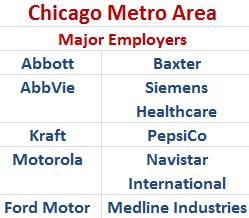
The Manufacturing 4.0 would require managers who understand the interdependencies in a manufacturing unit from the production components, the environment where the components interact, and the IT system that enable the interactions. Specialists in supply-chain integration will play a vital role in guiding managers in the new eco-system. MBA curriculum that integrates technical expertise and challenges in the supply chain, both technically and at an organizational level, will be of greater value for candidates entering the manufacturing sector.
Chicago is #1 metro city in the US for manufacturing Primary Metal, Electrical Equipment, Food Processing, Paper, Plastics and Fabricated metals.
Reference: State of Illinois Forecast Report - February 2016