F1GMAT · https://www.f1gmat.com/m7-mba-admissions-show-how-you-think ·
Follow F1GMAT
- LinkedIn, opens in a new tab
- YouTube, opens in a new tab
- X, opens in a new tab
- Instagram, opens in a new tab
Email me articles like this
MBA essay guides and deadline reminders. Unsubscribe in one click.
Email me articles like this, opens Mailchimp in a new tab Add F1GMAT as a preferred source on Google, opens Google in a new tab
See more of F1GMAT's MBA admissions research in Google's Top Stories by making us a preferred source on Google.
M7 MBA applicants from consulting and finance compete in a crowded pool. Applicants who show how they think stand out. A good MBA essay that shows an applicant's thinking covers four traits - clear thinking backed by evidence, reflection, a search for new knowledge, and ideas that resolve ambiguity.
This session explains one consultant's essay line by line.
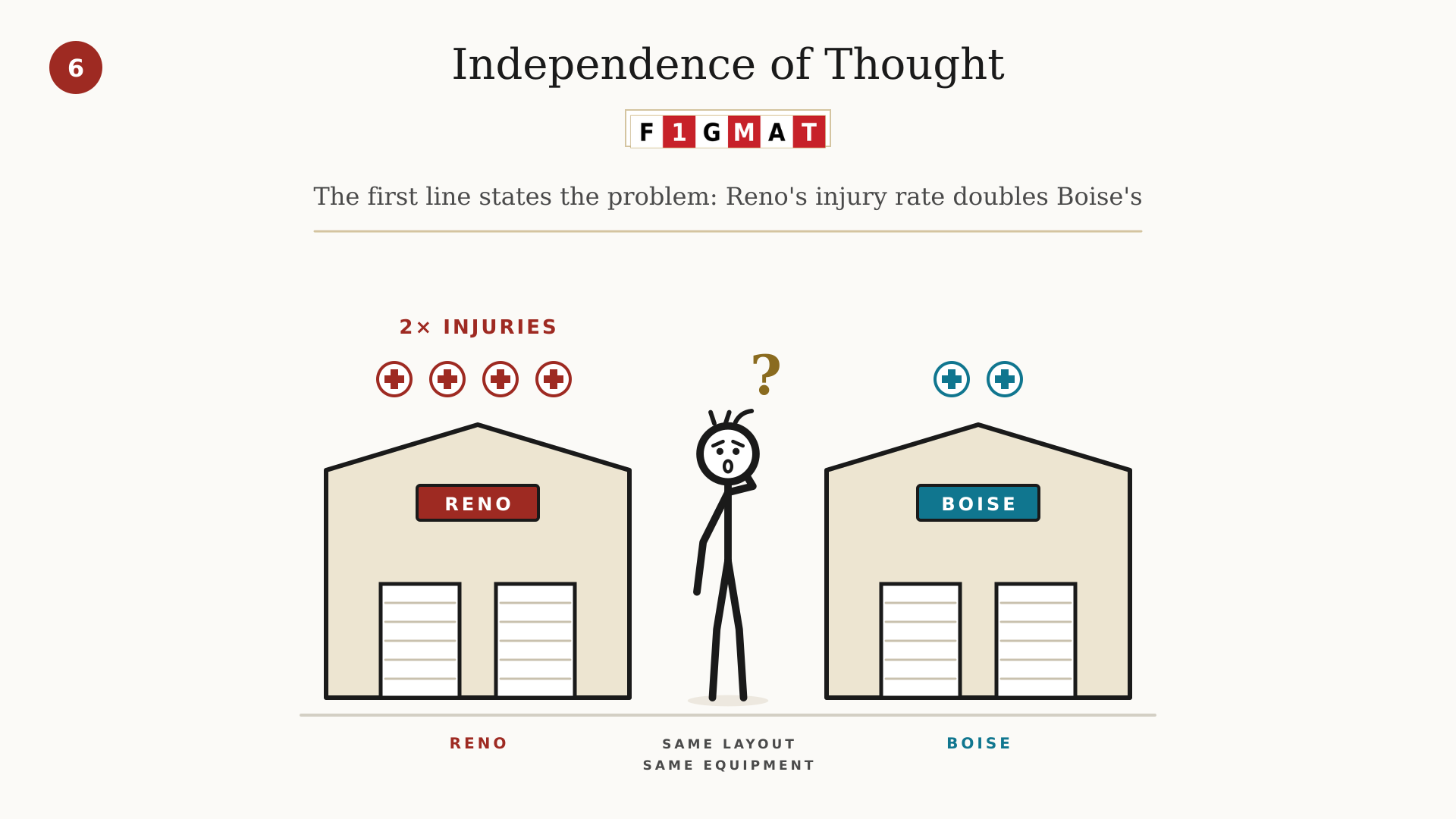
In 2024, a logistics client hired the consultant to find out why injuries at its Reno warehouse ran at double the rate of its Boise site, despite the same layout and equipment. Two weeks of floor notes explained the workflow but gave no insight.
The consultant studied a 2003 review by Simon Folkard and Philip Tucker and found an insight.
The line-by-line MBA essay review shows how to show your thinking through MBA essays - a must for M7 MBA essays around problem solving, innovation, or entrepreneurship.
How much data should you put in an MBA essay?
Feedback
Show Hands-on Experience
Then, the essay goes like this.
f1gmat.com
Show how you Think - Secret to Winning M7 MBA Admissions
For M7 MBA Admissions, showing that your thinking is unique is one way to stand out from a crowded technology consulting or finance applicant pool.
Four traits Shows How you Think
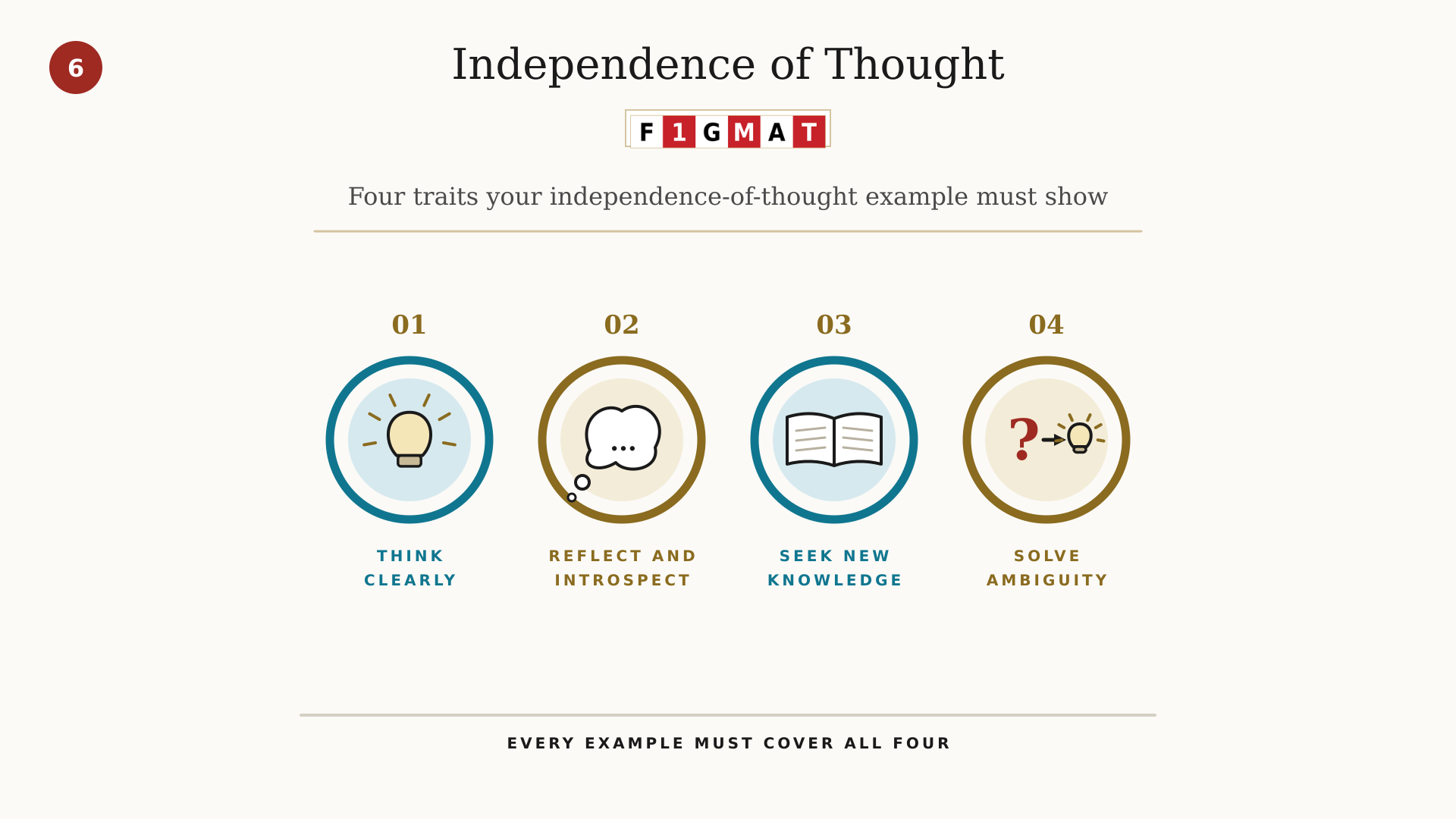
To show your independence of thought, your example must cover, number one, thinking clearly with evidence of strong intellectual ability, number two, communication from reflection and introspection, number three, seeking new knowledge, perspectives and experiences, number four, making sense of ambiguous situations and generating ideas that solve that ambiguity.
Define the Problem statement Early On
Let us look at one good example of an operations consultant who was assigned to evaluate why there is a higher injury rate in a Reno warehouse compared to the company's Boise site. The essay goes like this.
Essay: Share the Complexity of the Problem
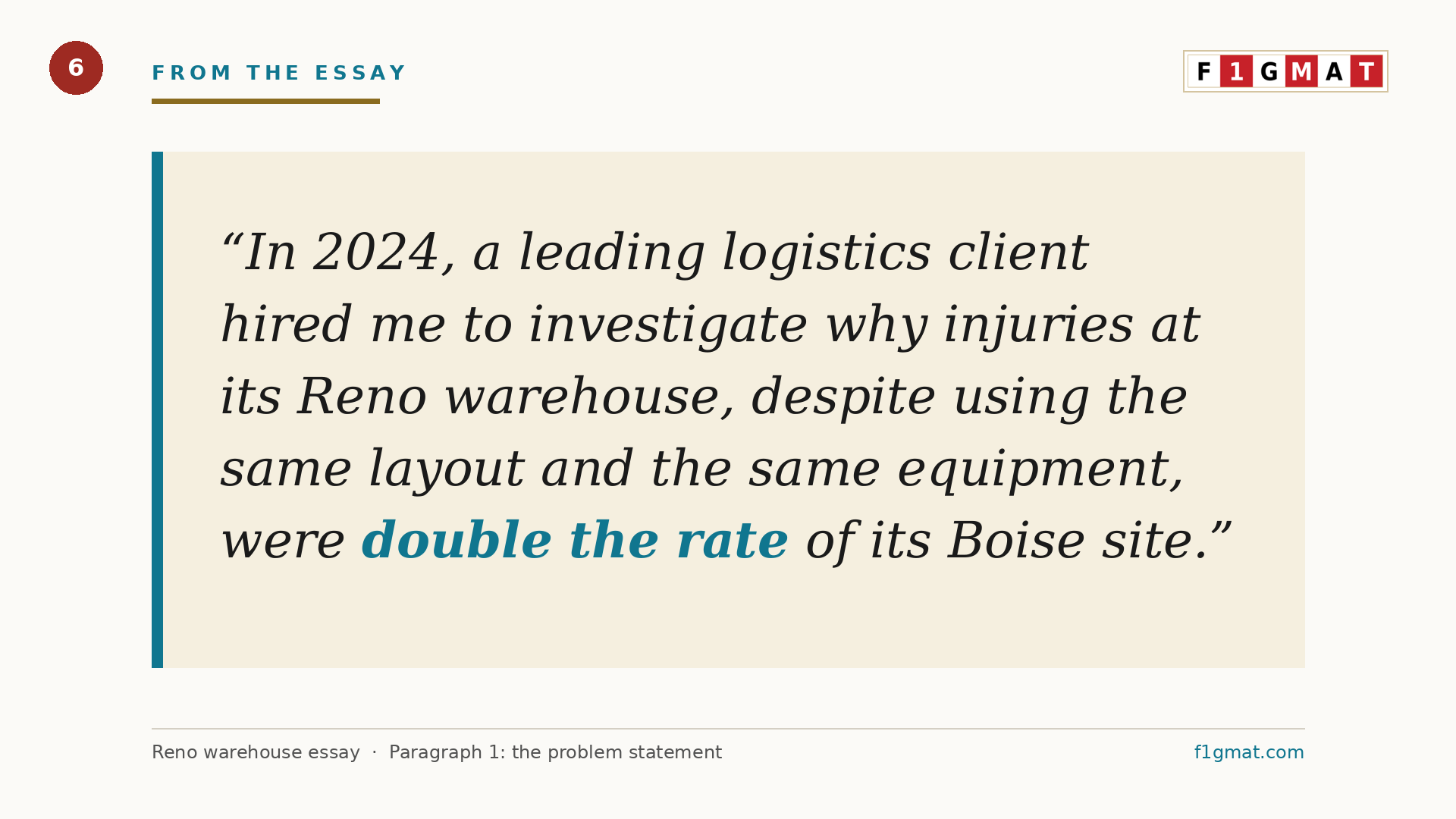
In 2024, a leading logistic client hired me to investigate why injuries at its Reno warehouse, despite using the same layout and the same equipment, were double the rate of its Boise site.
Keep Word count Goals
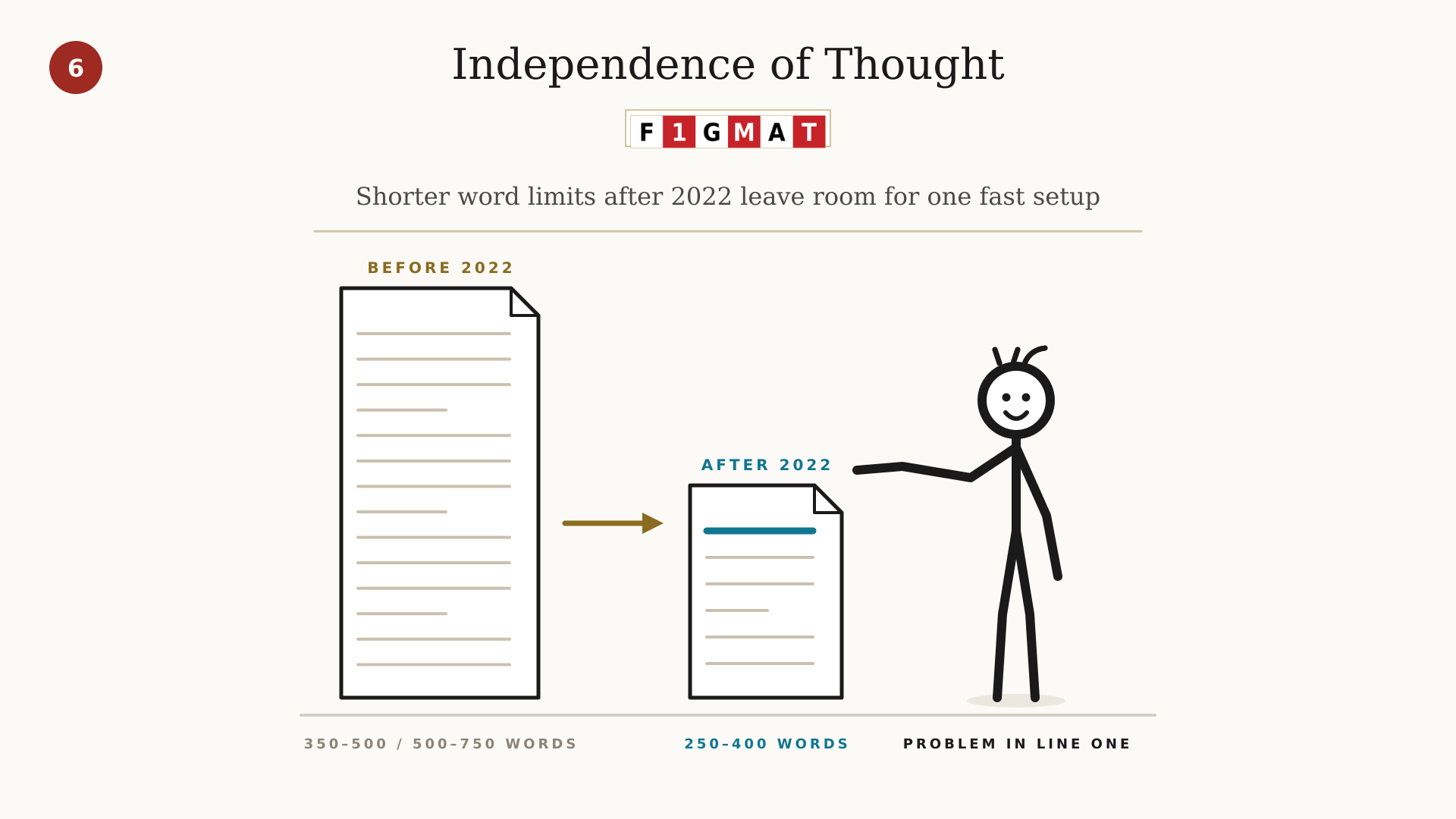
As you can see, the first line itself establishes the problem statement. This is the best practice that you must adopt post-2022 when the word count has come down dramatically from the 350 to 500 or 500 to 750 range to the 250 to 400 word range. Whenever you talk about your independence of thought, quickly establish the problem statement.
Show Hands-on Experience
Then, the essay goes like this.
Consultant = Observation and Analytical Skills
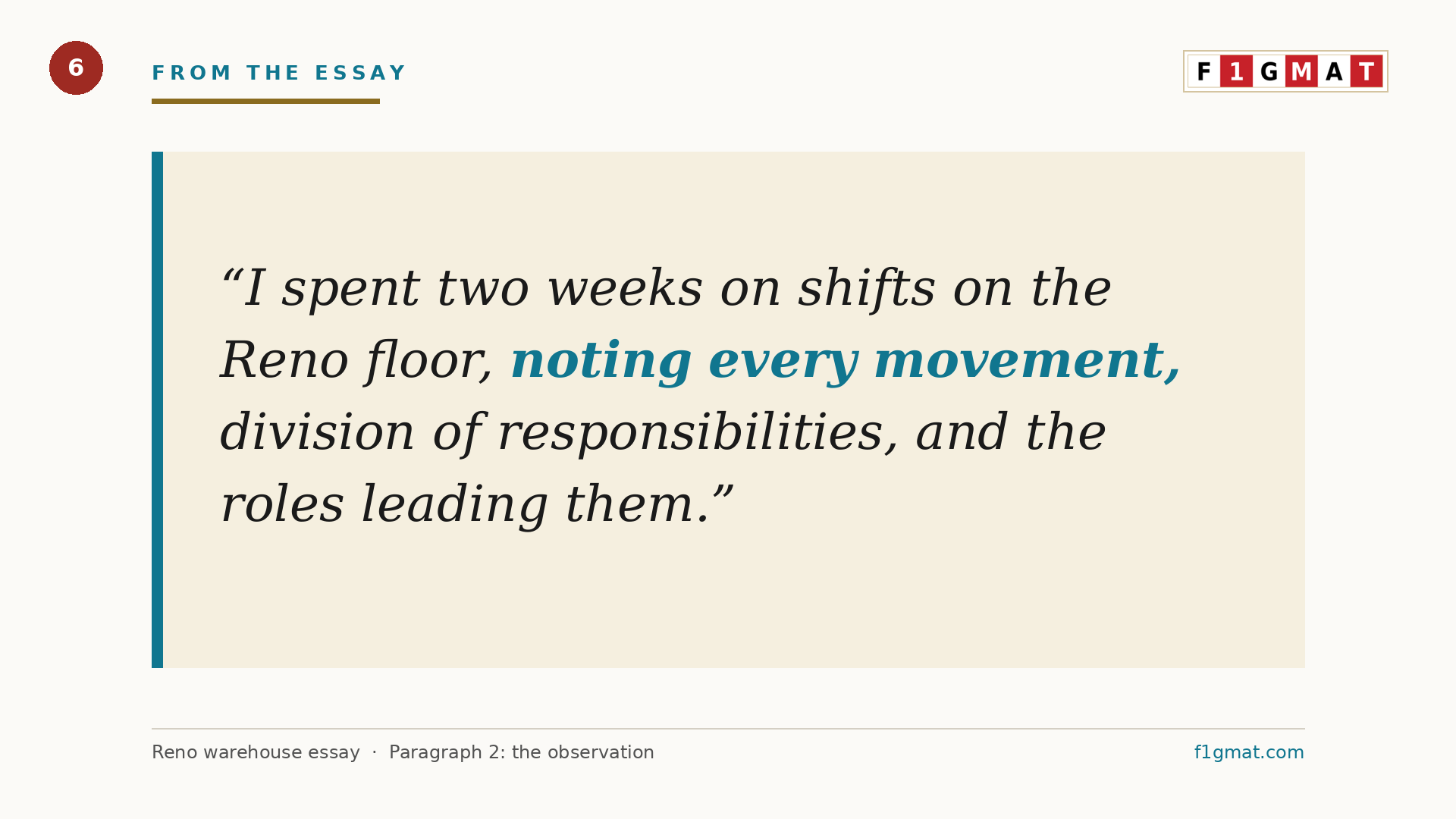
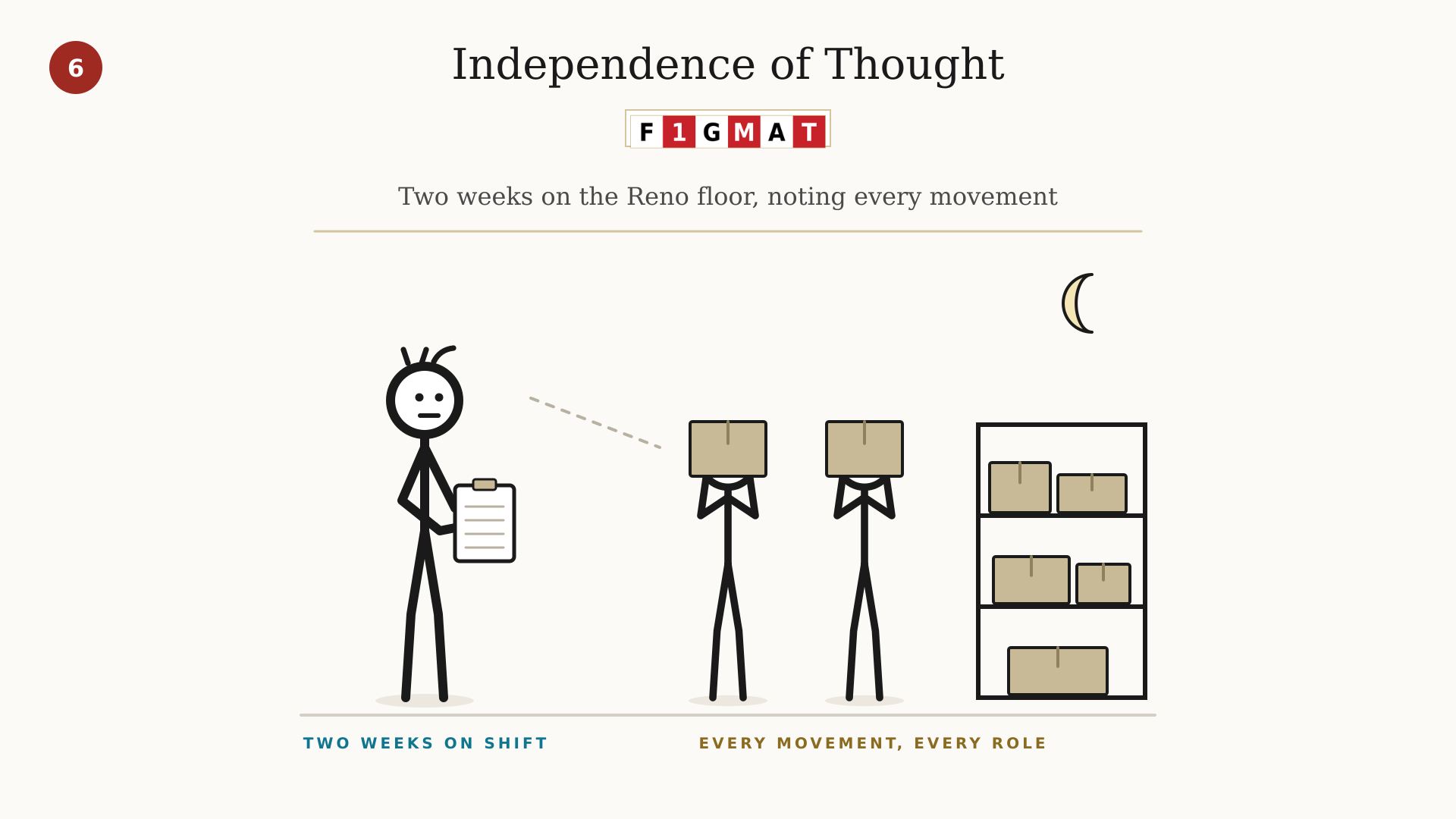
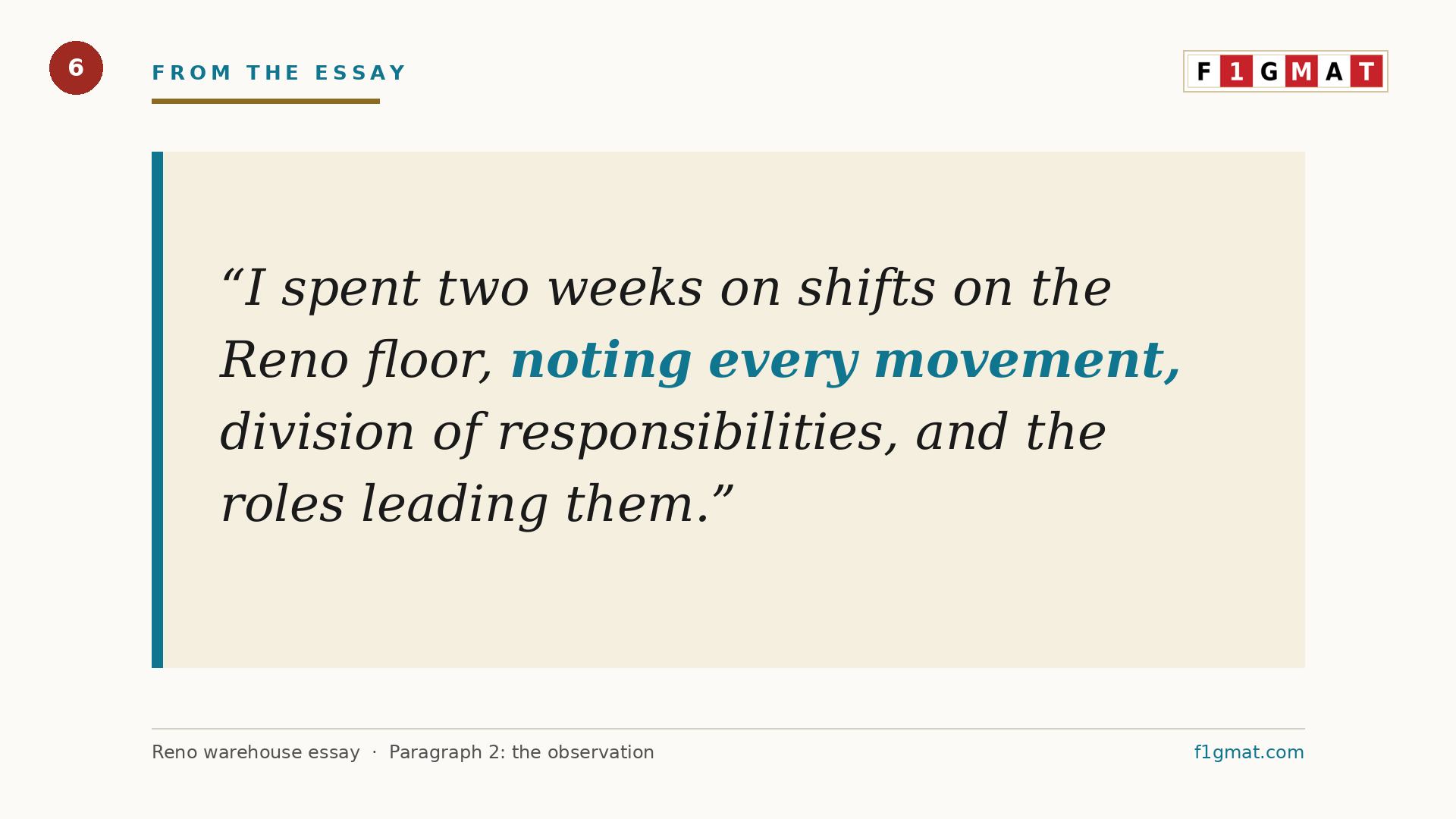
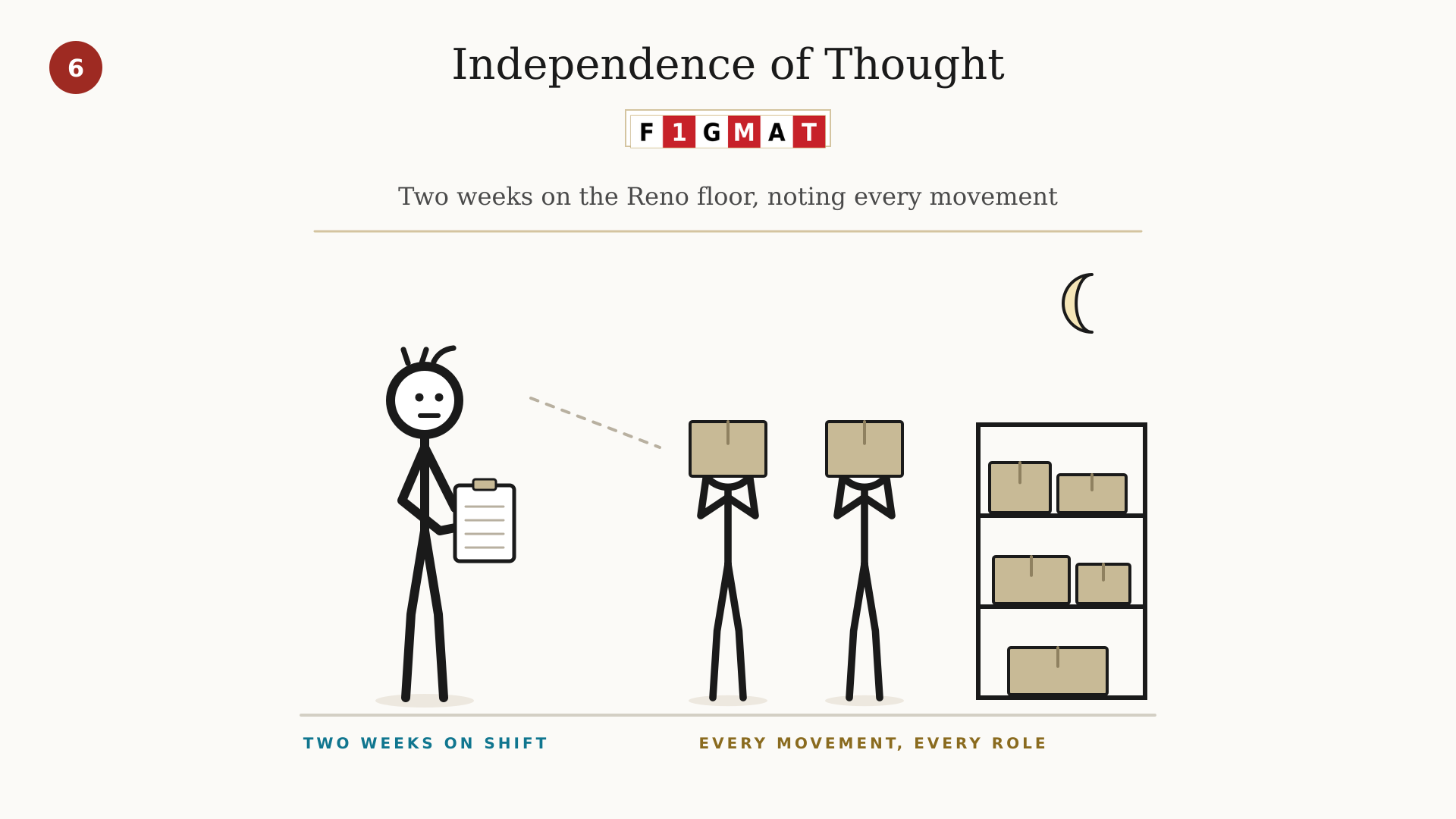
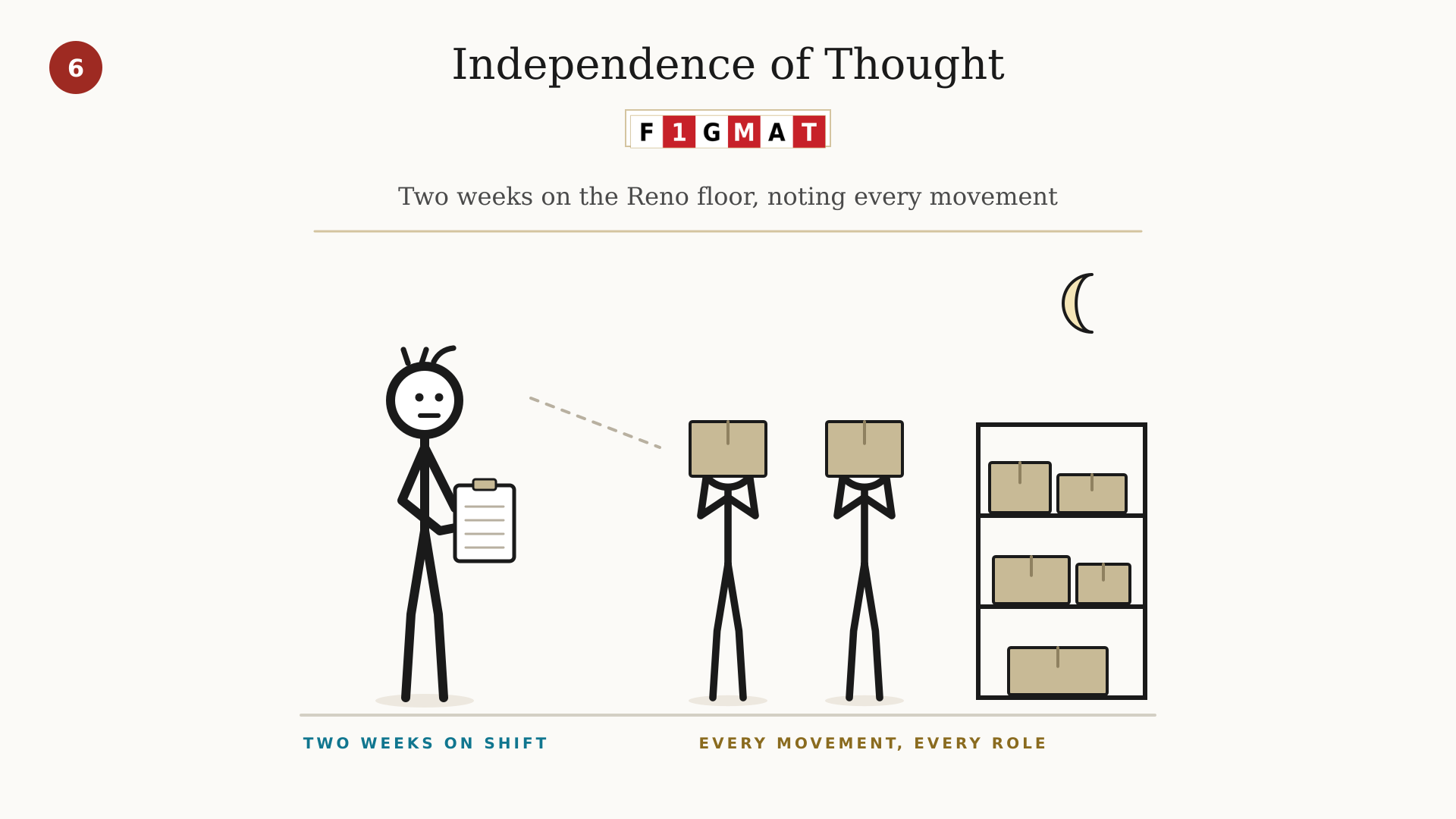
I spent two weeks on shift on the Reno floor, noting every movement, division of responsibilities and the roles leading them.
Essay: Shift Work and Subtlety of Operations
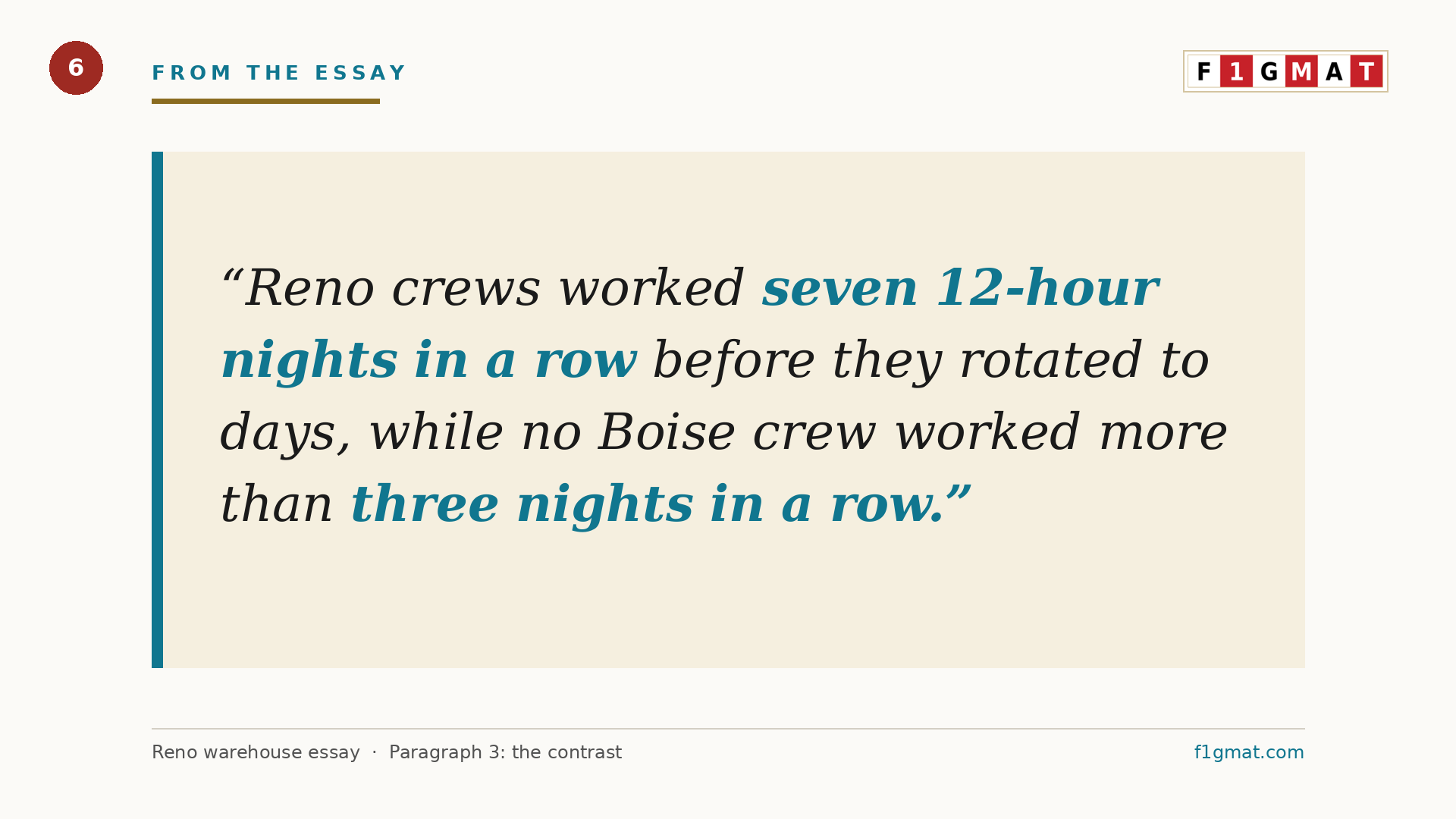
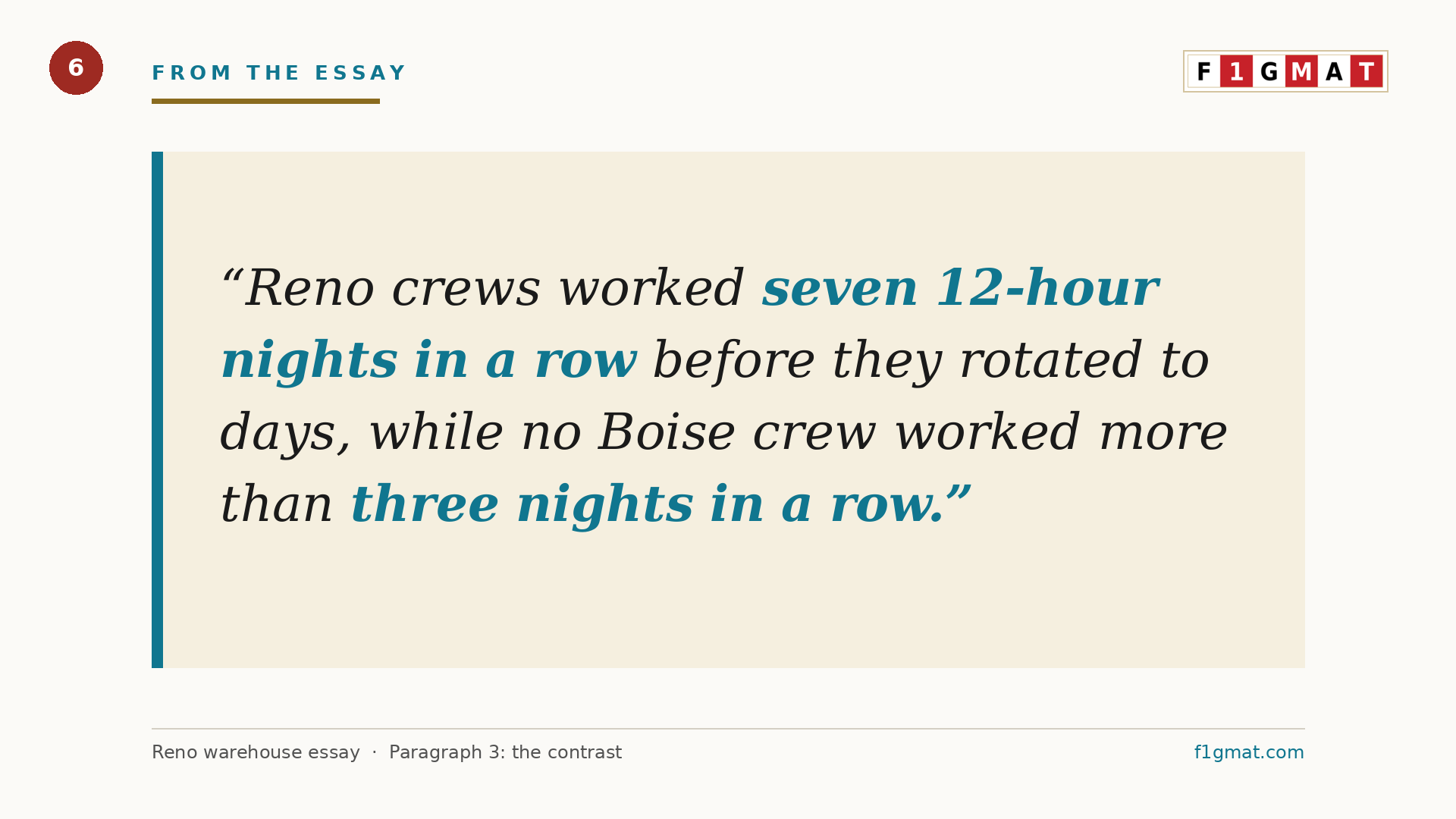
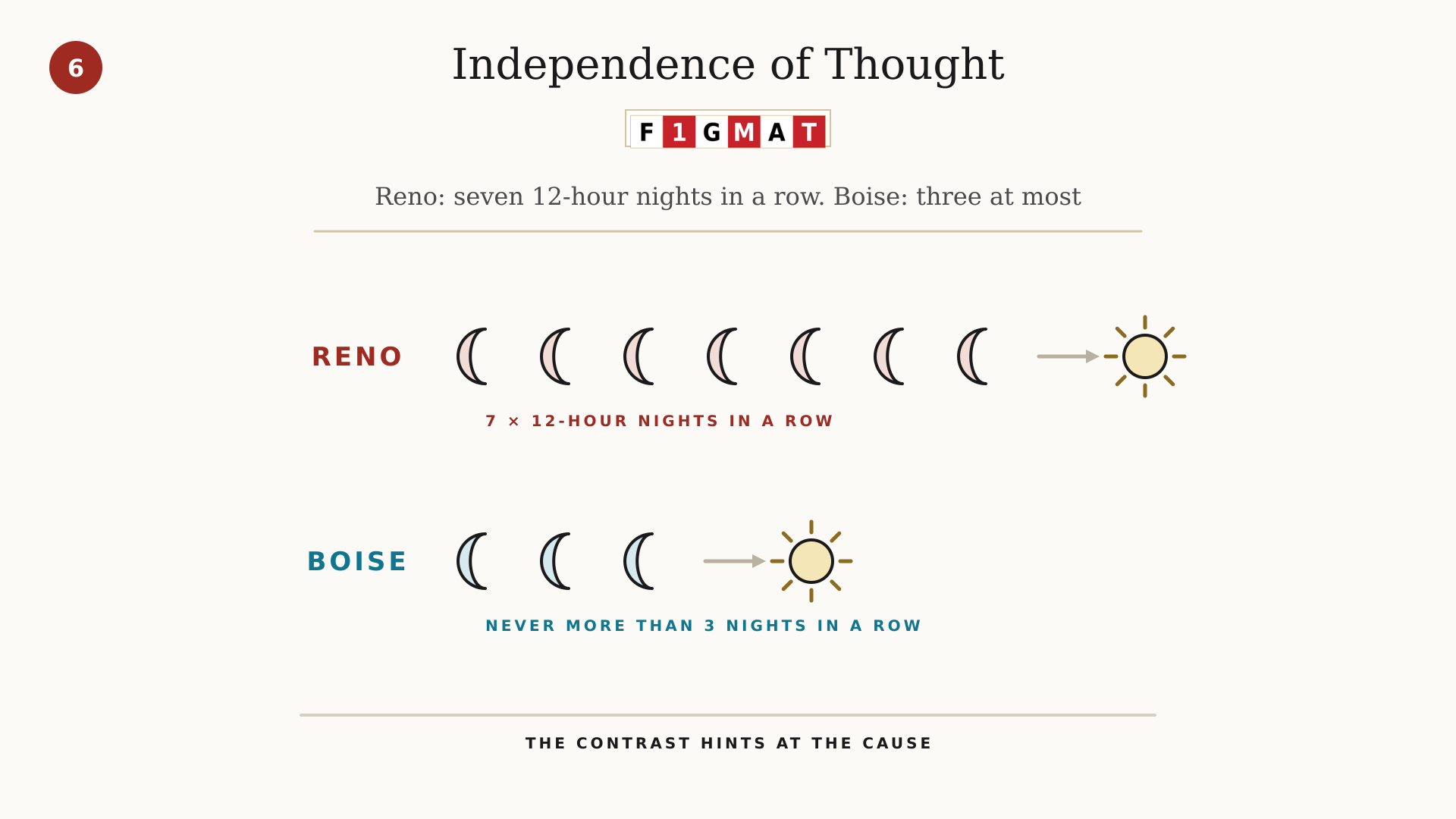
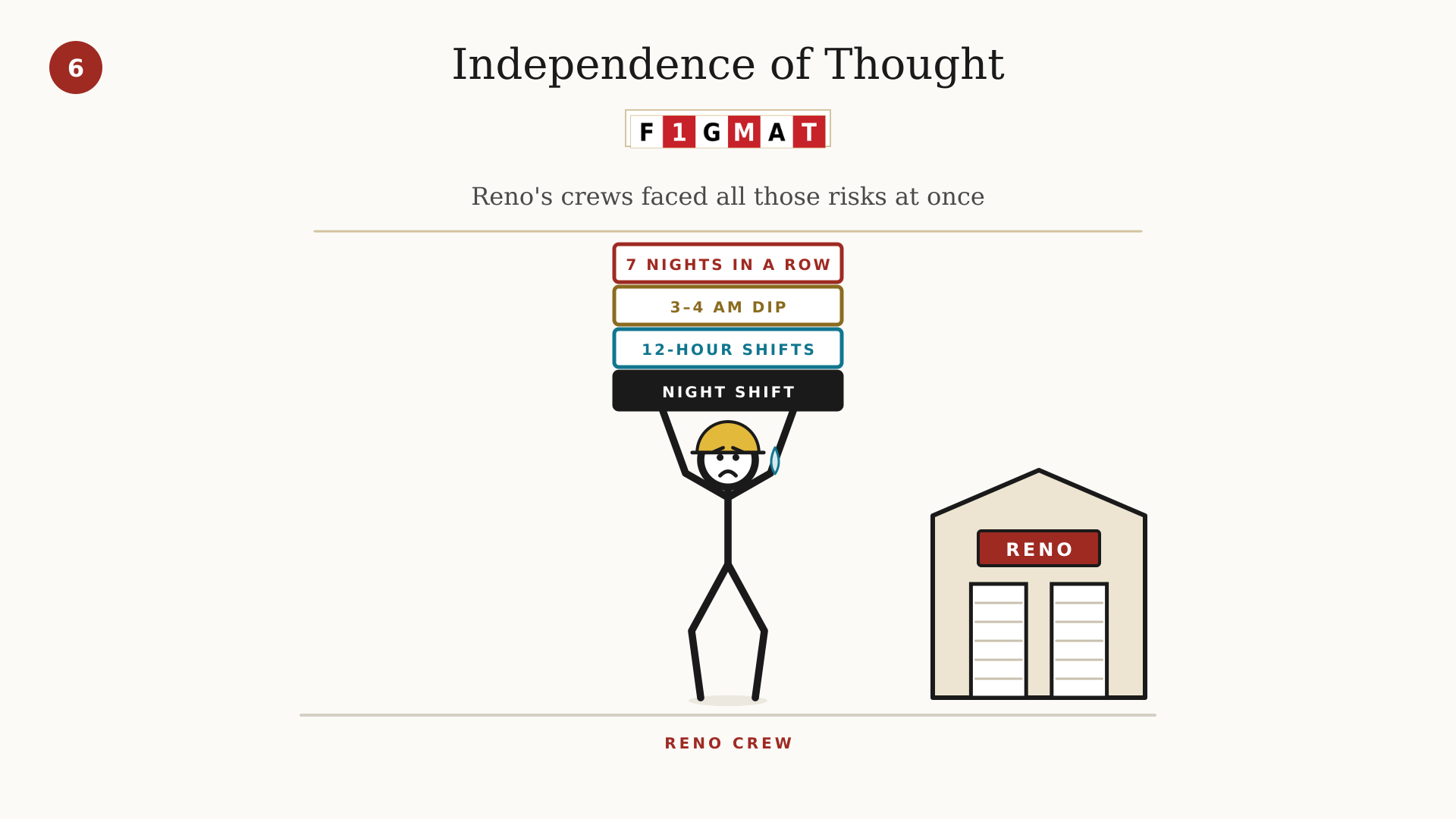
Reno crews worked seven 12-hour nights in a row before they rotated to days, while no Boise crew worked more than three nights in a row.
Verify Theory in the Real World
As you can see, the MBA applicant is showing what he did on that site.
Essay: two weeks
I spent two weeks noting every movement, division of responsibilities and the roles leading them.
Two weeks on the floor again
This is the first evidence of independence of thought. Now, it might be part of a consultant's job to do all these tasks, noting down and breaking down the problem. But you must explicitly cite specific observations you had about that engagement because consulting is a very generic term for a lot of roles and responsibilities. Unless you break down the consulting engagement to its essence, it's tough for the admissions person to understand what exactly you did. The best practice for writing essays is that once you share what you did, you must quickly pivot back to the problem statement. How did the applicant pivot back?
Essay: seven nights
Reno crews worked seven 12-hour nights in a row before they rotated to days, while no Boise crew worked more than three nights in a row.
Shift contrast
As you can see, he is contrasting the two sides and hinting that the injury was the result of consecutive night shifts.
MBA Essay: The W-Pattern (Low)
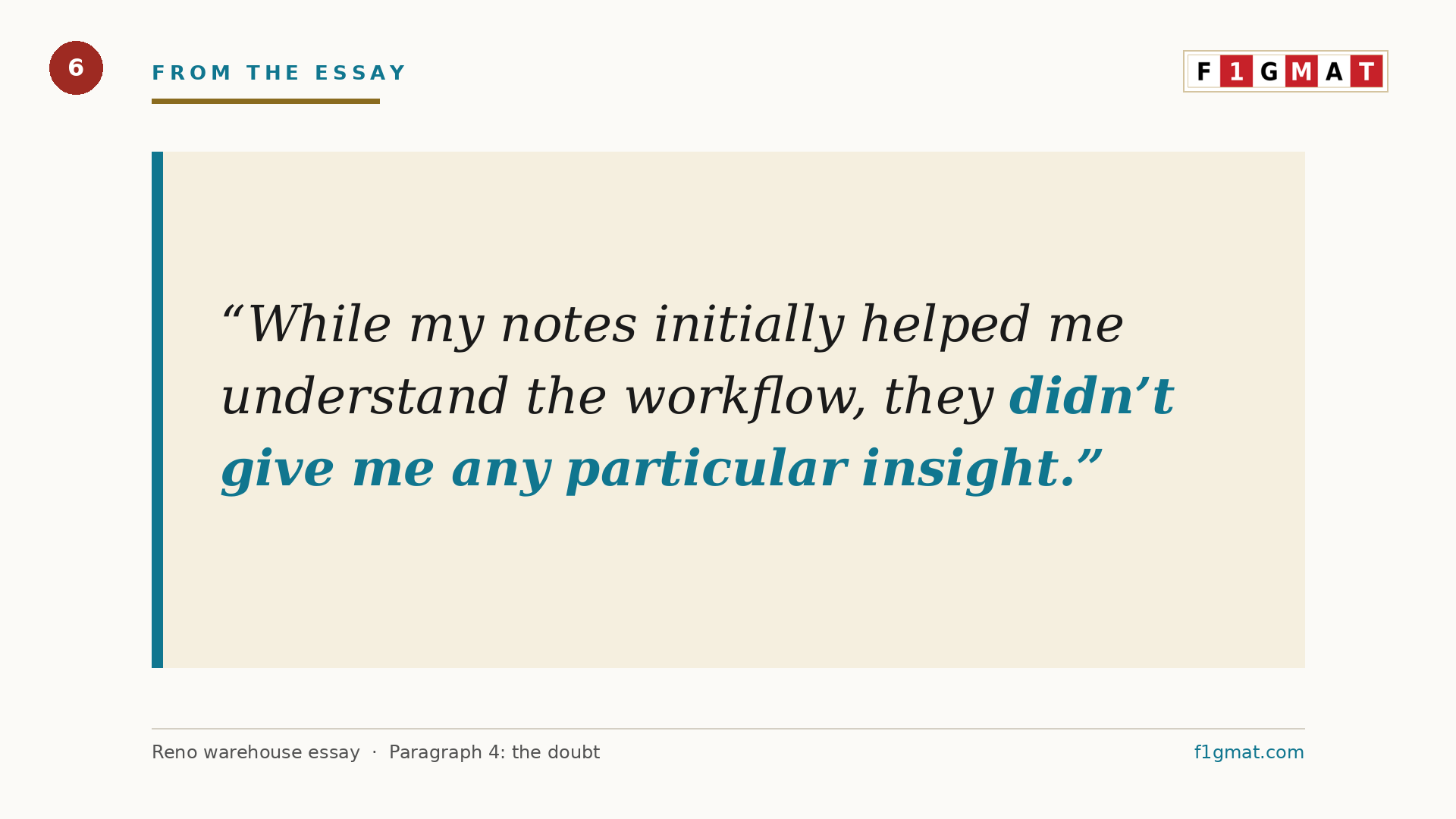
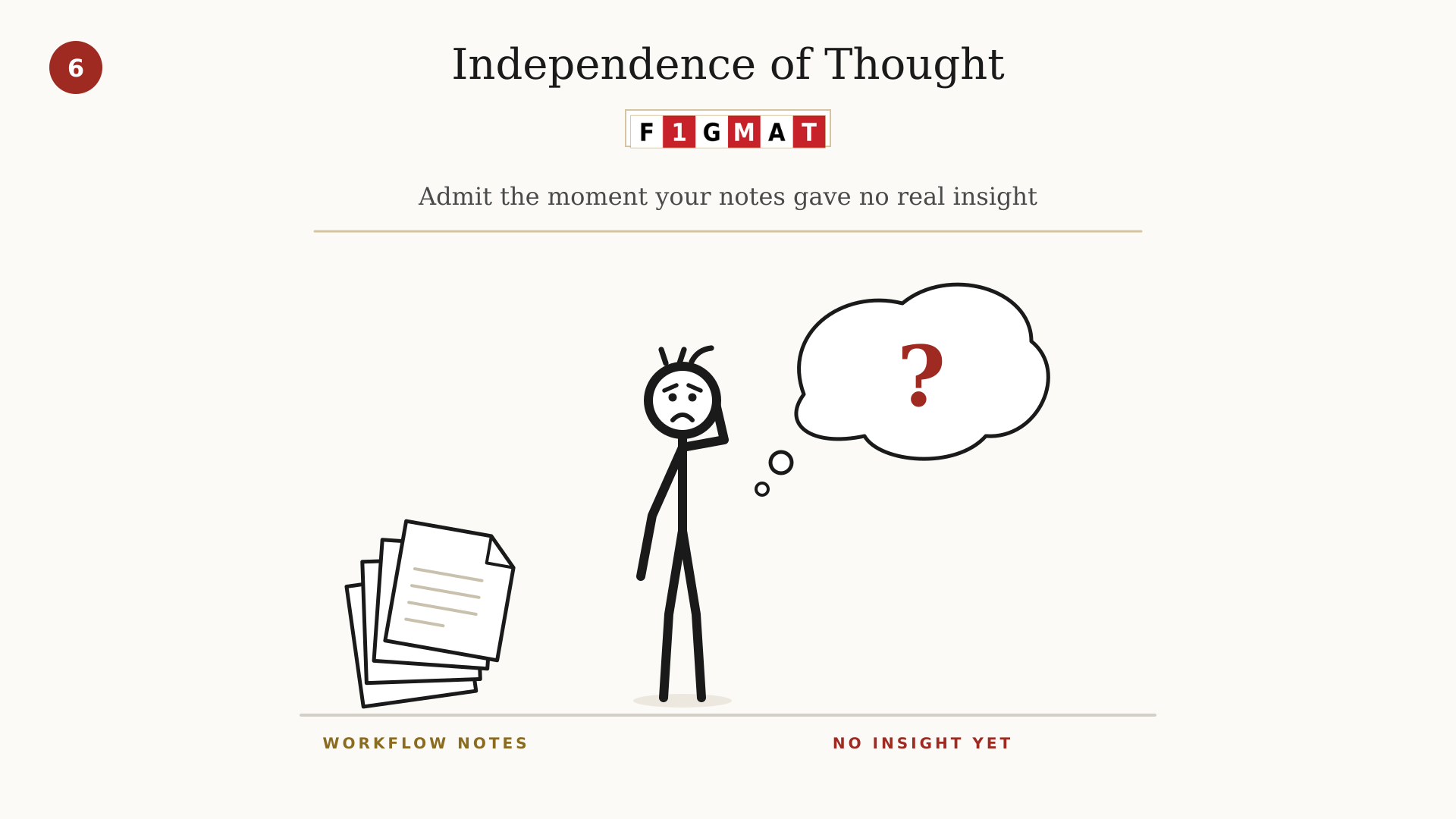
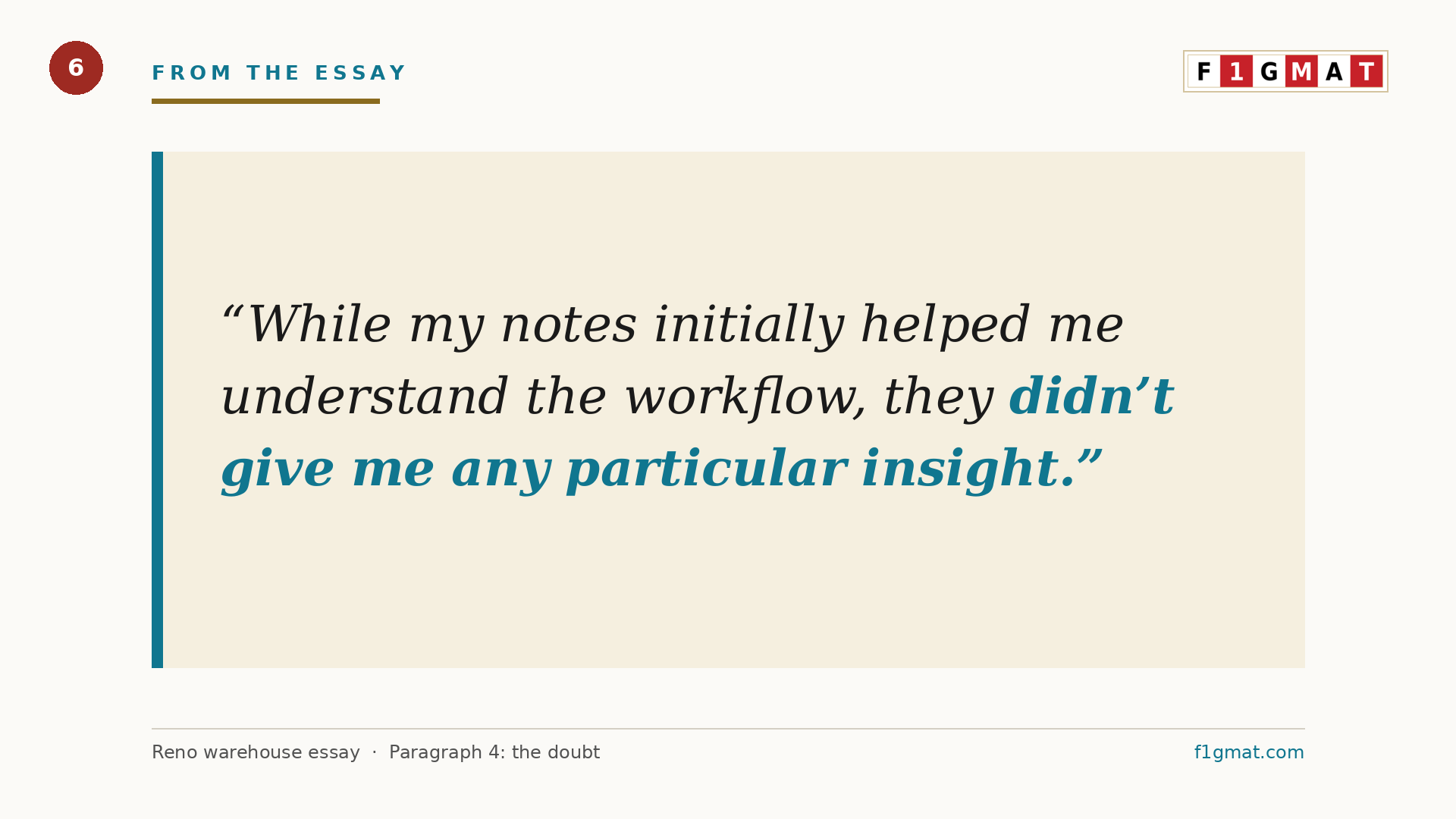
Then he says, "While my notes initially helped me understand the workflow, they didn't give me any particular insight."
Admit the doubt
Again, instead of always writing about yourself in a positive light, you can bring some doubt into the AdCom's mind. This is something not many applicants do. They're insecure that any line that shows their confusion might be considered against them. But the truth is that, whenever you work on a high-profile project or a project with a lot of complexities, there are moments when you couldn't figure out the core reasons for the problem.
Essay: no insight
You have to explicitly write those lines like, "While my notes initially helped me understand the workflow, they didn't give me any particular insight."
Essay: the weekend study
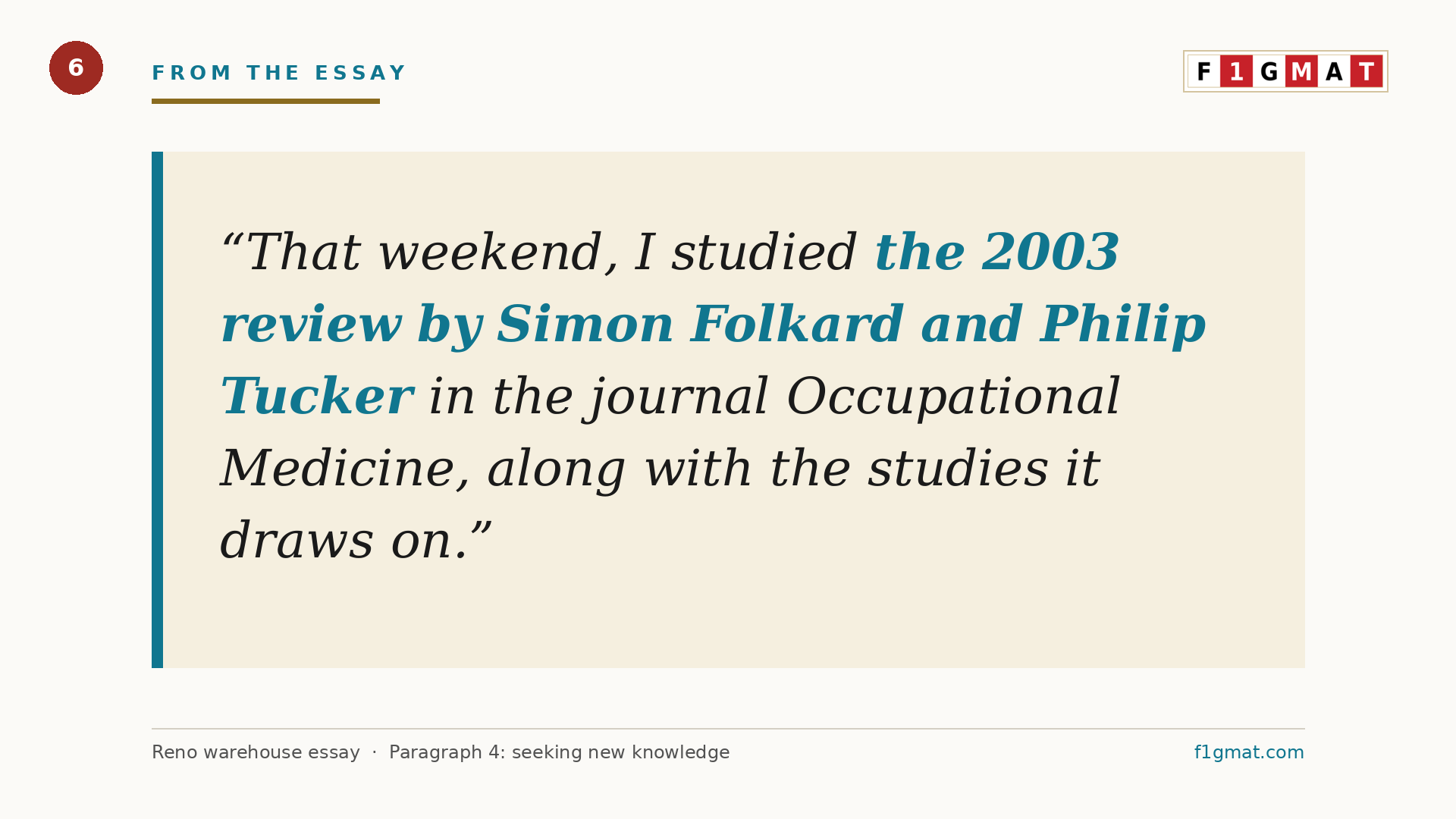
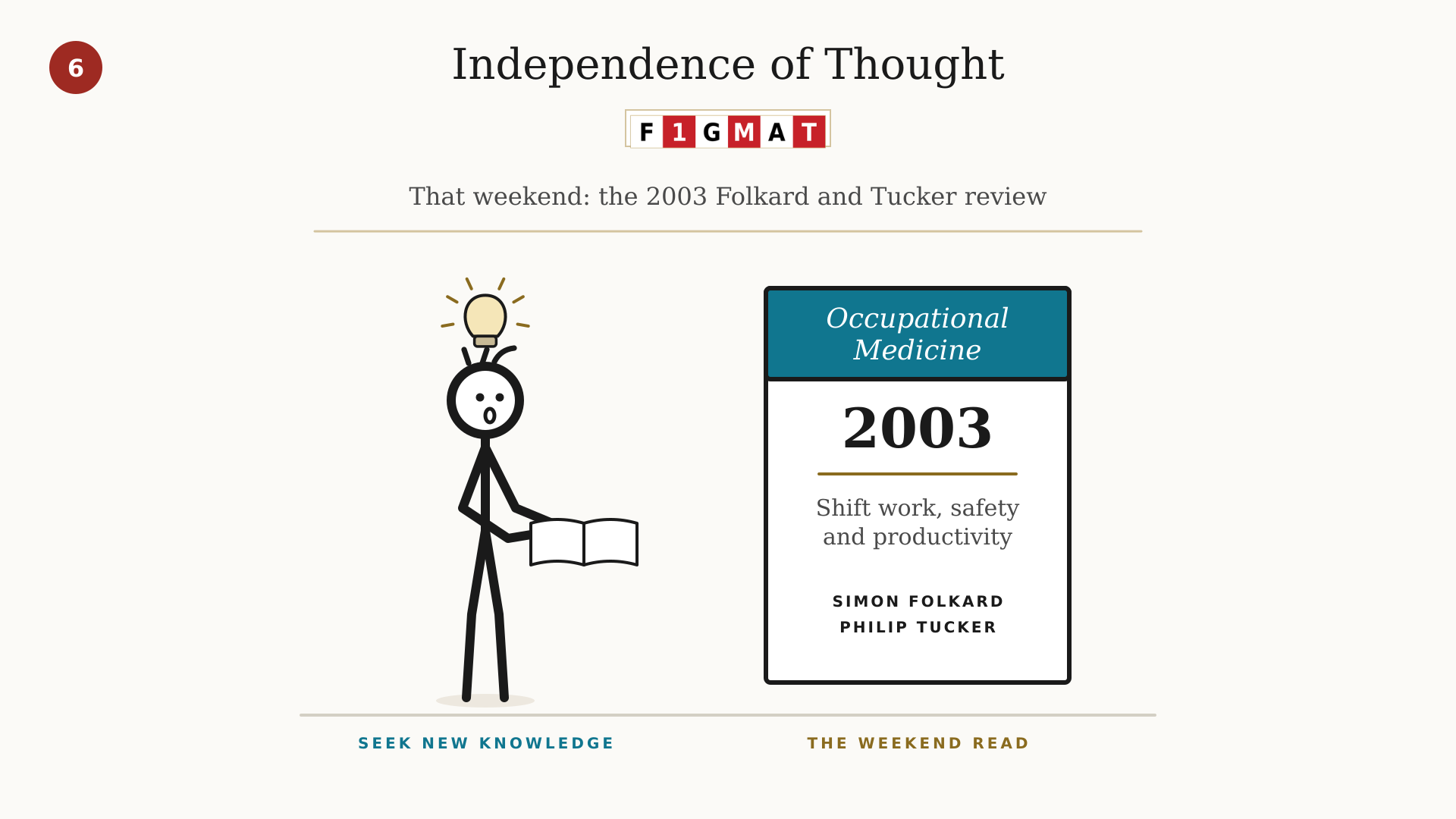
That weekend, I studied the 2003 review by Simon Folkard and Philip Tucker in the journal Occupational Medicine along with the studies it draws on.
Research - The 2003 review
What independence of thought trait is being highlighted here? Even if he had noted down the entire workflow and the processes, he couldn't figure out the reasons for the problem. So what is the next step he took? He read a paper from the Journal of Occupational Medicine written by Simon Folkard and Philip Tucker. That line shows the third independence of thought trait, that is, seeking new knowledge, perspective and experiences.
Essay: numbers matched
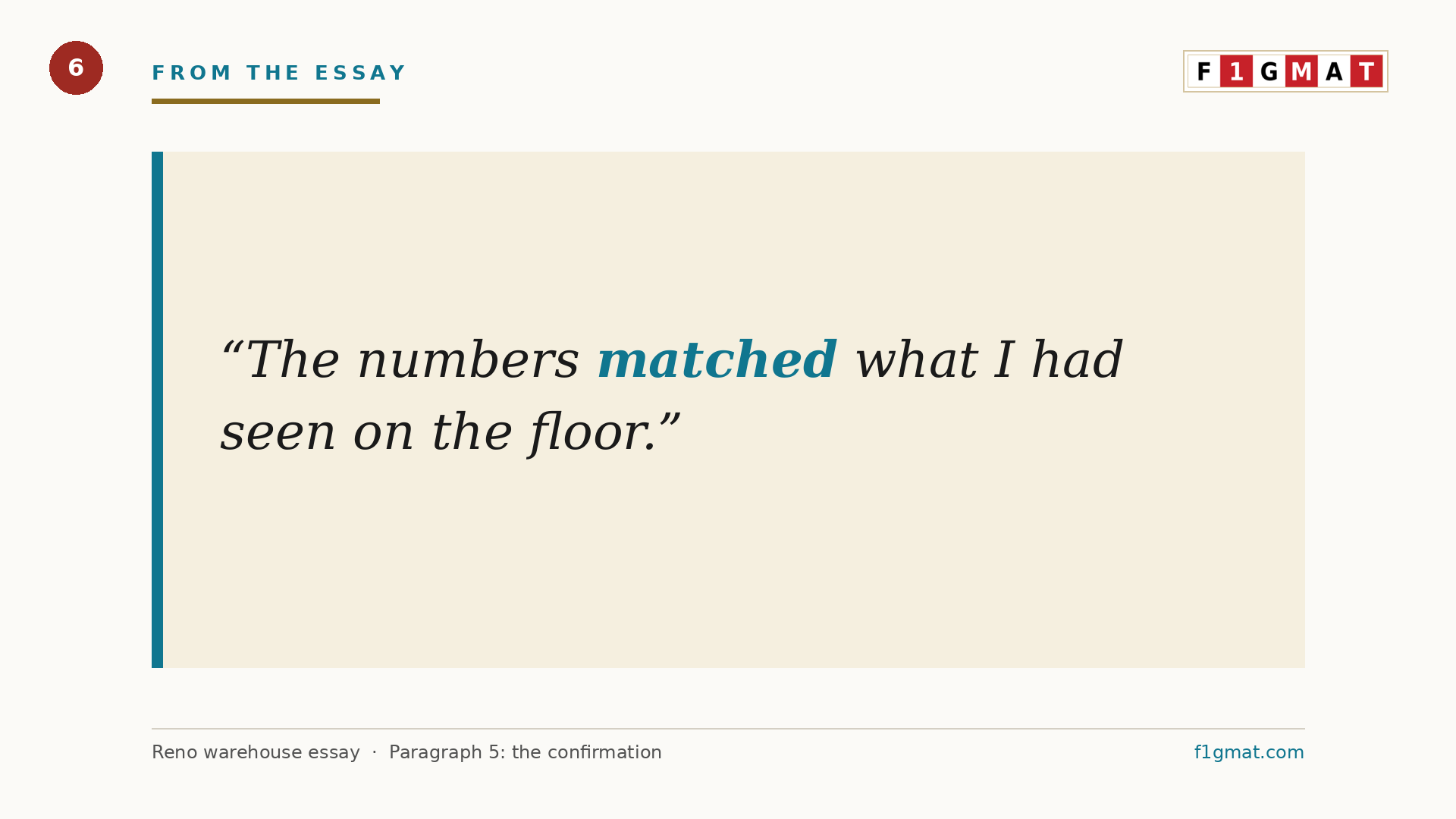
The numbers match what I had seen on the floor.
Night and 12-hour risk
He is confirming the study's conclusion with the results he had observed on the floor. What was the conclusion?
Essay: 25 to 30 percent
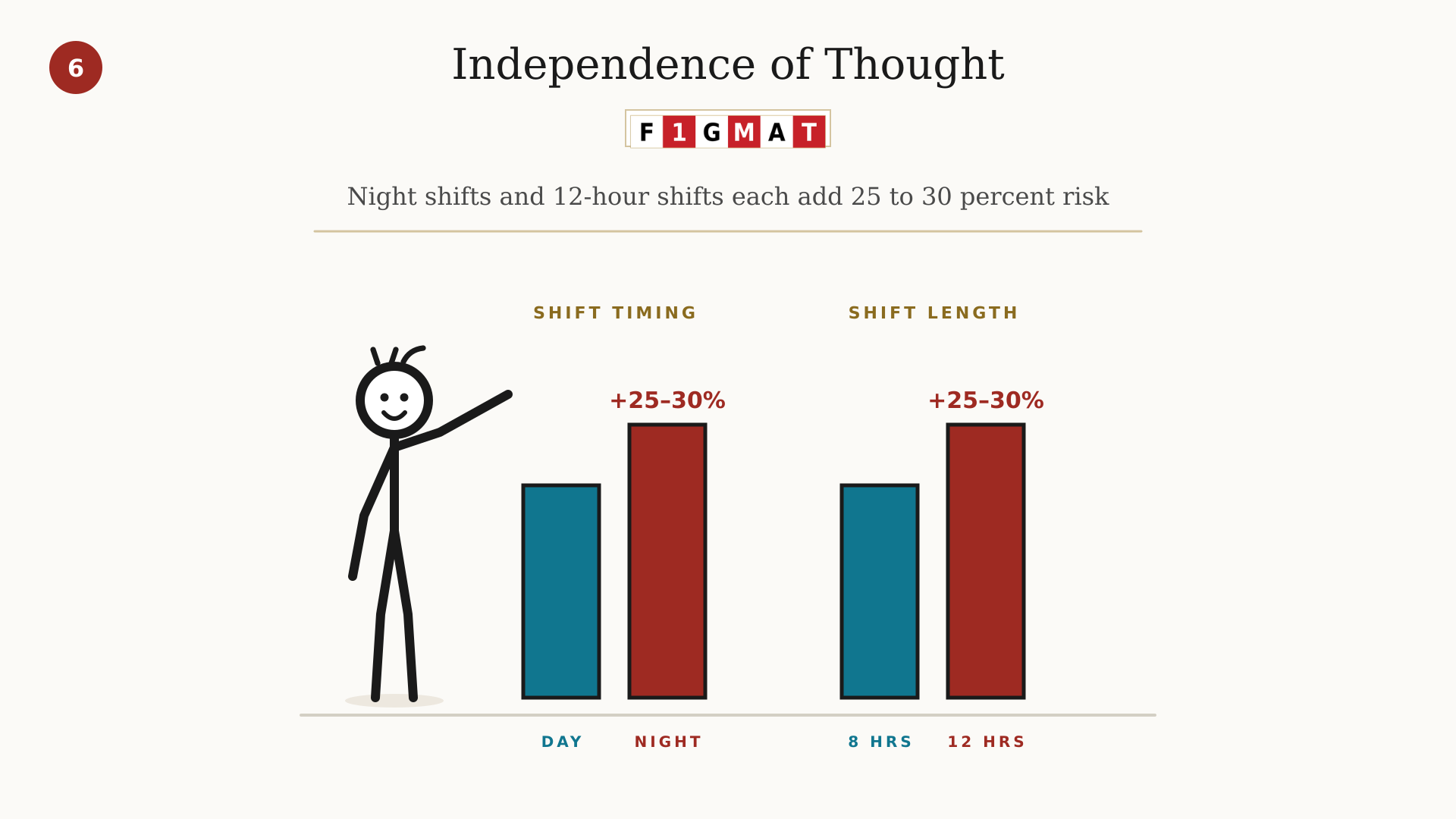
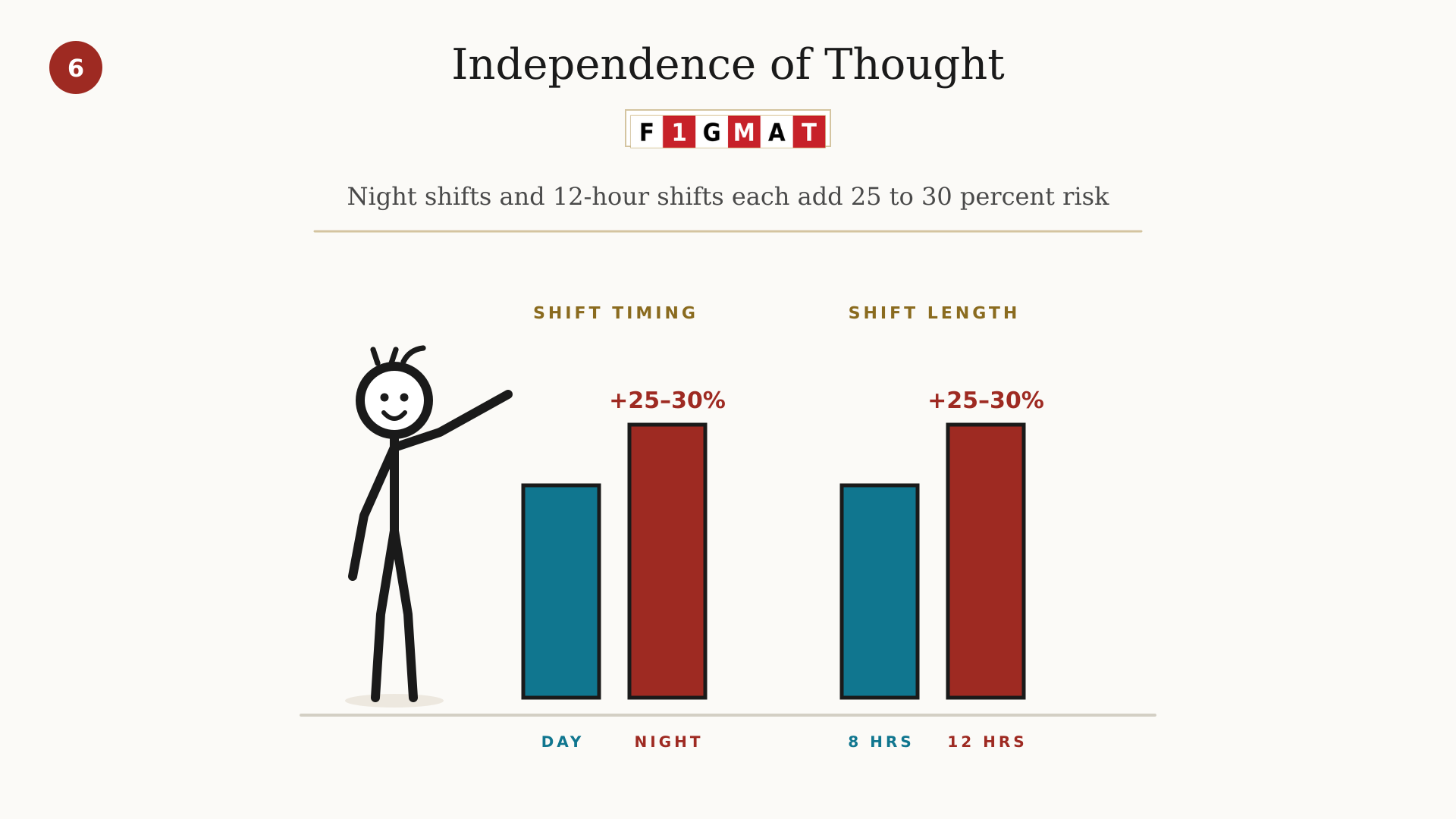
Night shifts had a 25-30% higher injury risk than day shifts. Just an increase in shift duration from 8 to 12 hours had a 25-30% higher risk of accident than 8-hour shifts.
Essay: hourly log
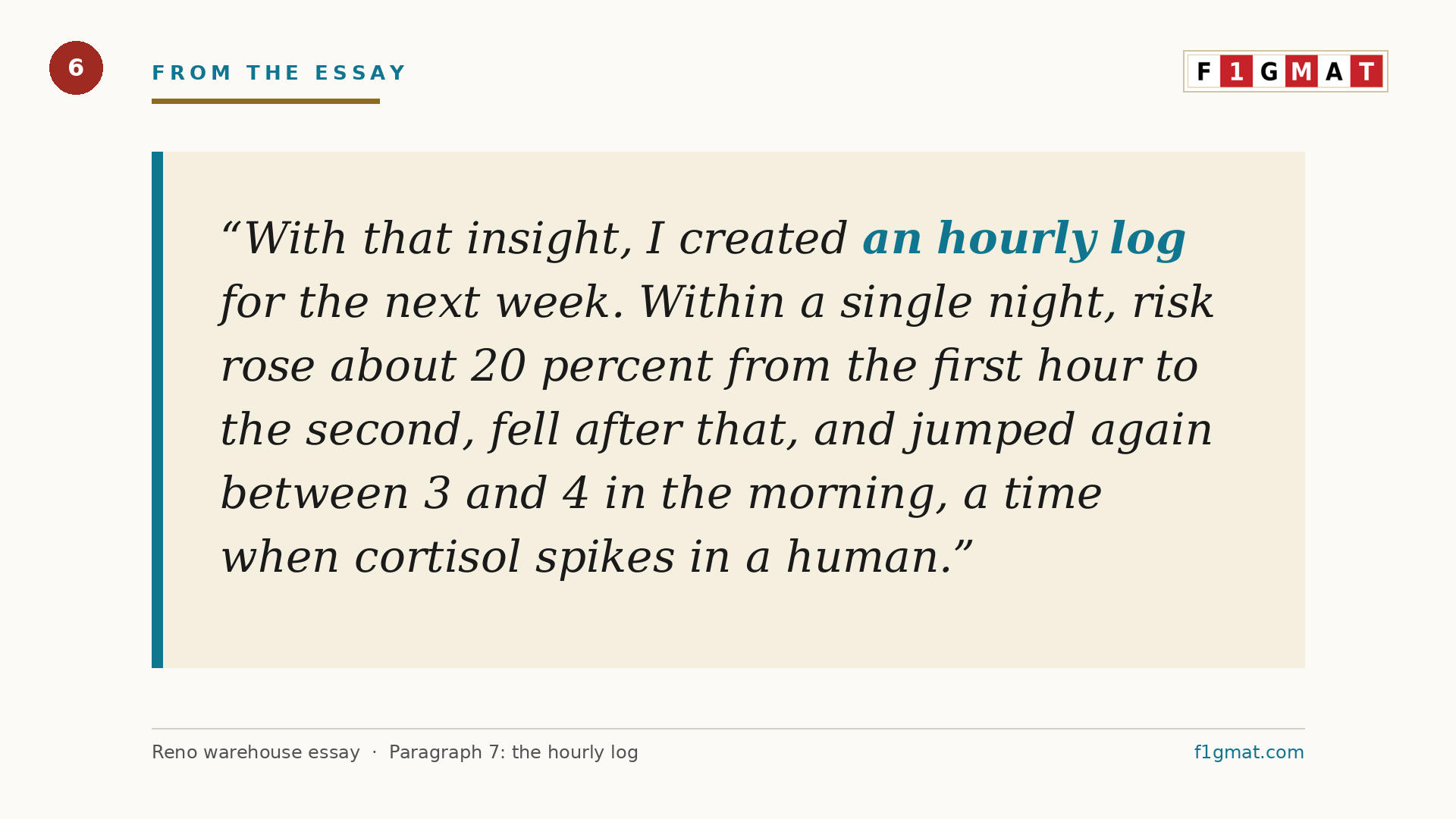
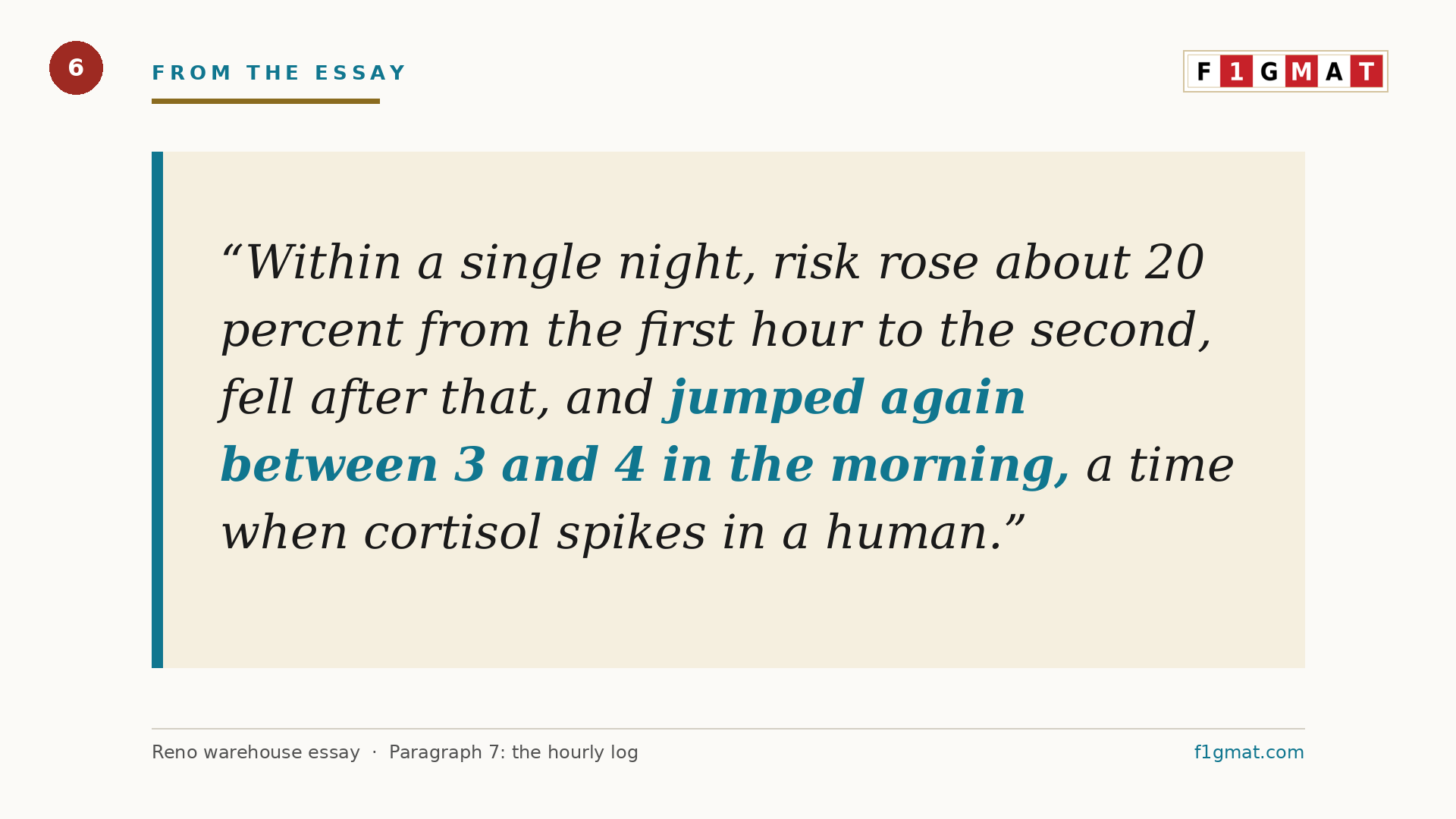
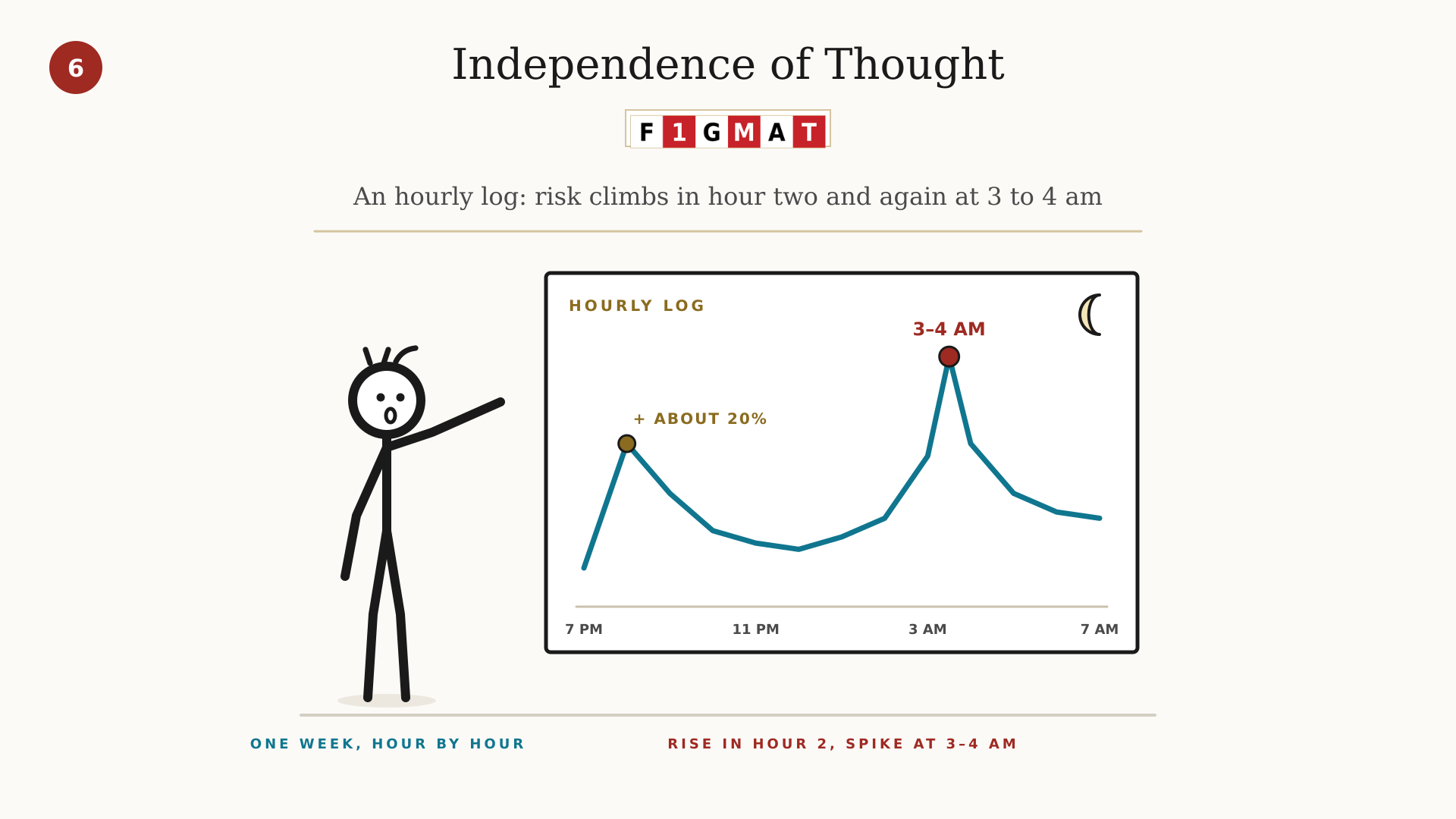
With that insight, I created an hourly log for the next week. Within a single night, risk rose about 20% from the first hour to the second, fell after that and jumped again between 3 and 4 in the morning, a time when cortisol spikes in a human.
Teach the AdCom
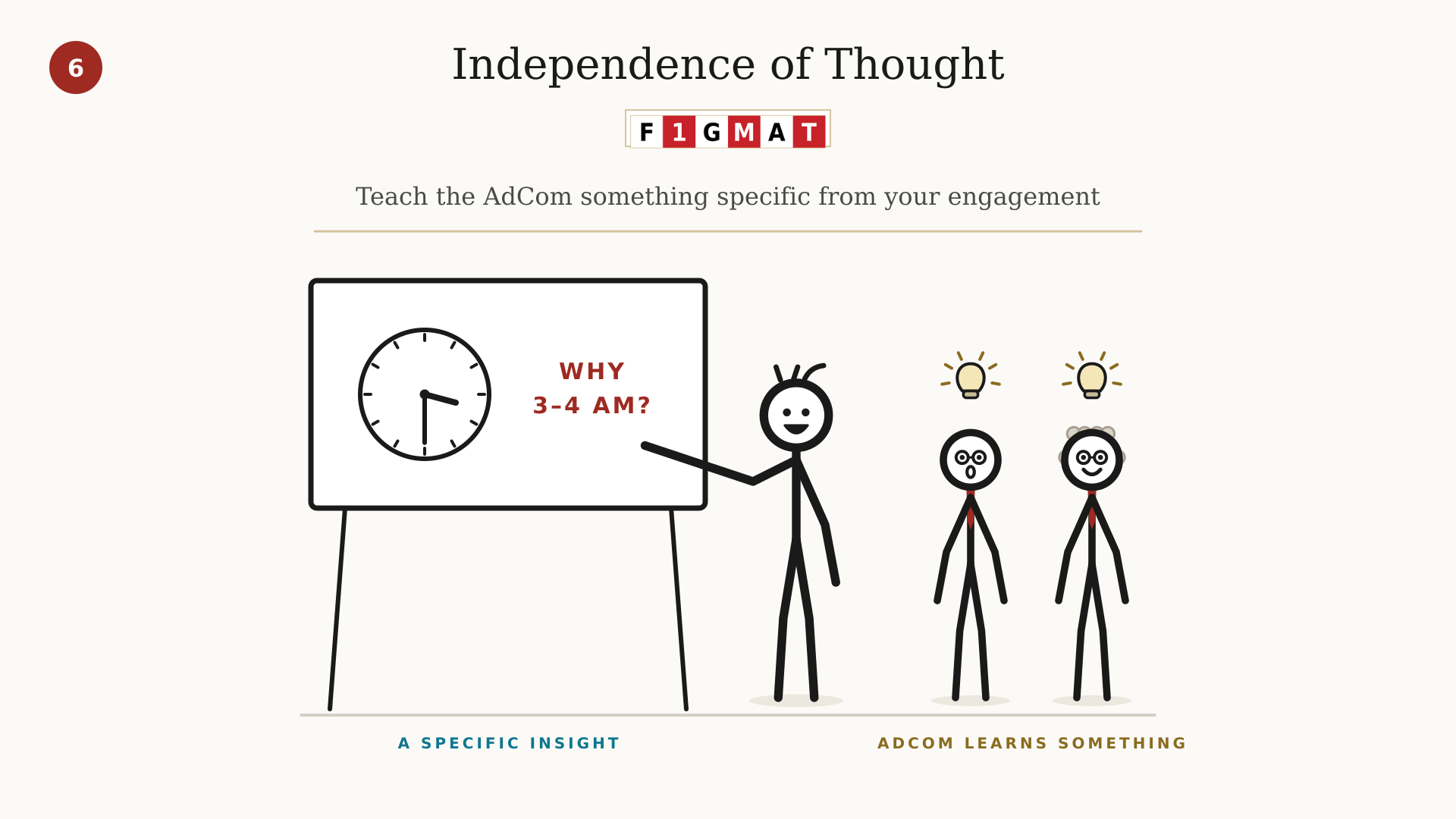
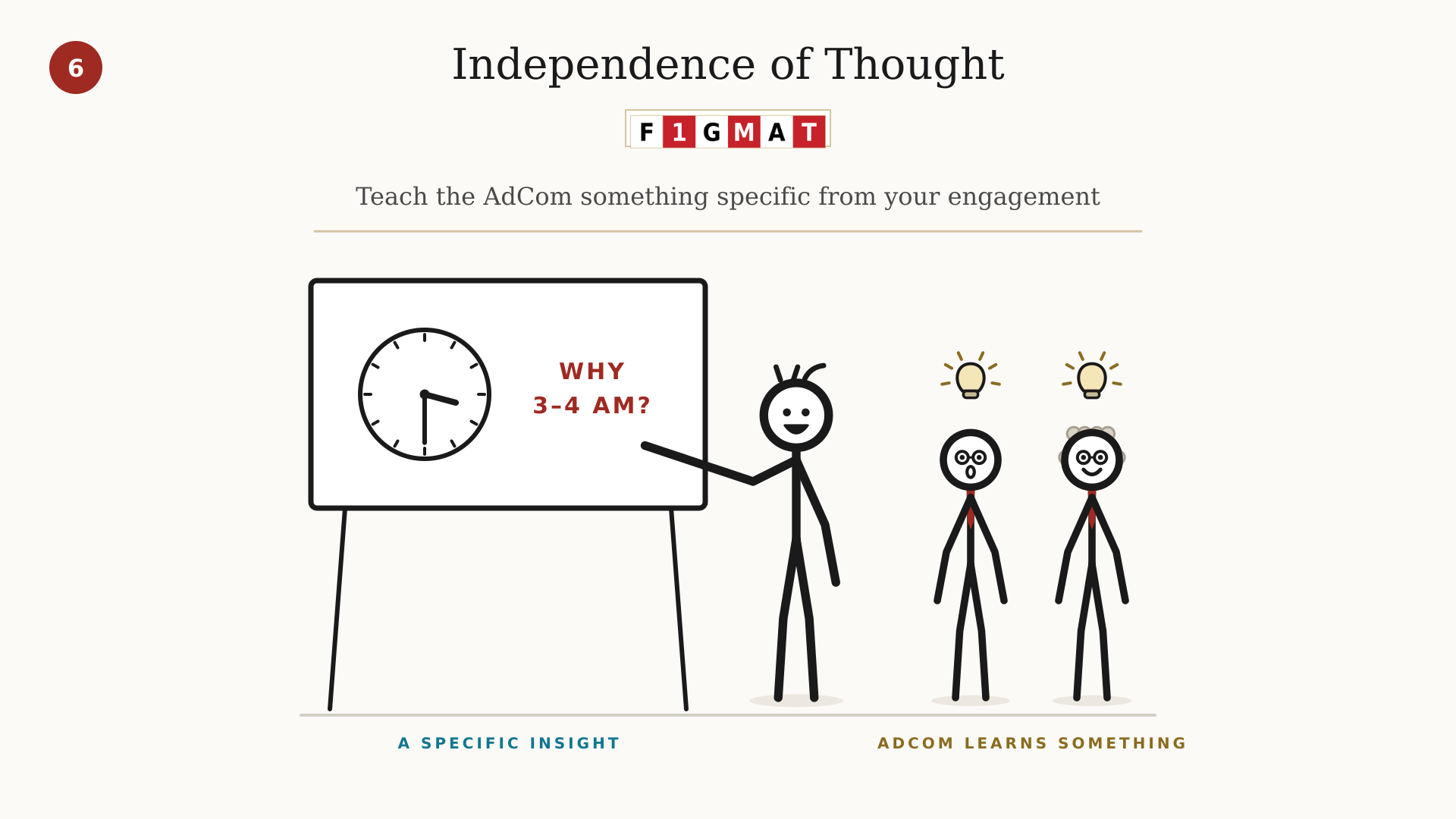
Now what is the interesting part of this paragraph? It has nothing to do with the independence of thought part in itself. It definitely covers seeking new knowledge, perspectives and experiences. As an applicant, one of the best ways to show your competence is to share a nuanced take in a larger problem and educate the AdCom about something specific about your industry or your engagement. What is that something specific from your engagement?
Night and 12-hour risk again
The applicant is sharing that although night shifts had a 25-30% higher injury risk than day shifts, just an increase in shift duration from 8 to 12 hours had a 25-30% higher risk of accident.
Teach the AdCom again
Any general reader like the ad-com might know about night shifts increasing injury risk, but they might not know the specific reasons for that higher risk of injury. Anyone who is curious which most ad-com readers are, they are not just looking at evaluating your profile, they are also trying to learn something new. Will your peers learn something new from your experience? How do you show that? By sharing a specific strategy or use case that shows the depth of your knowledge, what will your M7 MBA peers gain from your presence? Some nuggets of wisdom, some insights that they are never going to get from their company where they are working right now. That's why the diversity of experience is so important, equally important as the diversity of the demographic that is entering into an MBA program.
Essay: within a single night
Within a single night, the risk rose about 20% from the first hour to the second, fell after that and jumped again between 3 and 4 in the morning, a time when cortisol spikes in a human.
Hourly log
Here is the unique perspective. It is a time between 3 and 4 in the morning when the risk of injury is high and now the applicant is sharing the reason for that.
Essay: 36 percent
Risk also climbed when night shift workers worked consecutively in a row. On the 4th consecutive night of shift work, the risk of injury increased by 36% compared with the risk on the first night.
All risks at once
Now the applicant is taking the ad-com through his entire thought process and reaching the real reason why the injury rate is much higher at the Reno site than at the Boise site.
Essay: all risks at once
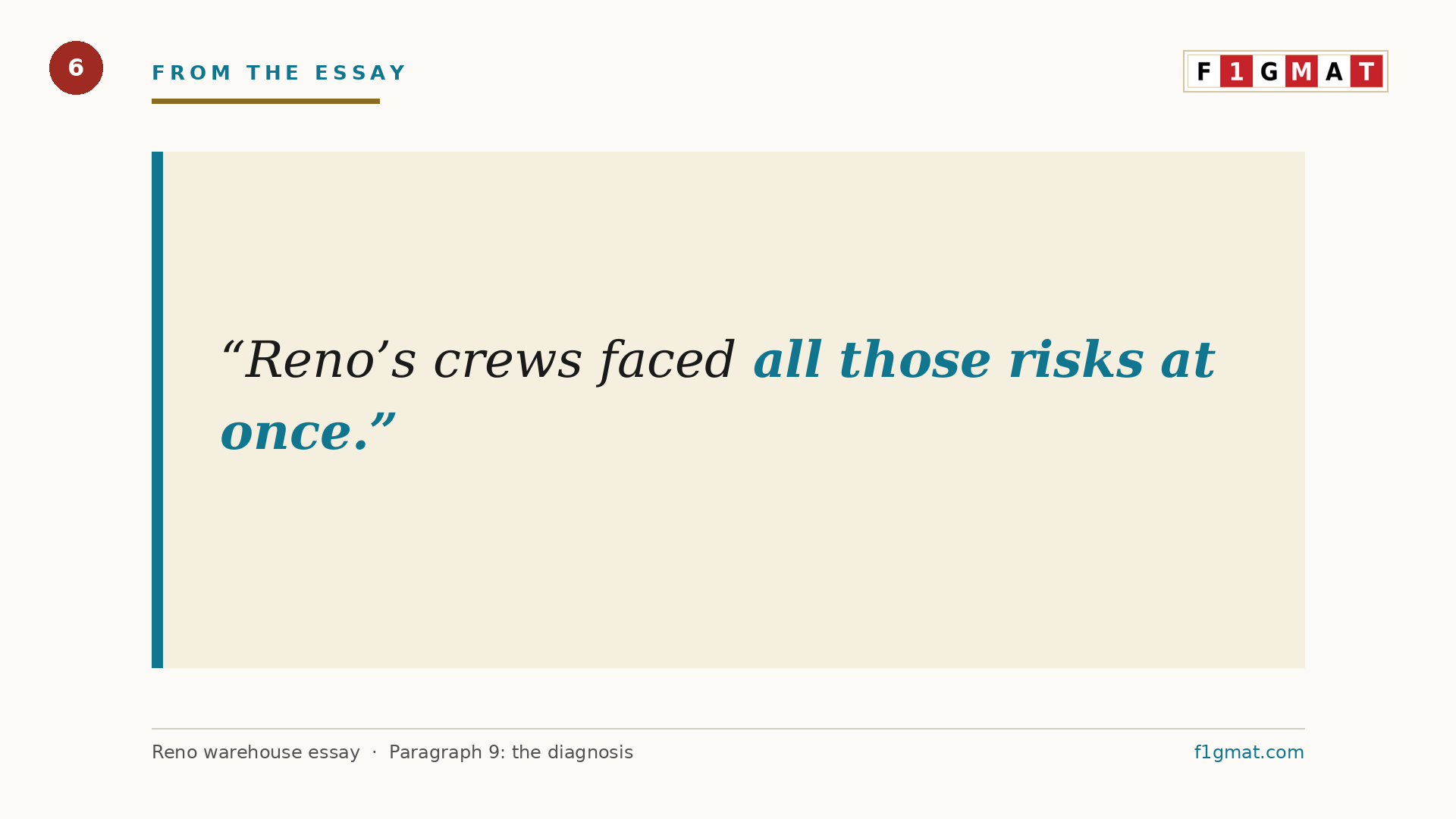
Reno's crews faced all those risks at once.
Essay: the lesson
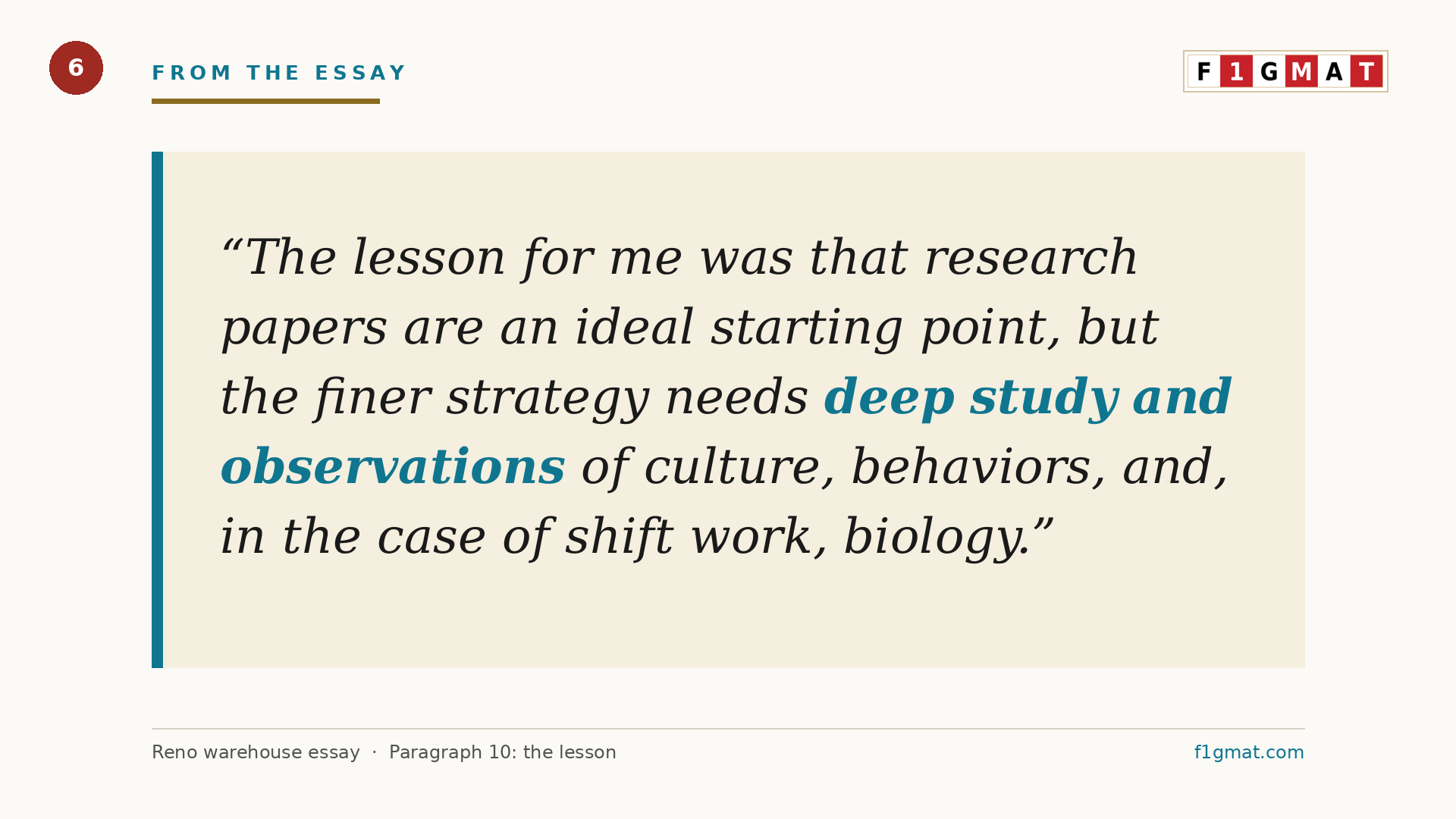
The lesson for me was that research papers had an ideal starting point but the finer strategy needs deep study and observations of culture, behaviors and the case of shift work, biology.
Essay: nine to one
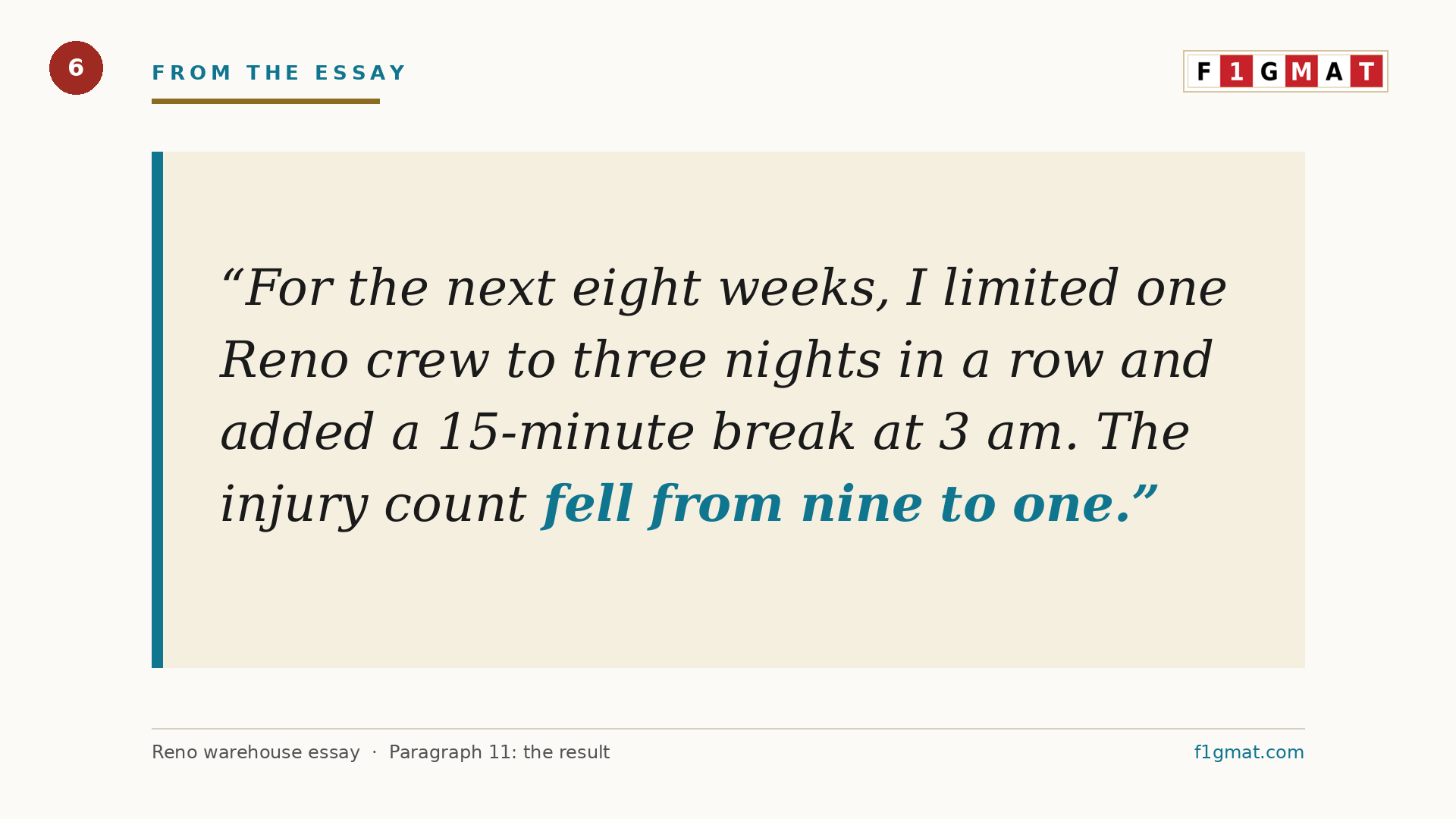
For the next 8 weeks, I limited one Reno crew to 3 nights in a row and added a 15-minute break at 3 am. The injury count fell from 9 to 1.
Injuries 9 to 1
That is the unique insight that the applicant is sharing. This kind of narrative should be part of any essay where you have to show your unique thinking or independence of thought. Have you reached a particular solution or if you want to establish a motive for working let's say in a particular niche in the long term or a particular industry or function in the short term, show your thinking.
F1GMAT's Essay editing
If you need help in finding deeper insights from your consulting, technology or finance careers and converting them to a narrative that an adcom can understand, subscribe to F1GMAT's essay editing service.
You may also reach out to me at editor at the rate F1GMAT.com that is F the number 1 GMAT that is GMAT.com. You can also read my essay guide, Winning MBA Essay Guide.
You can also buy individual essay guides from store.f1gmat.com
I cover top schools including Harvard, Stanford, Wharton, Columbia, Booth, London Business School, MIT, Kellogg and many more. So visit store.f1gmat.com
For M7 MBA Admissions, showing that your thinking is unique is one way to stand out from a crowded technology consulting or finance applicant pool.
To show your independence of thought, your example must cover, number one, thinking clearly with evidence of strong intellectual ability, number two, communication from reflection and introspection, number three, seeking new knowledge, perspectives and experiences, number four, making sense of ambiguous situations and generating ideas that solve that ambiguity.
Let us look at one good example of an operations consultant who was assigned to evaluate why there is a higher injury rate in a Reno warehouse compared to the company's Boise site. The essay goes like this.
In 2024, a leading logistic client hired me to investigate why injuries at its Reno warehouse, despite using the same layout and the same equipment, were double the rate of its Boise site.
As you can see, the first line itself establishes the problem statement. This is the best practice that you must adopt post-2022 when the word count has come down dramatically from the 350 to 500 or 500 to 750 range to the 250 to 400 word range. Whenever you talk about your independence of thought, quickly establish the problem statement.
Then, the essay goes like this.
I spent two weeks on shift on the Reno floor, noting every movement, division of responsibilities and the roles leading them.
Reno crews worked seven 12-hour nights in a row before they rotated to days, while no Boise crew worked more than three nights in a row.
As you can see, the MBA applicant is showing what he did on that site.
I spent two weeks noting every movement, division of responsibilities and the roles leading them.
This is the first evidence of independence of thought. Now, it might be part of a consultant's job to do all these tasks, noting down and breaking down the problem. But you must explicitly cite specific observations you had about that engagement because consulting is a very generic term for a lot of roles and responsibilities. Unless you break down the consulting engagement to its essence, it's tough for the admissions person to understand what exactly you did. The best practice for writing essays is that once you share what you did, you must quickly pivot back to the problem statement. How did the applicant pivot back?
Reno crews worked seven 12-hour nights in a row before they rotated to days, while no Boise crew worked more than three nights in a row.
As you can see, he is contrasting the two sides and hinting that the injury was the result of consecutive night shifts.
Then he says, "While my notes initially helped me understand the workflow, they didn't give me any particular insight."
Again, instead of always writing about yourself in a positive light, you can bring some doubt into the AdCom's mind. This is something not many applicants do. They're insecure that any line that shows their confusion might be considered against them. But the truth is that, whenever you work on a high-profile project or a project with a lot of complexities, there are moments when you couldn't figure out the core reasons for the problem.
You have to explicitly write those lines like, "While my notes initially helped me understand the workflow, they didn't give me any particular insight."
That weekend, I studied the 2003 review by Simon Folkard and Philip Tucker in the journal Occupational Medicine along with the studies it draws on.
What independence of thought trait is being highlighted here? Even if he had noted down the entire workflow and the processes, he couldn't figure out the reasons for the problem. So what is the next step he took? He read a paper from the Journal of Occupational Medicine written by Simon Folkard and Philip Tucker. That line shows the third independence of thought trait, that is, seeking new knowledge, perspective and experiences.
The numbers match what I had seen on the floor.
He is confirming the study's conclusion with the results he had observed on the floor. What was the conclusion?
Night shifts had a 25-30% higher injury risk than day shifts. Just an increase in shift duration from 8 to 12 hours had a 25-30% higher risk of accident than 8-hour shifts.
With that insight, I created an hourly log for the next week. Within a single night, risk rose about 20% from the first hour to the second, fell after that and jumped again between 3 and 4 in the morning, a time when cortisol spikes in a human.
Now what is the interesting part of this paragraph? It has nothing to do with the independence of thought part in itself. It definitely covers seeking new knowledge, perspectives and experiences. As an applicant, one of the best ways to show your competence is to share a nuanced take in a larger problem and educate the AdCom about something specific about your industry or your engagement. What is that something specific from your engagement?
The applicant is sharing that although night shifts had a 25-30% higher injury risk than day shifts, just an increase in shift duration from 8 to 12 hours had a 25-30% higher risk of accident.
Any general reader like the ad-com might know about night shifts increasing injury risk, but they might not know the specific reasons for that higher risk of injury. Anyone who is curious which most ad-com readers are, they are not just looking at evaluating your profile, they are also trying to learn something new. Will your peers learn something new from your experience? How do you show that? By sharing a specific strategy or use case that shows the depth of your knowledge, what will your M7 MBA peers gain from your presence? Some nuggets of wisdom, some insights that they are never going to get from their company where they are working right now. That's why the diversity of experience is so important, equally important as the diversity of the demographic that is entering into an MBA program.
Within a single night, the risk rose about 20% from the first hour to the second, fell after that and jumped again between 3 and 4 in the morning, a time when cortisol spikes in a human.
Here is the unique perspective. It is a time between 3 and 4 in the morning when the risk of injury is high and now the applicant is sharing the reason for that.
Risk also climbed when night shift workers worked consecutively in a row. On the 4th consecutive night of shift work, the risk of injury increased by 36% compared with the risk on the first night.
Now the applicant is taking the ad-com through his entire thought process and reaching the real reason why the injury rate is much higher at the Reno site than at the Boise site.
Reno's crews faced all those risks at once.
The lesson for me was that research papers had an ideal starting point but the finer strategy needs deep study and observations of culture, behaviors and the case of shift work, biology.
For the next 8 weeks, I limited one Reno crew to 3 nights in a row and added a 15-minute break at 3 am. The injury count fell from 9 to 1.
That is the unique insight that the applicant is sharing. This kind of narrative should be part of any essay where you have to show your unique thinking or independence of thought. Have you reached a particular solution or if you want to establish a motive for working let's say in a particular niche in the long term or a particular industry or function in the short term, show your thinking.
If you need help in finding deeper insights from your consulting, technology or finance careers and converting them to a narrative that an adcom can understand, subscribe to F1GMAT's essay editing service at store.f1gmat.com/essay-editing. You may also reach out to me at editor at the rate F1GMAT.com that is F the number 1 GMAT that is GMAT.com. You can also read my essay guide, Winning MBA Essay Guide from store.f1gmat.com/winning-mba-essay-guide You can also buy individual essay guides from store.f1gmat. I cover top schools including Harvard, Stanford, Wharton, Columbia, Booth, London Business School, MIT, Kellogg and many more. So visit store.f1gmat.com