While offering MBA admissions consulting services, I noticed that Engineers struggled to find the right fund as they are overrepresented in the application pool for top MBA programs.
Sainsbury Management Fellowship is a welcome fund for those targeting reputed schools in the UK, Europe, and the US.
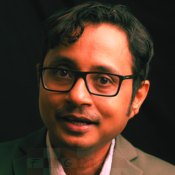
In my interview with Professor David Falzani, the President and Trustee of the Sainsbury Management Fellowship, I asked about the vision for the fellowship, the IMPACT of the fund, and the type of candidates who should apply for the program.
Atul Jose (AJ): How did the Sainsbury Management Fellowship start?
Professor David Falzani: Over 35 years ago, David Sainsbury, now Lord Sainsbury of Turville, realized that the UK had far fewer engineers in the board-level roles of leading companies compared to other leading economies such as Germany and the USA. He felt that engineering was hugely important in that it’s a profession that knows how to get things done and has an increasingly important role as technology pervades business. He, therefore, created a bursary scheme to encourage the brightest engineers with leadership potential to take MBAs at the top-ranked schools around the world.
AJ: What is the skill gap you noticed in Engineering candidates before pursuing an MBA. In your observation, how have they evolved with the fellowship and the MBA program?
Professor David Falzani: One of the classic skills gaps for engineers is in finance and accounting, and they are a powerful complement to engineering skills. I would also add the importance of understanding marketing and customer-centric thinking, as business competition is becoming increasingly based on intangible factors. Another key area would be in developing soft skills and particularly improving communications skills. Typically, all these areas of personal development are reported as being hugely important by engineers that have taken MBAs or similar qualifications.
AJ: What do you see is the biggest challenge for Engineering candidates in pursuing a management degree?
Professor David Falzani: In terms of course content, the background, qualifications, and training make engineers very good candidates for management degrees such as MBAs. Most of the subjects covered are complementary to the technological understanding that an engineer will have, along with their familiarity with the project environment. Perhaps, therefore, the challenges are around developing some of the softer communication skills, around taking time out from a busy career, as well as the perennial challenge of funding a course at a good business school.
AJ: Business, Humanities, and Finance backgrounds are the most represented in top business schools over engineering profiles. What do you foresee as a change in orientation for engineering candidates to be considered competitive for admissions to top schools?
Professor David Falzani: About 25 percent of MBA students are engineers, and most business schools value them for their powerful analytical and problem-solving skills, as well as their deep technological understanding.
AJ: How does the network assist current fellows?
Professor David Falzani: We operate a support network, as well as networking events, to help MBA graduates maximize the value of their new qualifications and help them develop their careers over the next 30 years. The network is unusual in that everyone in it has a common engineering background but has followed a wide variety of roles from investment banking to strategy consulting to start-ups to industrial products – so there is almost certainly someone that has already pursued a course that a new MBA graduate plans to follow.
AJ: What are some of the key qualities you expect in a Sainsbury Management fellow?
Professor David Falzani: We look for evidence of leadership and future potential. Candidates must show us that they are good communicators, that they can sell their ideas, and that they can motivate others. There is a bundle of other qualities that we see in all our successful candidates – a willingness to work hard, enthusiasm, open-mindedness, self-awareness, and integrity, to name a few.
AJ: What are the academic criteria (GMAT, GPA, Years of Experience) for the selection process?
Professor David Falzani: We have a list of 14 of the top business schools in the world. In order to make our selection task easier, we require applicants for the £50,000 bursary to have secured a place at one of these schools. Beyond that, our application form and process seek to explore what leadership potential the applicant has, but there are no other academic requirements other than being an engineer. It’s worth mentioning that achieving or working towards chartered engineer status is also looked upon favorably, as it’s a demonstrable form of leadership.
14 Top Business Schools – Partnered with the Sainsbury Management Fellowship
1) Harvard
2) MIT
3) Stanford
4) Wharton
5) Columbia
6) Kellogg
7) University of Chicago
8) Imperial College, UK
9) INSEAD
10) IMD
11) RSM
12) IESE
13) SDA Bocconi
14) HEC Paris
AJ: Is financial need a selection criterion?
Professor David Falzani: No. Typically, applicants will have already been in successful workplace roles for a few years, so financial criteria would not be practical.
AJ: How should an applicant prepare for the interview? What are some of the commonly asked questions?
Professor David Falzani: Perhaps the best way for candidates to prepare for the interview is to be sure that they are very clear in their motivation to do an MBA and their short-term and long-term goals. The questions asked in the interview will be based on their presentation and experience, so self-awareness and the ability to describe your achievements and show how you and others have built upon them is key.
We also have a blog on this subject on our website, along with some other FAQs about Sainsbury Management Fellowship here
AJ: This year (2021), the total awards increased to 11. Will the £500,000 cap change for the total fund or any plans to increase the number of awards?
Professor David Falzani: We generally plan to award 10 bursaries of £50,000 per year. Some years we may award 11, but then a subsequent year will only award 9.
AJ: We noticed that the majority of partnering schools are from the US. Does the candidate pool’s preference influence the partnerships?
Professor David Falzani: About half of our schools are in the USA and half in Europe. These represent the enduring seats of academic excellence in business schools today – however, almost all of these schools have opportunities within their MBAs to allow for studies across the world, such as SE Asia, China, and India. This is usually via an additional campus that the school has or through partner programs.
AJ: Are there any special considerations for women and underrepresented candidates?
Professor David Falzani: The bursary scheme simply seeks to find the very best candidates and is open to whatever profiles those candidates have. Having said that, in a recent diversity survey, we were pleased to note the alumni have much higher levels of diversity compared to the pool from which our candidates generally come, and we believe that diversity is an important driver of excellence in business.
AJ: Is the fellowship only for UK citizens?
Professor David Falzani: It’s open to UK citizens and those who can demonstrate a commitment to the UK (e.g., right to residence, etc.). Typically, about 30% of applicants are not UK citizens (EU/EEA citizens/ Domiciled in the United Kingdom)
Next Step
Apply for the Sainsbury Management Fellowship
Related Services